
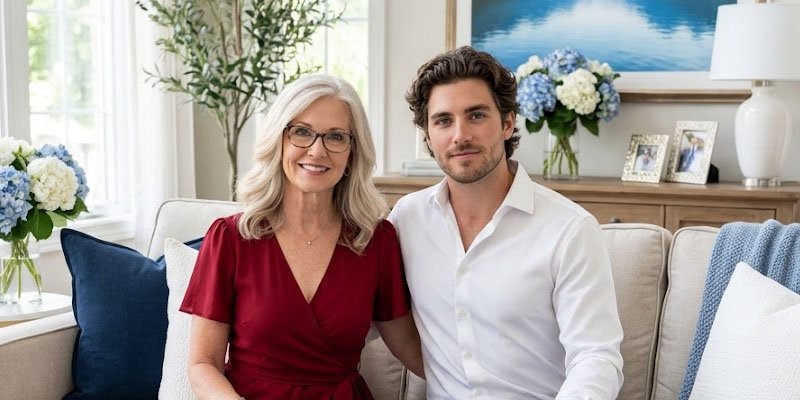
My 31-Year-Old Millionaire Husband Was Secretly Putting Something in My Nightly Drink—Until a Doctor Exposed the Real Reason He Married Me
The first time I caught my husband putting an unknown substance into my evening drink, I persuaded myself there had to be an innocent explanation.
The second time it happened, I started doubting everything I believed about our marriage.
But when I heard him quietly say, “Time is running out. She must never find out what happened to the others,” I understood that the person I trusted more than anyone was hiding a truth he never wanted me to discover.
My name is Margaret Bennett. I’m sixty-four, a former elementary school teacher, and six months ago, I became the wife of a thirty-one-year-old millionaire named Daniel.
Nearly everyone had doubts about our relationship.
My younger sister, Helen, was especially concerned.
“Margaret, he’s thirty-one, rich, and successful. What reason could he possibly have for marrying a woman twice his age?”
“Maybe he’s in love with me,” I replied.
More than anything, I wanted to believe those words.
Daniel was attractive, charismatic, and ran a thriving investment business specializing in medical technology. He owned an extraordinary mansion and had enough money to buy practically anything he desired.
I had devoted thirty-eight years to teaching young children and was enjoying a comfortable retirement supported by my savings.
We came from completely different worlds.
Whenever I asked Daniel why he’d picked me, he would simply smile.
“Because nobody else makes me feel the kind of peace I feel when I’m with you.”
He seemed to remember every little thing about me.
The flowers I adored, the dishes my mother used to cook, and the stories I treasured during childhood.
Our wedding was wonderful, and those first few months together seemed almost too perfect to be real.
He served me breakfast each morning, surprised me with meaningful presents, and encouraged me to rest rather than occupy myself with housework.
Occasionally, I’d notice him observing me while I was reading.
“What are you looking at?” I’d tease.
He’d give me a gentle smile.
“I’m just checking that you’re actually here.”
Back then, I considered it sweet.
Today, I understand those words very differently.
Three months after our wedding, Daniel became determined to take me to an exclusive medical clinic.
“Darling, you’re sixty-four. I only want to know that everything is fine with your health.”
“I’ve already been for my yearly checkup.”
“This place has much more sophisticated testing. Please agree, for my sake.”
In the end, I gave in.
The clinic occupied a sleek contemporary building covered in reflective glass. We were welcomed by a doctor named Adrian Cole.
I underwent a series of tests and was given a large stack of paperwork to sign.
Several documents were filled with medical expressions I didn’t recognize.
As I tried to examine them more closely, Daniel rested a hand on my shoulder.
“There’s nothing to be concerned about, sweetheart. I’ve gone through all of it already.”
Because I believed him, I signed the papers.
I had no idea how profoundly that choice would affect my future.
Following the appointment, Daniel introduced a new nighttime habit.
He made me a warm beverage containing milk, honey, cinnamon, and vanilla.
“My mother made a drink very much like this,” I mentioned.
“I haven’t forgotten,” he answered tenderly.
Each night, he brought the mug to the chair where I liked to sit and read.
“Your drink, darling. This should make it easier for you to unwind.”
Initially, I found the ritual soothing.
But eventually, things began to feel different.
I started waking up feeling abnormally drained. It became harder to focus, and I struggled to recall even simple discussions.
There were moments when I couldn’t remember where I’d left everyday items.
Daniel assured me these problems were merely part of adapting to my changed circumstances.
“You’ve seemed a little absentminded recently,” he’d remark in a comforting tone.
Soon, he was speaking on my behalf whenever we spent time with friends.
“Margaret hasn’t been getting enough rest lately,” he would tell them.
Little by little, I lost confidence in my own ability to think clearly.
One afternoon, Helen came over.
“You seem completely worn out,” she commented.
“I’m fine.”
“You also seem to have trouble concentrating.”
“I’m probably drinking too much coffee.”
She reached for my hand.
“Margaret, are you really happy?”
For a moment, I couldn’t answer.
“Sometimes, I hardly recognize myself.”
Worry spread across Helen’s face.
“I think you need to see your own physician.”
Before I could say anything else, Daniel entered the room holding a bouquet.
When Helen brought up the idea of seeing an independent doctor, his pleasant expression disappeared for an instant.
Then his smile returned.
“Absolutely,” he replied. “I’ll take care of scheduling it.”
Except he never arranged the visit.
That same evening, I entered the kitchen without announcing myself.
Daniel was standing over my mug, squeezing a few drops of liquid from a little dark-colored bottle into the heated milk.
I froze in the doorway.
“What are you adding to my drink?”
He spun around in surprise.
“It’s nothing special. Only some flavoring.”
“Could you show me the bottle, then?”
His face grew tense.
“Margaret, you’re making a problem out of nothing.”
He picked up the mug and offered it to me.
“Come on, darling. Drink it before it cools.”
Part of me wanted to keep asking questions.
Yet when he gave me that familiar, comforting smile, I started second-guessing my concerns.
So I took the cup.
When I woke the next day, my entire body felt unusually heavy and slow.
Daniel was already seated next to me.
“Are you feeling all right?” he asked.
“Not particularly.”
He shut his eyes for a moment.
“I’m sorry.”
“What are you apologizing for?”
He paused before responding.
“For the fact that you’re having such a rough morning.”
I couldn’t shake the uneasy feeling his response left behind.
During the next several days, I watched Daniel much more carefully.
He insisted on making my nighttime beverage without any help.
He never took even a single sip himself.
And whenever I said I didn’t feel like drinking it, he became oddly determined to change my mind.
One night, I suggested spending several days at Helen’s house.
“This isn’t a good time,” he replied without hesitation.
I looked at him in disbelief.
“Why wouldn’t it be?”
He made his tone gentler.
“It might interfere with your treatment schedule.”
My eyebrows drew together.
“What treatment?”
For a second, he appeared alarmed.
“I was talking about your health routine.”
I pressed him to explain, but he refused to give me a straightforward response.
A few nights afterward, I woke up to the sound of his hushed voice as he spoke on the telephone beside our bedroom window.
“Yes, I’ve been doing exactly what I was told,” he murmured.
He fell quiet while the other person spoke.
“The problem is that she’s starting to notice things.”
I didn’t move.
“I can’t adjust anything else. She’s already experiencing problems.”
My heartbeat quickened.
Then I heard words that filled me with fear.
“We don’t have much time left. If things keep going this way, we might lose her.”
He remained silent for several moments, listening.
At last, he said softly, “I’m aware of what happened to the others. I refuse to let it happen another time.”
The others?
Who could he possibly mean?
And why was my husband talking to a stranger about my health?
The next evening, I made up my mind that I wouldn’t continue drinking anything until I understood what was happening.
I decided to have the beverage tested by someone independent.
When Daniel’s phone rang and he walked into the hallway to answer it, I quietly transferred a portion of the drink into a clean container.
The next morning, once he had gone to his office, I took the sample to a laboratory.
One of the technicians told me that detecting unknown substances might involve advanced testing.
Forty-eight hours later, my phone rang.
“Mrs. Bennett, Dr. Samuel Reeves would like you to come in so he can explain the findings personally.”
I went to the appointment feeling extremely nervous.
Dr. Reeves studied the laboratory report before shutting his office door so we could speak privately.
“Is your husband aware that you’ve come here?”
“No.”
He moved closer to his desk.
“Mrs. Bennett, my advice is to undergo a separate medical evaluation before taking any more treatment connected with this drink.”
“What was in it, Doctor?”
“We identified an unusual medical substance linked to an experimental research project.”
I could only stare at him.
“An experiment?”
“That’s correct. This type of compound should never be given to someone without appropriate medical oversight and their fully informed permission.”
My constant fatigue and worsening memory suddenly seemed far more alarming.
Dr. Reeves wanted to know if I’d attended a private medical facility recently.
“Yes. My husband booked an appointment for me.”
“Did you see a doctor called Adrian Cole?”
I felt the air catch in my throat.
“How could you know that?”
He pulled out a folder.
“Our laboratory has previously worked with groups affiliated with that clinic.”
Then he rotated his computer monitor in my direction.
My full name appeared on the screen.
Along with my home address.
And my date of birth.
Below that information were two words:
RESEARCH PARTICIPANT.
“I never agreed to participate in any medical experiment,” I said quietly.
But the documents indicated that I had been registered in an experimental study examining biological mechanisms related to growing older.
The clinic had included consent paperwork displaying my signature.
I recalled Daniel assuring me that everything I signed was ordinary medical documentation.
“Your husband’s business is named among the organizations funding this project,” Dr. Reeves told me.
I could barely process what I was hearing.
Daniel hadn’t merely taken me to a clinic for a health assessment.
He was involved in a research study that I had never knowingly consented to enter.
At that moment, Dr. Reeves’ phone began ringing.
He checked the caller information.
His expression immediately shifted.
“Your husband is calling.”
“How could he possibly know I’m sitting here?”
“I have no idea.”
He allowed the phone to stop ringing before opening a cabinet and removing a closed envelope.
“This was brought here yesterday. The person who delivered it instructed me to hand it to you if your laboratory findings were linked to that study.”
My name was printed on the front.
I opened it and discovered an aged photograph.
It showed a hospital room.
There was a narrow hospital bed.
A young man stood alongside it.
And on the mattress lay an older woman with silver hair who bore an incredible resemblance to me.
Her eyes looked like mine.
So did her mouth.
Even the way she wore her hair was identical.
Yet the date on the photograph showed that it had been taken twenty-seven years before.
Someone had left a message on the reverse side:
MARGARET WASN’T THE FIRST. ASK DANIEL WHAT BECAME OF THE OTHER THREE.
My fingers trembled as I held it.
I studied the young man beside the patient.
He had Daniel’s exact appearance.
How could my husband, who was only thirty-one, be in a picture taken nearly three decades ago?
Before I had a chance to say anything, there was a knock at the office door.
“Margaret?”
For a moment, I felt as though my heart had stopped beating.
Daniel was outside.
“Darling, I know you’re inside.”
I pressed the photograph tightly against myself.
“Then tell me why you’ve kept this entire research project secret!”
Neither of us spoke for several seconds.
Finally, Daniel replied from the hallway.
“Because I believed I was keeping you safe.”
“Safe from what?”
His voice shook.
“From suffering the same fate as the others.”
Dr. Reeves stayed next to me when I finally permitted Daniel to come into the office.
I made it clear that he was not to approach me.
He appeared utterly drained.
His expensive, perfectly fitted suit was creased, and I could see his hands shaking.
I raised the old picture.
“Tell me who this woman is.”
Daniel fixed his gaze on the photograph.
“She was Evelyn Mercer.”
“Who is the man standing beside her?”
“That’s my father.”
I examined the image once more.
The similarity between Daniel and his father was remarkable.
That answered one of my questions.
But it left countless others unanswered.
“Why does Evelyn have the same face as me?”
Daniel looked toward the floor.
“She meant a great deal to my father. She was involved in raising him, and years later, she developed a serious and complicated neurological illness.”
His father eventually trained as a doctor and committed himself to researching the condition that affected Evelyn.
Over time, he began to suspect that some of the biological changes involved in her illness might also play a role in the aging process.
He started investigating an unproven therapy, hoping it could restore her health.
“Did the treatment help?” I asked.
Daniel slowly shook his head.
“No. Evelyn eventually died after years of battling her illness.”
My gaze returned to the picture.
“What about those other three women?”
“My father carried on with the experiments, recruiting people who shared certain characteristics he thought were relevant.”
Dr. Reeves cut in.
“Looking physically similar to someone is not, by itself, a legitimate scientific basis for choosing participants in a medical study.”
“I realize that,” Daniel answered.
My patience was nearly gone.
“Tell me what happened to those women.”
Daniel struggled to swallow.
“Each of them developed severe health problems. Two died later on, and the remaining woman was left with lasting medical complications.”
I clutched the sides of my chair.
“You knew all of this?”
“I didn’t know in the beginning.”
“When exactly did you learn the truth?”
He delayed answering.
“Before our wedding.”
I felt something inside me sink.
He’d been aware of that disturbing past before we became husband and wife.
Before all the bouquets.
Before the vows he’d made.
Before he persuaded me that our marriage represented a wonderful new beginning.
I stared straight into his eyes.
“Was Evelyn’s resemblance to me the reason you selected me?”
His eyes became wet.
“That wasn’t the only reason.”
Those few words broke my heart.
“How did you come across me in the first place?”
“At a fundraising event.”
I remembered the charity gathering organized to support retired educators.
Daniel had introduced himself after I delivered a talk about encouraging children to read.
Now, however, I understood that our encounter hadn’t happened purely by chance.
He confessed that he’d originally come across my picture in a database connected to the medical research.
Before approaching me, he’d already collected information about my life.
How old I was.
What I’d done for a living.
Who my relatives were.
Even some of my individual likes and dislikes.
Everything I once found considerate suddenly took on another meaning.
The flowers he’d chosen.
The meals I remembered from childhood.
The novels I’d loved.
He hadn’t learned all those things by getting to know me.
He had possessed some of that knowledge before our first conversation.
“Were your feelings for me ever genuine?” I asked.
“Yes,” he answered under his breath.
“Or were you really attracted to the opportunity to finish your father’s experiments?”
Daniel buried his face in his hands.
“The program was the reason I initially wanted to meet you. But once I listened to your speech, my feelings changed completely.”
He told me his father had spent much of his life burdened by regret over failing to save Evelyn.
After inheriting his father’s research documents, Daniel became committed to taking the project further.
Eventually, Dr. Cole convinced him that advances in technology could lead to a more successful outcome.
“When your tests appeared to show some potential health issues,” Daniel explained, “I convinced myself the research might actually help you.”
“But my own doctor told me there was nothing wrong with my health!”
Daniel avoided looking at me.
He admitted that three weeks earlier, he’d noticed inconsistencies between the results of my original tests and the medical documents used as the basis for my enrollment.
The first examinations had shown no evidence of the illness that the research team claimed I suffered from.
“Are you telling me the medical reports were wrong?”
“That’s what it looks like.”
“Then why did you keep putting that substance into my drink?”
“Dr. Cole warned me that stopping or altering the schedule without professional supervision might cause even worse complications.”
Dr. Reeves responded in a serious voice.
“That concern needed an independent medical review. It certainly didn’t give anyone permission to continue an experimental procedure without the patient’s informed agreement.”
I turned my attention back to Daniel.
“You saw how tired I was becoming.”
His expression collapsed.
“I did.”
“You were aware that my memory was getting worse.”
“Yes.”
“But you continued making that drink every evening while hiding the truth from me.”
He couldn’t bring himself to reply.
At last, I recognized what had really happened. Regardless of whether Daniel thought he was helping, he’d decided that his opinions mattered more than my right to control my own medical care.
Dr. Reeves asked Daniel if he had any documents proving the problems within the study.
Daniel acknowledged that he’d made copies of several files but had never submitted a formal report.
According to him, Dr. Cole had threatened to exclude him from decisions concerning my participation if he tried to interfere.
The absurdity of it almost made me laugh.
“Daniel, being married to me doesn’t give you the authority to control every decision in my life.”
He bowed his head.
I faced Dr. Reeves.
“I want a complete examination by an independent doctor, and I want those records investigated.”
Daniel moved toward me.
“Margaret, please listen—”
I lifted my hand to stop him.
“No. From this moment forward, you will not make these choices on my behalf.”
For once, he didn’t try to argue.
After Daniel went to collect the files, Dr. Reeves assisted me in organizing a medical assessment and ensuring that the laboratory evidence was properly retained.
I telephoned Helen.
As soon as she heard me speak, she sensed that something terrible had occurred.
“Margaret, what’s wrong?”
“I need your help.”
She came to the clinic soon afterward.
Once I’d told her the entire story, she wrapped her arms around me.
She didn’t remind me that she’d expressed doubts about Daniel.
All she said was, “You’re staying with me.”
I agreed.
For the first time in several months, I finally felt secure enough to let myself cry.
The next day, Daniel handed over copies of the research documents.
Certain pages supported the facts we’d already uncovered.
But other pages exposed even more disturbing information.
My initial medical tests did not indicate the condition that had supposedly made me eligible for the experiment.
The research records also showed that my dizziness, disorientation, and unusually long periods of sleep had been documented.
Despite those observations, the study had carried on without adequately responding to the problems I’d reported.
What troubled me even more was finding Daniel’s initials on some of the paperwork.
There was no way he could honestly insist he’d known nothing.
At the same time, investigators started examining how the clinic operated and what previous research subjects had experienced.
Dr. Reeves was especially interested in the woman who had survived the earlier study.
Her documents indicated that she had withdrawn her permission to participate and had tried to alert others to the program’s problems.
But the records suddenly stopped.
No one could establish whether her complaints had ever reached the appropriate people.
My thoughts returned to the old photograph.
Someone had tried to alert me to the danger.
Someone had realized I might become another person drawn into the experiment without a full understanding of what was being done.
A few days passed before Daniel called again.
“Margaret, Dr. Cole has found out that the files have been handed over.”
“I’m pleased to hear it.”
“He’s insisting that you understood everything and willingly agreed.”
I glanced at the documents spread out beside me.
“In that case, he can explain why nobody gave me a proper explanation of the experiment.”
Daniel said nothing for a while.
Then he revealed that he’d located a written account from the third woman.
In her statement, she’d explained that the researchers had ignored her concerns even after she reported disturbing changes in her physical condition.
There was one question I’d been frightened to put to Daniel.
I finally asked it.
“If I had never caught you using that bottle, would you have confessed what you were doing?”
The silence stretched on.
Eventually, he answered quietly.
“I can’t say.”
That response was all I needed to hear.
Several weeks afterward, Helen accompanied me back to the mansion, along with a person helping us handle the arrangements for our separation.
I had no intention of repairing the marriage.
I simply wanted to retrieve my collection of books, the pictures of my mother, and a handmade quilt that Helen and I had stitched together many years before.
Daniel stood waiting in the foyer.
He seemed to have aged considerably since our last meeting.
“Are you doing any better?” he asked.
“Yes, I am.”
Tears gathered in his eyes.
“That’s good to hear.”
He informed me that Dr. Cole had been taken off the project while further inquiries were carried out, and the clinical trial was now on hold.
Daniel had also started assisting the investigators.
I then asked if anyone had learned who was responsible for sending that mysterious picture.
Daniel gave a small nod.
“They have.”
“Who sent it?”
“The woman from the third trial.”
My chest tightened.
“You mean she’s still living?”
“Yes. She’s called Laura Mitchell.”
Laura had survived the previous experiment, although she continued to suffer from serious long-term health difficulties.
When she discovered that the study might have started again, she decided to look into it herself.
Eventually, she uncovered my identity and made arrangements for the photograph to be delivered to Dr. Reeves.
“Why didn’t she approach me herself?” I wanted to know.
“She worried you wouldn’t take her seriously.”
I lowered my gaze to the photograph.
In all likelihood, she was correct.
Half a year earlier, I probably would have ignored such a warning.
My faith in Daniel had been absolute.
I faced him again.
“Were you ever planning to explain everything to me?”
“I was always hoping to find the proper time.”
“And when exactly would that time have arrived?”
“Once the experiment showed a successful result.”
“What if it never succeeded?”
He turned his face away.
His silence confirmed what I already suspected.
“Daniel, protecting me wasn’t your only motivation,” I told him. “You were desperate to undo what happened to Evelyn.”
He started to weep.
“My love for you was real.”
“I know it was.”
He seemed taken aback.
“But your obsession with finding a solution became so powerful that you forgot I was entitled to make my own decisions.”
His shoulders dropped.
“I’m truly sorry.”
I didn’t doubt that he regretted what he’d done.
But no apology could give back the months I’d spent feeling bewildered and questioning my own health.
“I’ve made up my mind to end our marriage,” I said.
He pleaded with me to change my decision.
I shook my head.
“If you genuinely want to help me now, give the investigators your complete cooperation. Be truthful about everything, even the things you’re ashamed to admit.”
He nodded in agreement.
I gathered what I’d come for and left the mansion.
I never turned around.
Over the following months, I slowly began to recognize the person I’d once been.
My medical team kept a close watch on my condition. Recovery took time, but my strength gradually returned.
My ability to remember everyday details also improved.
Titles of books I loved.
Dates I needed to keep.
Small exchanges I’d had with people close to me.
For a while, I stayed in Helen’s spare bedroom and worked on restoring a normal daily routine.
Eventually, I had the opportunity to meet Laura Mitchell in person.
She used a walking stick and had a soft speaking voice, but there was genuine kindness in her eyes.
We met at a little café and sat together.
She described her involvement in the previous study and explained that she’d initially trusted the medical team because she thought they sincerely wanted to improve her health.
But when she developed worrying symptoms, the people responsible repeatedly brushed aside her complaints.
In time, she’d begun doubting her own perceptions.
Her story sounded painfully similar to mine.
“What made you decide to warn me?” I asked.
Laura gave me a sorrowful smile.
“Because when I started asking questions, nobody wanted to hear me.”
I reached over the table and gently held her hand.
“I’m grateful to you.”
“Make the most of your life, Margaret,” she replied. “That’s all I ask.”
I never forgot what she said.
The investigation into the medical project went on, and in time, my marriage was legally dissolved.
Daniel made no attempt to challenge the separation.
He wrote to me one final time.
In his letter, he acknowledged that he’d confused controlling someone with caring for them, allowing his father’s incomplete research to become more important than my welfare.
There was one line I couldn’t forget.
I believed I was giving you a brighter tomorrow, yet I failed to value the life that was already yours.
I folded the page and tucked it inside a drawer.
I never wrote back.
There are apologies worth accepting, but accepting them doesn’t necessarily mean rebuilding a relationship.
One year after finding that strange bottle, I settled into a modest home not far from Helen.
There was a bright kitchen filled with sunlight, a small garden, and plenty of room to display my cherished books.
Twice every week, I volunteered with a literacy program for children.
One morning, a young girl approached me carrying a book.
“Will you read this with me?”
I gave her a warm smile.
“Certainly, sweetheart.”
While we worked through the pages together, I experienced a feeling that had been absent from my life for far too long.
I finally felt like myself again.
I was Margaret.
I wasn’t defined by being married to a millionaire.
I wasn’t merely a subject in a medical experiment.
And I wasn’t a person whose future belonged in someone else’s hands.
I was simply a woman who found joy in teaching and still had plenty of reasons to look forward to tomorrow.
One evening, after spending time tending my garden, I went into the kitchen and made myself a hot beverage.
I used milk, honey, cinnamon, and a little vanilla.
As I mixed the ingredients, I stopped for a moment.
An image of Daniel in our old kitchen returned to my mind.
That small, dark bottle.
All the questions he’d refused to explain.
The way he always maintained that whatever he did was meant to help me.
Then I took a moment to look around the house that now belonged to me.
There was no one there making me question my ability to think clearly.
No one demanding that I follow an unexplained daily ritual.
No one deciding what happened to my body without first asking for my permission.
I brought my mug over to the window and tasted a little of the drink.
Its flavor was just as I remembered from the days when my mother used to make it for me.
Warm.
Sweet.
Reassuring.
I took another small drink.
Then I put the mug down.
It was still half full.
And I smiled.
Because after such a long time, I no longer had to empty the cup simply because someone else expected me to.
I was free to finish it.
Or let it sit.
Or tip the remaining drink down the sink.
That choice was mine and mine alone.
After everything I’d endured, I finally recognized a truth that mattered more than anything else.
Genuine love never demands that a person give up their independence. However perfect a relationship may seem from the outside, real trust can exist only where there is honesty, mutual respect, and the freedom to make your own decisions.




