
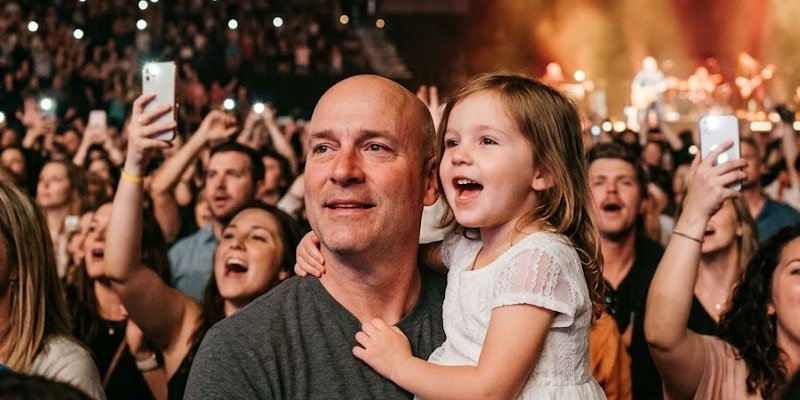
We had always been a family of three: Dorothy, my wife, Nancy, our nine-year-old daughter, and me.
Between work and getting Nancy to and from school, we hardly ever had a peaceful conversation before bedtime. Even so, Dorothy was the person I told everything to, and I had always assumed she felt the same way about me.
“Is everything okay?”
There was just one subject she refused to discuss: her mother, whose calls she had been sending to voicemail for years.
“Is everything okay?” I once asked after she let a call from her mom go unanswered.
She turned her phone facedown. “Please don’t make me talk about her.”
I never brought it up again.
“Another visit?”
Then Dorothy’s mother suffered a severe stroke, and suddenly hospital parking receipts began filling the pockets of Dorothy’s coat.
“Another visit?” I asked as she reached for her keys.
“She shouldn’t be left alone.”
I squeezed her shoulder. Nearly losing her mother had apparently changed something inside her.
“Mom keeps asking for her.”
On Saturday, she stood by the door with our nine-year-old daughter, Nancy.
“Mom keeps asking for her,” Dorothy said. “I thought we could go cheer her up.”
Nancy held up a folded piece of construction paper. “I made a card.”
“Grandma is going to love it.”
I kissed Nancy on the forehead, then kissed Dorothy’s cheek.
“I made a card.”
“Drive carefully.”
“We won’t be gone too long,” Dorothy said, catching the door before it closed and smiling at me.
I trusted that smile more than anything.
I had no idea I would soon regret trusting it.
“Am I crazy, or is that Nancy?”
Around nine o’clock, my phone buzzed. It was my cousin Jason.
“Mark, am I crazy, or is that Nancy? That girl looks exactly like her.”
I opened the picture he had sent, then pinched the screen to zoom in.
Nancy had both arms wrapped around a man’s neck, her mouth open as though she were singing. His thick beard made him look roughly Dorothy’s age. One hand was supporting her back while the other held her close.
“She’s been with this guy the whole concert.”
Jason sent another message.
“It’s definitely her. She’s been with this guy the entire concert.”
At school functions, Nancy usually hid behind me whenever other parents greeted her.
Yet there she was, clinging to a complete stranger. Or at least, that was what I thought.
The first call went unanswered.
I called Dorothy rather than replying.
The first call rang without an answer. The second did too.
When she finally answered twenty minutes later, I was already on my feet with my keys in hand.
“Where are you?”
Silence.
“Mark, please don’t jump to conclusions.”
“Jason just sent me a picture of Nancy at a concert with some man. You told me you were at the hospital.”
Dorothy drew in a deep breath. “Mark, please don’t jump to conclusions.”
“Then tell me who he is.”
“I can’t explain this properly over the phone.”
“Then try.”
“Please. Just wait for us.”
Silence again.
“Please. Just wait for us.”
“Us?”
“We’ll be home around ten. You’ll meet him. Then we’ll explain everything. It isn’t what you’re imagining.”
After she ended the call, I put my keys down and looked at the photograph again.
“It isn’t what you’re imagining.”
I kept staring at Nancy. She didn’t look uncomfortable or as though she wanted to get away. She was leaning against his chest, completely relaxed.
Dorothy hadn’t merely lied about where they were going. She had taken our daughter to someone who apparently needed no introduction.
Nancy came inside holding the stranger’s hand.
The clock showed 10:06 when Dorothy unlocked the door.
Nancy walked in holding the stranger’s hand. In person, he looked much younger, probably somewhere in his mid-twenties beneath the beard. His eyes were red and swollen.
Nancy let go of his hand when she saw me.
“Dad, please don’t be angry with Mom.”
“What have you told her?”
I stared at Dorothy. “What have you told her?”
“Mark,” the stranger said, “I’m sorry you had to discover me like this.”
“Apparently, I’m the only person who didn’t know.”
He lowered his eyes.
Dorothy reached for my arm.
I opened the door. “Leave.”
He looked toward Dorothy, and the silent exchange between them made my grip tighten around the doorknob.
Dorothy touched my arm. “Before you do that, you need to hear a story that began twenty-five years ago.”
“Dorothy—”
“Please.”
“Leave.”
Nancy stepped closer to her mother.
“You haven’t done anything wrong, sweetheart,” Dorothy told her. “Go upstairs and get ready for bed. We’ll deal with this.”
“Will you come upstairs?”
“Yes.”
Only after Nancy’s footsteps faded did I shut the door.
“Does he know?”
Dorothy sat down and turned her wedding ring around her finger. I remained standing.
Twenty-five years ago…
My mother stood in the doorway of my bedroom, holding the pregnancy test.
“Does he know?”
“Not yet. I was going to tell him tomorrow.”
I stayed on my feet.
“Give me your phone.”
“No. Mom, please—”
“Now.”
When I was sixteen, I had fallen for the boy who waited outside the diner after my shifts, doing his homework beneath the streetlight. We would share a sandwich on the walk home. He always gave me the larger half.
My mother called him instead.
I wanted him beside me when I told her.
My mother called him instead.
I learned later that she had told him I no longer wanted to see him. Then she packed our belongings and moved me to another state.
To me, she said, “I told him about the baby.”
“He doesn’t want either of you.”
“What did he say?”
“He doesn’t want either of you. Don’t embarrass yourself by chasing him.”
I kept writing to him anyway. I gave the envelopes to my mother because she drove past the post office.
“Anything for me?” I asked every afternoon.
“I’m keeping my baby.”
Eventually, Mom stopped answering and simply shook her head.
When my jeans stopped buttoning, she placed adoption information beside my breakfast.
“I’m keeping my baby.”
“And where are you going to live?”
“Here. I’ll work.”
“I’ll figure something out.”
My mother sighed. “Who will take care of him? Who will pay the bills while you finish school?”
“I’ll figure something out.”
“Not in my house.”
I shoved the papers aside.
“Who will take care of him?”
She pushed them back toward me. “You can give him parents who are prepared, or you can make two lives more difficult instead of one.”
I kept writing to my boyfriend until my mother discovered me crying over another unfinished letter.
“He’s moved on, Dorothy. It’s time for you to do the same.”
When my son was born, his fingers closed around mine before I had even worked out how to hold him.
When he opened his mouth, I thought he was about to cry.
“Hello,” I whispered. “I’m your mom.”
I examined the tiny crease above his nose and the dark hair pressed flat against his head. When he opened his mouth, I thought he might cry, but instead he simply yawned.
The woman who came to take him waited quietly beside my bed.
“May I?”
“Just another minute.”
I had to free them myself.
My mother reached for my hand. “Dorothy. You signed.”
I tucked the blanket beneath his chin twice. When I finally handed him toward the woman, his fingers caught my gown. I had to free them myself.
Years later, I had a job, an apartment, and a phone I could simply ignore whenever my mother called.
But every birthday, I counted.
“Dorothy. You signed.”
Five. Eight. Ten.
I wondered whether he hated peas, whether someone checked his forehead when he was ill, whether he ever thought about me.
I never let myself picture meeting him again.
Then, ten years after my mother had taken me away, I heard someone say my name—and turned toward the one person I had tried hardest not to miss.
“Do you have time for coffee?”
My ex, the father of my child, stood beside a grocery cart, giving me a nervous smile.
“Do you have time for coffee?”
Before answering, I looked at his left hand. He noticed.
“No wife,” he said. “You?”
He pushed the larger half of his sandwich toward me.
“No husband.”
He pushed the bigger half of his sandwich toward me, exactly as he used to outside the diner.
“You remember,” I said.
“Of course I remember.”
The following week, coffee turned into dinner.
I stayed until the chairs had been stacked.
Coffee turned into dinner the following week.
Over dessert, he reached across the table. “I’m sorry, Dorothy. I should have fought harder to stay with you.”
My mother had told me he knew about the pregnancy.
“I should’ve fought harder to stay with you.”
I heard a father apologizing for abandoning his child; he was actually apologizing for our relationship ending.
Neither of us said enough to reveal the difference.
“I can’t go through those months again,” I whispered.
“We don’t have to.”
He took my hand.
“Can we start here?”
He held my hand. “I’d like that.”
We had been seventeen, I reminded myself. We had both been frightened. I could forgive the boy he had been without telling the man what had happened to our baby.
We married the following spring. Several years later, he placed Nancy against my chest, and her fingers caught my hospital gown.
“Dorothy? What’s wrong?”
“She knows her mom,” he whispered.
I looked down at that tiny hand and remembered slowly releasing another one, finger by finger.
“Dorothy? What’s wrong?”
“Nothing. I’m just tired.”
My mother had begun the first lie.
There had been chances before our wedding, throughout the pregnancy, on quiet evenings when Nancy slept upstairs.
Whenever I considered telling him, I imagined him asking why I had waited so long.
Then I waited longer.
My mother had begun the first lie.
Every time I watched my husband kiss Nancy goodnight while I remained silent about her brother, I chose to continue the lie.
At her house, I found the paperwork hidden inside a drawer.
Then my mother’s stroke brought me back to her home—and toward something I was never meant to uncover.
At her house, I found the paperwork hidden inside a drawer. Underneath it sat a shoebox containing two collections of letters.
One bundle had my name written across the faded envelopes.
My husband’s handwriting.
“Your mother said you don’t want me to contact you.”
I opened the first one.
“Your mother said you don’t want me to contact you. Please tell me that yourself. I thought we were happy.”
Another was dated three weeks later.
Another came two months after that.
I read them while sitting on the floor of her bedroom.
“Whatever happened, let me come see you. You don’t have to stay with me. Just let me know you’re okay.”
I read them while sitting on the floor of her bedroom.
Not once did he say anything about a baby.
The next morning, I placed the letters on her hospital tray. “You told me he knew I was pregnant.”
“You let me believe he didn’t want us.”
She stared at the envelopes. “Did you tell him?”
“No.”
I gripped the edge of the tray. “You let me believe he didn’t want us.”
“You would have gone back.”
When I got home, I opened the second bundle.
He had never known.
All those years, I had mistaken his silence for an agreement that neither of us should ever talk about our son.
When I got home, I opened the second bundle.
The newer letters were addressed to my mother. The most recent one was only three months old.
“My name is Ethan. I believe your daughter, Dorothy, is my birth mother.”
I pressed my thumb against the numbers.
He had written down his birthday.
I pressed my thumb against the numbers.
“This was the only family address I could trace. Please pass along my number. She doesn’t have to call, but I’d like her to know I’ve had a good life.”
I called before I could lower the letter.
“Ethan?”
“Did you receive my letters?”
“Speaking.”
“My name is Dorothy.”
For several seconds, neither of us said anything.
Then he asked, “Did you get my letters?”
I called before I could put the letter down.
“Only today.”
Later, at the café, Ethan stood when I approached, then hesitated.
“Would it be okay if I hugged you?”
I nodded because I couldn’t find any words. He held me until I stopped shaking.
“You married him?”
Ethan asked about my life, and I told him about my husband and Nancy.
“You married him?”
“Yes.”
“Does he know about me?”
I shook my head. “I have to tell him, Ethan. He deserves to meet you.”
“Could I meet her first?”
Ethan looked at Nancy’s picture on my phone.
“Could I meet her first?”
He had never asked me to keep anything from my husband; that decision belonged to me.
Ethan arranged for a backstage visit and three seats close to the stage at the concert he was helping organize.
“I’ll be done working before the show,” he said.
“Are we going to see Grandma later?”
On Saturday, Nancy held Grandma’s card in her lap while I parked outside the arena.
“Are we going to see Grandma later?”
“Not tonight. There’s someone here I need to tell you about.”
I told her Ethan was her older brother and that another family had raised him because I had been very young.
“I’ll explain everything to Dad tonight.”
“Does Dad know him?”
The question stopped me. “Not yet. I’ll explain everything to Dad tonight.”
“Does Ethan know my name?”
“Yes, sweetheart.”
She smiled. “Okay. Where is he?”
“Thank you for bringing me!”
Backstage, she asked Ethan whether he knew every singer.
Later, when a familiar song began, Nancy threw her arms around his neck. “Thank you for bringing me!”
He held her close as she sang, tears running into his beard. From the next seat, I reached over and squeezed his arm.
“Did I hurt you?” Nancy asked.
Jason’s picture had not shown me.
He wiped his cheeks. “No. I’m happy.”
Jason’s picture had not shown me.
My phone vibrated inside my bag. I allowed the first calls to go unanswered while I tried to find words that would not make everything worse.
By the time I walked into the corridor and answered, my husband had already seen the photograph.
“He deserves the truth.”
There would not be a carefully arranged introduction.
“He deserves the truth,” I told Ethan afterward. “Tonight.”
“Should I come?”
“Yes.”
During the drive home, Nancy grew quiet in the back seat.
This time, I didn’t pretend I knew the answer.
Ethan watched the houses pass outside the window. “What if he doesn’t want me there?”
This time, I didn’t pretend I knew the answer.
Back in the present, Dorothy fell silent…
“Mark, the boy my mother made me give away was your son too.”
“I swear to you, I didn’t know.”
I looked at Ethan. He was twenty-five. I tried to picture him as a baby, but I could see only the grown man sitting in my living room, waiting to discover whether I would ask him to leave.
“I didn’t know. I swear to you, I didn’t know.”
“Dorothy told me.”
His eyes stayed lowered.
For a moment, he barely moved.
“I would have come,” I said. “For both of you.”
Ethan pressed his lips together, but his chin began to tremble. I crossed the room before he could answer. Ethan stood uncertainly, and I wrapped my arms around him.
For a moment, he hardly moved. Then his hands tightened around the back of my shirt.
“I wasn’t sure you’d want me here,” he whispered.
None of those things belonged between Ethan and me.
I tried to respond, but all I could do was hold him tighter.
Over his shoulder, Dorothy covered her mouth. I looked away. There were things I needed to ask her, questions I couldn’t settle tonight. None of them belonged between Ethan and me.
When we separated, he wiped his eyes with his sleeve. I did the same.
“Were you happy?” I asked. “Growing up?”
He looked toward the hallway.
“I was. My parents are good people.”
“Good.” I nodded, then swallowed before speaking again. “That’s good.”
He looked toward the hallway.
“I should probably let you two talk.”
I wasn’t ready to watch him leave through the door.
We had twenty-five years of birthdays I never knew I was supposed to remember, school pictures I had never seen, and questions I had never been there to answer.
I wasn’t ready to watch him leave through the door.
“Not yet.”
I pulled out the chair beside mine and sat down, leaving my hand on its back until he came over and joined me.
I wanted to discover what made him laugh.
“Stay awhile,” I said. “Tell me about yourself.”




