My parents told me they would not pay for the medical treatment I desperately needed because the money had already been set aside for my brother’s education.
I was only fifteen when I realized that, in my family, protecting a college fund was considered more important than protecting my future.
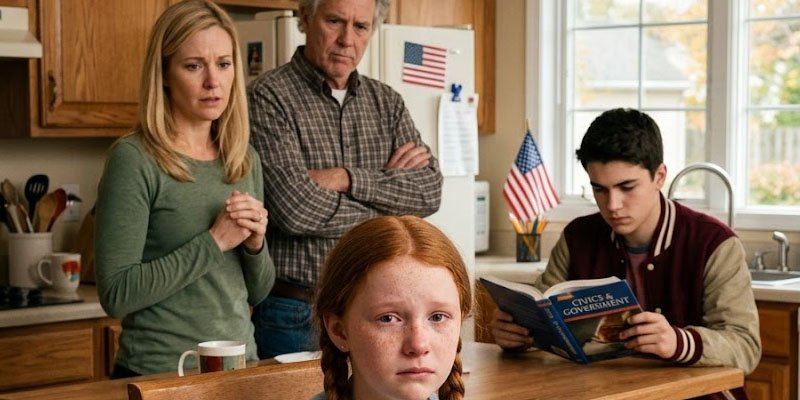
I can still remember every detail of the kitchen that afternoon. Thin rays of sunlight filtered through the white blinds, forming narrow stripes across the oak table. In the middle sat a bowl filled with shiny green apples, each one carefully polished.
My mother, Melissa Hart, sat across from me with her hands neatly folded beside a letter from the insurance company. My father, Victor, stood behind her with his arms crossed, his shoulder partially covering the window.
The way they looked, you would have thought we were about to discuss nothing more than a routine change to the household budget.
They had just finished speaking with the insurance company. The specialist’s recommended treatment would not be fully covered. I knew it was expensive, and I understood that unexpected medical costs frightened my parents.
But I also knew they had savings.
They had proudly talked about that account countless times, and every discussion always revolved around my older brother, Caleb.
“So what happens now?” I asked.
Mom lowered her eyes to the letter before looking back at me. She wore the same unsettling calm expression she always had whenever she decided someone else’s feelings were an inconvenience.
“We’re not going to go ahead with the treatment,” she said.
For a few moments, I couldn’t process what she was telling me.
I assumed they meant getting another opinion or trying a different hospital. Maybe they wanted a new estimate, planned to appeal the insurance decision, or were waiting to hear back from another doctor.
“What do you mean?”
She released a slow breath.
“Your father and I have discussed it. We believe that if this is truly meant to happen, another solution will come.”
I looked over at Dad.
He had always been the quieter of the two, not because he disagreed with Mom, but because staying silent let him avoid taking responsibility for choices he fully supported.
Finally, he uncrossed one arm and placed his hand on the back of her chair.
“We can’t spend all of our money on this,” he said. “Caleb starts college next year. There’s tuition, housing, textbooks, transportation—everything has already been planned. We’ve made commitments.”
The refrigerator buzzed softly behind me.
From upstairs, I could hear Caleb’s music faintly playing through the ceiling.
“But you have the money,” I said.
“It isn’t that simple,” Mom answered.
“It sounds pretty simple.”
Dad’s expression hardened. “We can’t sacrifice your brother’s future.”
That single sentence changed everything.
I stared at him, waiting for him to realize what he had just admitted.
He never took it back.
Mom didn’t react at all.
The insurance letter stayed perfectly straight along the edge of the table, as if keeping it neatly aligned could somehow make their decision seem reasonable.
“So my treatment is sacrificing his future?”
“That’s not what your father meant,” Mom replied.
“It’s exactly what he meant.”
“Elena, don’t turn this into an accusation.”
I looked back and forth between them.
Neither seemed uncertain.
Neither acted as though they needed more facts.
Both of them looked calm, almost as though they had rehearsed this conversation beforehand.
“You’re choosing his education instead of me.”
Mom frowned. “Don’t put it that way.”
“Then how am I supposed to say it?”
“This isn’t about choosing one child over another. We’re making the most responsible decision possible with the resources we have.”
I pointed toward the insurance letter. “The doctor said that treatment is what I need.”
“And doctors always recommend the most aggressive treatments,” she replied. “They’re expected to. That doesn’t mean every family can ruin itself financially by following every recommendation.”
My fingers felt icy as they gripped the edge of the table.
When Caleb’s music became louder upstairs, Dad glanced toward the staircase.
“Your brother has worked very hard for this opportunity.”
“So have I.”
Neither of them responded.
Caleb had always been the center of attention in our family.
He was two years older than me—smart, self-assured, and completely accustomed to being the focus. Whenever he struggled in school, my parents hired a tutor. Whenever I brought home excellent grades, they treated them as nothing unusual.
When he wanted a new laptop, they spent days comparing different options. When my laptop would only charge if I held the cable at a certain angle, Dad simply told me I should be grateful it still worked.
I noticed every difference.
I just never imagined their favoritism would reach this point.
Before that afternoon, it had revealed itself through countless smaller hurts: brand-new shoes for Caleb while mine were repaired, a full birthday celebration for him while I received only a text message, driving lessons for him and endless promises of “later” for me.
I got through those moments by becoming quieter.
I studied harder.
I asked for less.
I kept telling myself that if a real crisis ever came, the difference between my brother and me would finally disappear.
Instead, the crisis made that difference impossible to ignore.
Mom placed the insurance letter inside a manila folder.
“We’re not going to spend the entire evening arguing about this,” she said. “You’re upset, and that’s understandable. You need some time to calm down.”
I pushed my chair away from the table.
Its wooden legs scraped loudly across the floor.
“Elena,” she said in a warning tone.
I stood up and looked straight at Dad. “Are you really going through with this?”
For a brief moment, he held my gaze.
Then he looked away toward the folder in Mom’s hands.
“We’re doing what we believe is best for the family.”
The family.
That was the first time I truly realized my parents could say those words without including me.
I walked upstairs.
Caleb’s bedroom door was closed, with a thin line of blue light glowing beneath it. As I passed through the hallway, I looked at the framed photos on the wall: Caleb proudly holding a science fair ribbon, Caleb wearing his baseball uniform, Caleb smiling beside our parents at his middle school graduation.
I appeared in only two older family photos near the bottom of the staircase.
Both had been taken before I understood how easily I could become invisible.
I stepped into my bedroom and quietly shut the door.
I didn’t slam it.
I didn’t shout.
I refused to give them anything they could later dismiss as an emotional outburst.
Then I sat down on the edge of my bed and waited.
No one came after me.
For the next hour, I listened as life in the house carried on as though nothing had happened.
Cabinet doors opened downstairs.
Water flowed from the kitchen sink.
The television turned on in the living room, followed by my father’s familiar cough and the canned laughter from a sitcom.
My mother began making dinner.
That was the part I never forgot.
She had just told her sick daughter that the recommended treatment would not happen, and then she went straight into preparing dinner as though the hardest responsibility of the day was already behind her.
The sunlight in my room slowly faded from warm gold to dull gray.
I stayed seated on the bed, still wearing my shoes, with my hands resting quietly in my lap.
I expected fear to overwhelm me.
Instead, something colder settled in first.
Clarity.
If I wanted to survive, I couldn’t rely on my parents suddenly changing their decision.
I opened the old laptop sitting on my desk.
Its hinge was loose, and the screen flickered twice before finally coming to life. I searched every question that came to mind.
Can a minor receive medical treatment without parental consent?
What legally qualifies as medical neglect?
Can another relative seek emergency guardianship?
How long does it take to become emancipated?
Would foster care provide necessary medical treatment?
The answers were complicated, filled with legal terms, waiting periods, court procedures, paperwork, and repeated reminders that every state had different laws.
Every possible solution seemed to require either time, an adult willing to help, or both.
I found the phone number of a youth shelter and wrote it on the back of an old homework assignment. The shelter was nearly two hours away and had only a small number of available beds.
A legal aid website explained that emancipation generally required proof of employment along with independent housing.
I had neither.
Emergency court intervention might have been possible, but someone would have needed to report my situation and help gather the necessary evidence.
For several desperate minutes, I searched to find out whether children placed into state custody were guaranteed access to necessary medical care.
I wasn’t planning to do anything reckless.
I simply wanted to know how far I might have to go before my health was in the hands of someone other than my parents.
The fact that I was even asking those questions frightened me.
But staying in that house frightened me even more.
When dinner was ready, nobody called me downstairs.
The smell of roasted chicken drifted up the stairs. I heard Caleb come down, heard his chair scrape against the floor, and heard him ask if there was any bread left. Their voices blended together into the familiar sounds of a normal family dinner.
I remained alone in my bedroom with the medical folder lying open beside me.
Near the bottom of the treatment estimate, I found the specialist’s phone number. I saved it in my phone and took pictures of every document in case my parents decided to remove the originals.
That was the first decision I had ever made entirely for myself.
The second was leaving.
The thought didn’t arrive in a wave of panic or emotion. It came quietly, one practical step after another.
I pulled an old, faded backpack from my closet and packed two shirts, a pair of jeans, underwear, socks, my phone charger, a toothbrush, my school ID, and every medical document. I also packed a sweatshirt because the evenings had started getting colder.
At the back of my closet sat a glass jar where I kept birthday money and cash I had earned by helping classmates write essays.
I emptied everything onto the carpet.
Seventy-three dollars.
I counted it twice, folded the bills carefully, and slipped them into the inside pocket of my backpack.
Then I waited.
Not long after midnight, the house finally grew quiet.
The pipes clicked inside the walls. The floorboards creaked as Dad walked down the hallway after using the bathroom. Mom mumbled something behind their closed bedroom door before everything fell silent again.
Eventually, Caleb’s music stopped as well.
I picked up my backpack and slipped the straps over my shoulders.
My room felt smaller than it had earlier that morning. Library books were stacked beside my bed. A chipped ceramic mug filled with pens sat on my desk. Hanging above it was a second-place ribbon from a writing competition.
When I had brought it home, Mom simply smiled and said, “That’s nice, sweetie,” before asking me to set the table.
For years, I believed that one day I would accomplish something important enough to make them look at me the same way they looked at Caleb.
Now I finally understood that my accomplishments had never been the issue.
I reached for the bedroom door and opened it.
The hallway was dimly lit, with only a small night-light glowing near the staircase. The framed family photographs seemed to follow me as I walked past them.
When I reached the front door, I paused with my hand resting on the lock.
For a moment, I thought about leaving a note.
I imagined writing, You chose him.
I imagined explaining where I was going, even though I had no idea myself.
I imagined pleading with them to change their minds.
Then I remembered the calm expression on my mother’s face and my father saying, “We cannot throw away your brother’s future.”
A note would only give them another chance to justify what they had done.
I unlocked the door, stepped outside onto the porch, and closed it behind me as quietly as possible.
The neighborhood street was deserted.
Sprinklers clicked across a lawn a couple of houses away. A flag hanging from a nearby porch swayed gently in the cool night air. Far off, I could hear the soft hiss of tires moving along the main road.
At first, I walked quickly, afraid that a light might suddenly come on behind me.
It never did.
After about five blocks, my legs started to shake.
I hadn’t eaten anything since lunchtime, and with every step, my backpack seemed heavier. Near a twenty-four-hour grocery store, I found a metal bench beneath a streetlamp.
The grocery store’s glowing red sign cast a faint light over the edge of the parking lot. Employees pushed long rows of shopping carts toward the entrance while a delivery truck idled beside the loading dock.
No one questioned why a teenage girl was sitting there alone after midnight.
I pulled my sweatshirt tighter around myself and watched the automatic doors slide open and shut.
For the first time, I allowed myself to think honestly about what my parents had done.
They hadn’t misunderstood the doctor’s diagnosis.
They had spoken with the insurance company, reviewed the treatment estimate, discussed their savings, and made a deliberate decision.
Their calm attitude hadn’t come from uncertainty.
It came from complete confidence.
They believed Caleb’s future deserved protection.
Mine could simply be left to chance.
I remembered my mother reading to me when I was little. I could still picture us wrapped beneath a yellow blanket while she traced each line of the story with her finger.
Those memories felt like they belonged to someone else’s childhood.
By the time Caleb entered middle school, almost all of my parents’ attention revolved around him—his grades, activities, ambitions, and college plans.
Dad taught Caleb how to drive in the high school parking lot while I stayed home washing dishes.
Mom spent entire weekends helping him prepare science projects. When I asked her to read a story I had written, she told me she would get to it later.
The pages sat untouched on the kitchen counter for three weeks before I finally threw them away.
Even then, I believed there was a line my parents would never cross.
Sitting beneath that humming streetlamp with seventy-three dollars and a backpack, I finally realized no such line had ever existed.
There was only the amount of sacrifice they believed I was worth.
I stayed on the bench until the first light of morning appeared.
The darkness above the grocery store gradually faded into gray, and soon a thin band of gold appeared beyond the shopping center.
Commuters crossed the parking lot carrying paper coffee cups, gym bags, and tired expressions. A woman walked a golden retriever past me without ever looking in my direction. Two men wearing work boots loaded cases of bottled water into a pickup truck.
Every one of them could see me.
Not one of them truly noticed me.
That should have surprised me.
It didn’t.
I had spent years learning how to become invisible while standing right in front of people.
I knew how to speak quietly enough not to interrupt anyone. I knew how to accept the smaller share. I knew to stop asking after hearing “no” the first time.
My parents weren’t loud people, nor were they openly cruel.
They didn’t have to be.
Their neglect always came wrapped in organization, politeness, and explanations that sounded perfectly reasonable—until someone compared everything Caleb received with everything I never did.
Whenever Caleb caught the flu, the entire household revolved around him.
Mom checked his temperature every hour. Dad drove across town just to buy his favorite soup.
Whenever I got sick, someone left a box of tea on the kitchen counter with instructions to rest.
When Caleb won a science fair, my parents decorated the backyard with balloons and invited the neighbors to celebrate.
When I earned second place in a statewide writing competition, Mom glanced at my certificate and simply said, “That’s nice. Can you help make dinner?”
Those differences happened so often that they eventually blended into the background of daily life.
Caleb received brand-name shoes every semester.
I wore the same pair until the heel split open and rain soaked through my sock.
He got a brand-new laptop when he turned thirteen.
I inherited an old one that sounded like an engine and randomly shut itself off.
He received professional driving lessons.
I was told we would figure something out later.
Later never came.
In seventh grade, I earned straight A’s and proudly brought my report card to Dad while he was sitting in the den.
I expected him to be proud of me.
He looked over the report card before handing it back.
“That’s what we expect from you,” he said. “Caleb has to work harder, so his improvement means more.”
After that day, I stopped showing him my grades.
Even birthdays reflected exactly where I stood in the family.
Caleb’s birthday always included restaurant dinners, presents, and a cake covered with blue icing.
On my fifteenth birthday, Mom completely forgot until late that afternoon. While she was at work, she sent me a text:
Sorry, busy day. Happy birthday.
I bought myself a cupcake from the school cafeteria and ate it alone while sitting at the bus stop.
None of those moments had ever been enough to make me leave.
I always found a way to justify them.
Caleb needed more support.
My parents were busy.
Money was tight.
I was independent.
They trusted me.
I became incredibly good at turning disappointment into proof that I was simply more mature.
Everything changed after that conversation in the kitchen.
This wasn’t about a forgotten birthday or worn-out shoes.
My health was on the line, and the people responsible for protecting me had decided that my brother’s future mattered more.
I took out my phone and thought about calling the school counselor.
Ms. Grant had once told our class that her office door was always open. I truly believed she cared.
But I also knew she was legally required to report situations like this.
One phone call could lead to child protective services, police interviews, temporary placement somewhere else, and possibly being sent back home while adults investigated everything.
There was a genuine chance I would get help.
There was also a very real chance I would be returned before anything actually changed.
I scrolled through my contacts until I reached Ruth.
Aunt Ruth was my mother’s older sister.
She lived about forty minutes away in an aging apartment building on the west side of town. We hardly ever visited because my parents always came up with excuses not to invite her.
They described her as difficult.
They complained that she judged everyone, spent too much money feeding stray animals, ordered takeout too often, and lived in what they called a shoebox.
Dad frequently pointed out that she only worked part-time tutoring struggling students. Mom used Ruth’s unmarried life as proof that she had never figured out how to build a stable life.
But Ruth had always made me feel like my thoughts mattered.
At family gatherings, she listened to my answers instead of turning to Caleb before I finished speaking.
She remembered the names of books I mentioned.
After I once told her I wanted to become a writer, she mailed me a used collection of short stories.
Inside the front cover, she had written, Your voice belongs on the page.
I kept that book hidden inside my desk because Mom always rolled her eyes whenever Ruth encouraged me.
The strongest memory I had of Ruth came from when I was ten years old.
Mom had put a phone call on speaker while folding laundry. She and Ruth were arguing.
“We’re doing just fine,” Mom said. “You don’t need to lecture us about parenting.”
“I’m not lecturing you,” Ruth answered. “I’m asking why Elena looks like she hasn’t been hugged in weeks.”
Mom immediately took the call off speaker.
I stood quietly in the hallway holding a stack of towels, and something inside me relaxed.
Ruth had seen something I had never been able to put into words.
Now her name glowed on my phone screen.
My thumb hovered over the call button.
I had no idea what I expected her to do.
Maybe she would let me sleep on her couch for one night.
Maybe she could help me reach a social worker or find a legal aid office.
I didn’t believe she could afford to pay for my treatment. My parents had reminded me too many times that Ruth struggled just to support herself.
But I trusted her.
At that moment, trust mattered more than money ever could.
I pressed the call button.
The phone rang once.
Then a second time.
“Hello?” Ruth answered, her voice still heavy with sleep.
I opened my mouth, but nothing came out.
For the first time since I had walked away from home, tears burned behind my eyes.
“Ruth,” I finally whispered. “It’s Elena.”
She didn’t ask why I was calling before sunrise.
She didn’t sound irritated or confused.
“Where are you?”
I looked around at the grocery store sign, the shopping cart return, and the bench where I was sitting.
Then I gave her the address.
“Are you by yourself?”
“Yes.”
There was a brief silence.
I heard movement on her end of the call, followed by a drawer opening and the sound of keys rattling.
“Stay exactly where you are,” she said. “I’m on my way.”
Then she hung up.
About ten minutes later, an old red sedan sped into the parking lot, cut across two empty rows of spaces, and stopped at an angle beside the curb. One of the rear windows had been covered with clear tape, and the front passenger window was still cracked open a few inches.
Ruth climbed out before the engine had completely stopped.
She was forty-eight years old, with auburn hair twisted into a messy bun and a gray cardigan pulled over her pajama pants. Her eyes moved carefully over me from head to toe, checking for injuries and making sure I was really standing there.
I got to my feet, but my legs had gone numb.
She hurried around the front of the car and opened her arms.
I stepped into them.
For a long moment, neither of us spoke. She held me tightly, one hand resting against the back of my head. I hadn’t realized how desperately I needed a hug until my face pressed against the soft fabric of her cardigan.
Ruth didn’t ask me to explain everything right there in the parking lot.
She simply said, “Let’s get you somewhere warm.”
The drive to her apartment took less than forty minutes, but it felt like we had left ordinary life behind. She turned the heater toward me and kept both hands steady on the steering wheel. The inside of the car smelled faintly of peppermint gum and the paper grocery bags stacked behind the passenger seat.
I watched through the window as the familiar suburban neighborhoods slowly gave way to older brick buildings, small corner stores, and narrow streets lined with maple trees.
Ruth didn’t try to fill the silence with questions.
She seemed to know that I needed to feel safe before I could tell her what had happened.
Her apartment was on the second floor of a three-story building with chipped white trim and a front door that always stuck when the weather was damp. The stairs creaked beneath our feet as we climbed.
Inside, the apartment was small but welcoming.
Books filled two tall shelves and continued in neat stacks beneath the windows. A yellow lamp gave off a gentle glow beside a worn green couch. The air smelled of cinnamon, coffee, and freshly washed laundry.
A gray cat lifted its head from a chair, looked at me for a moment, then settled back down to sleep.
“I can sleep on the floor,” I said. “Just for tonight.”
Ruth slipped the backpack from my shoulder and set it beside the couch.
“You’re sleeping in the bed.”
“I don’t want to inconvenience you.”
“You’re not inconveniencing me.”
There was no room to argue with the certainty in her voice.
She handed me a pair of soft pajama pants, a clean T-shirt, and a glass of water. Then she spread a quilt across the bed in the apartment’s only bedroom.
“I’ll be right outside,” she said. “You don’t have to explain anything tonight.”
The quilt carried the familiar scent of her fabric softener.
I curled up beneath it and felt the warmth gradually relax every muscle in my body. My phone rested dark and silent on the bedside table.
My parents never called.
For the first time since I had received my diagnosis, I slept through the entire night without waking every hour.
The next morning, I woke to the sound of eggs cracking in the kitchen.
Sunlight filtered through the thin curtains and stretched across the stacks of books lining the walls. Ruth stood at the stove wearing jeans and a navy-blue sweater, spooning scrambled eggs onto two plates.
At home, breakfast usually meant grabbing a granola bar near the front door while Mom reminded me not to leave crumbs behind.
Without asking whether I was hungry, Ruth placed a full plate in front of me.
I hadn’t realized how starving I was until I began eating.
She waited until I had finished about half my breakfast.
“Are you ready to tell me what happened?”
My fork stopped in midair.
I hadn’t planned how to explain it. Even in my own mind, the truth still felt impossible to believe.
I set my fork down and started with the specialist appointment. Then I told her about the phone call with the insurance company, the conversation around the kitchen table, the college savings account, and the exact words my parents had spoken.
“They said they couldn’t afford both,” I said. “Dad told me they couldn’t throw away Caleb’s future.”
Ruth’s face remained calm, but her fingers tightened around her coffee mug. Her shoulders became completely still.
I went on to explain everything I had searched for that night—the youth shelter, emancipation, emergency guardianship, and my fear that any official investigation might send me back home before I could receive treatment.
Then I showed her the photos of my medical documents stored on my phone.
When I finished speaking, the apartment became silent except for the steady ticking of the clock hanging above the stove.
Ruth gently set her coffee mug on the table.
“You’re not going back there.”
It wasn’t a question.
I looked around the apartment—the tiny bedroom, the narrow kitchen, and the couch where she had slept the previous night.
“But there’s hardly any room,” I said. “And the treatment costs—”
She lifted one hand, stopping me before I could continue.
“Don’t worry about what I have or don’t have. Your only job is staying alive. We’ll figure everything else out.”
Something inside me finally gave way because of the certainty in her voice.
She didn’t tell me she would think about helping.
She didn’t suggest talking to my parents first.
She didn’t ask whether I had misunderstood what they meant.
She believed me immediately.
That very afternoon, Ruth started calling everyone she could.
She contacted the specialist’s office, two different medical clinics, a hospital financial counselor, a legal aid organization, and a family law attorney recommended by one of her tutoring clients.
Each time, she explained the situation clearly and directly.
“She’s fifteen years old. Her parents have refused to pay for the treatment her doctor recommended. She’s staying with me now. Tell me what paperwork you need.”
When one clinic quoted a cost that made my stomach sink, Ruth didn’t show any visible reaction. She wrote the amount on a yellow legal pad, thanked the person politely, and asked what payment plans were available.
She organized separate columns for treatment, medication, transportation, legal fees, and everyday living expenses.
Then she carried a metal file box out from the bedroom closet.
Inside were property deeds, tax records, retirement statements, savings bonds, and other documents I couldn’t fully understand.
My parents had always described Ruth as someone who barely managed to support herself.
Those papers revealed an entirely different reality.
She wasn’t wealthy, but she had always handled her finances wisely. She rented the apartment where she lived, yet years earlier she had purchased a modest condominium across town and rented it to a retired teacher.
It had been paid off completely.
Ruth sat at the kitchen table with a calculator and began making lists.
“You don’t have to do this,” I said.
She kept writing.
“This isn’t your responsibility.”
That made her look up.
“You’re my family.”
“Mom and Dad are your family too.”
“No,” she replied, her voice quiet but unwavering. “They’re adults who made a choice. You’re a child who needs help. Those aren’t equal responsibilities.”
I lowered my eyes to the paperwork spread across the table.
“If you spend all of this on me, you could lose everything.”
Ruth closed the calculator.
“Things can be replaced,” she said. “You can’t.”
By the end of that week, she had put the condominium up for sale.
She never gave a speech about what she was sacrificing or expected me to thank her endlessly. She never explained what that property meant to her or how many years she had spent paying for it.
She simply said selling it would allow my treatment to begin sooner.
The property sold quickly after a buyer made a cash offer.
Ruth combined the money from the sale with her savings, arranged a payment plan for the remaining expenses, and completed temporary guardianship paperwork with help from the attorney.
My parents responded to the legal notice with a short email.
They didn’t object to my staying with Ruth.
They didn’t ask to see me.
They simply wrote that perhaps spending time apart would help everyone think more clearly.
Ruth read the email once, printed a copy, and placed it inside the metal file box.
Then she drove me to my first treatment appointment.
Treatment didn’t feel brave or dramatic.
There were no inspiring speeches, miraculous recoveries, or clear moment when sickness ended and healing began.
Instead, there were early morning drives beneath gray skies, plastic hospital wristbands, endless hours beneath fluorescent lights, and days when every bite of food tasted wrong.
There were evenings when my legs trembled after walking across the apartment and mornings when getting dressed felt as exhausting as taking an important exam.
Ruth never acted as though my fear was a burden.
She kept a calendar on the refrigerator, writing every appointment in blue ink. Before every visit, she packed crackers, bottled water, extra socks, and a paperback novel into the same canvas tote bag.
Whenever I didn’t feel like talking, she simply sat beside me without trying to fill the silence.
Whenever I did want to talk, she listened without interrupting or pretending my experience was more hopeful than it truly was.
At night, after she thought I had fallen asleep, she sat at the kitchen table paying bills.
More than once, I saw her resting one hand against her forehead while staring at a calculator surrounded by unopened envelopes.
By morning, every paper would be neatly stacked away and breakfast would already be waiting.
At that time, I had nothing I could give her in return.
So I made myself a private promise.
If I recovered, Ruth would never again have to worry about paying rent, covering medical bills, or wondering whether her old car would start.
I had no idea how I would keep that promise.
I only knew that I would.
The weeks slowly turned into months.
Little by little, my strength returned.
First, I was able to stand long enough to wash the dishes.
Then I could walk around the block without needing to sit down.
Eventually, I could keep food down and sleep through most nights.
The first time I carried a bag of groceries up the apartment stairs, Ruth pretended not to watch me. But I caught the small smile on her face as she turned toward the door.
As I recovered, I had more time to think.
The anger I expected never came all at once.
Instead, something colder, quieter, and far more deliberate began to grow inside me.
My parents had reduced my life to a financial decision. They believed their choice would remain hidden inside the family, protected by silence and by the polished image they carefully showed the outside world.
Victor and Melissa Hart worked as education consultants.
Their business specialized in helping wealthy families prepare their children for admission to highly selective universities. Their website was filled with promises about integrity, compassion, unlocking potential, and always putting students first.
They spoke at private schools, organized university admissions workshops, and built their reputation on the image of being ethical parents deeply committed to the success of young people.
That carefully crafted reputation was the foundation of their business.
And there was one individual whose opinion mattered more to them than anyone else’s.
Dr. Malcolm Avery had once served as an Ivy League dean before becoming the director of the National Private Admissions Consortium.
My parents spoke about him with the kind of admiration most people reserved for celebrities.
His endorsement badge was displayed prominently at the top of their company website. Simply having his name associated with them opened doors to school partnerships and wealthy clients.
When I was eleven years old, he came to our home for dinner.
Mom bought an expensive bottle of wine that no one was allowed to touch until he arrived. Dad rehearsed casual ways to mention the company’s success rates.
I wore an uncomfortable dress and was told not to speak unless someone asked me a question.
Caleb presented one of his science projects.
My parents laughed far too hard at Dr. Avery’s jokes and slipped company statistics into every pause in the conversation.
After he left, Dad stood in the kitchen with both hands resting on the counter.
“If Avery trusts us, we’re set,” he said. “That’s all we need.”
For years, they did everything possible to protect that relationship.
Once I had recovered enough to sit at Ruth’s small desk for more than an hour, I opened my laptop and began writing a new email.
I didn’t write with emotion.
I wrote the facts.
I introduced myself as Elena Hart, the daughter of Victor and Melissa Hart, and reminded Dr. Avery that we had once met during dinner at our house.
I explained that when I was fifteen, I received a serious medical diagnosis and that my parents had enough money to begin the recommended treatment.
I told him they chose to keep those funds reserved for my brother’s university education instead.
I explained that I had left home, that my aunt had taken responsibility for my care, and that she had sold her own property and spent her personal savings so I could receive the treatment I needed.
Then I explained why I believed he deserved to know.
My parents continued running a company built on the promise that they protected young people’s futures.
I believed he had a right to understand how they behaved when protecting a child required personal sacrifice within their own family.
I attached evidence.
I included the treatment estimate along with the insurance decision.
I attached the email in which my parents agreed not to challenge Ruth’s temporary guardianship.
I also included a message Mom had sent to Caleb after I left home, telling him not to worry because I would “come back when she is tired of acting out.”
Several weeks later, Caleb had forwarded that message to me with only one sentence:
I’m sorry. I didn’t know.
I also attached a screenshot of a text Dad had sent Mom:
We cannot throw it all away on a gamble.
At the end of the email, I added one final sentence.
I thought you deserved to know what kind of people are representing your values.
My finger hovered over the send button for a long time.
I wasn’t afraid of being caught.
I was deciding whether I wanted to become the person who exposed my own parents.
Ruth had never encouraged revenge. Her only concern had been helping me recover. Part of me worried that sending the email would tie my future back to them again.
Then I looked over at the metal file box beside the desk.
Inside were the documents from the sale of Ruth’s condominium, the guardianship paperwork, and every receipt connected to my treatment.
She had sacrificed years of financial security because my parents refused to touch a college fund.
Staying silent would only protect them.
I clicked Send.
The email disappeared from the screen.
I closed my laptop, walked into the kitchen, and poured myself a glass of water.
My hands never shook.
I didn’t tell Ruth what I had done that day.
It wasn’t because I thought she would stop me.
I simply wanted that decision to belong completely to me.
She had already carried every burden she possibly could.
This one belonged to me alone.
Dr. Avery never replied.
For several weeks, nothing seemed different.
Then one day I visited my parents’ business website.
The consortium endorsement badge was gone.
It had once been displayed prominently beneath the company name.
Now, that space had been replaced by an ordinary photograph of a university campus.
I searched the National Private Admissions Consortium’s official directory.
Hart Educational Strategies was no longer listed.
There was no public announcement.
No accusation.
Just a quiet, deliberate removal.
At first, the effects were subtle.
One private school removed my parents from an upcoming speaking panel.
Several glowing testimonials disappeared from their website.
A longtime client canceled a workshop and requested a refund.
Parents began asking why the consortium no longer endorsed the company.
My parents tried to reinvent the business.
They replaced the photographs, rewrote the mission statement, and started offering discounted services.
Nothing changed.
Their business depended on trust, and once trust is lost, it rarely disappears with dramatic headlines—it simply fades away.
The phone stopped ringing as often.
Emails went unanswered.
Schools chose not to renew their partnerships.
Families who had once waited months for appointments began hiring different consultants instead.
Within six months, my parents shut down their office and started running the business from their house.
Not long after that, they lost the house as well.
I learned about the foreclosure through a local online discussion forum.
Someone was asking for recommendations for an affordable real estate agent because a married couple who owned an education consulting business had fallen behind on their mortgage.
The address listed in the notice was my childhood home.
Victor and Melissa relocated to a rental house on the other side of town.
From the bits of information that eventually reached me, I learned they stayed together more out of necessity than affection.
Their company was gone.
Most of their savings had disappeared.
Former professional contacts no longer returned their calls.
I never reached out to them.
I didn’t celebrate publicly or post the evidence online.
I had simply shared the truth with the person whose endorsement had helped build and protect their reputation.
Whatever he chose to do with that information was his decision.
My responsibility was to build a future of my own.
By the time I was nineteen, the tutoring work I had started during my recovery had grown into a full-time business.
In the beginning, I worked with students on English assignments and scholarship essays from Ruth’s kitchen table.
I understood teenagers who didn’t come from polished families, expensive consultants, or life stories that fit perfectly into a college admissions brochure.
I knew how to help them find words for experiences they had carried quietly for years.
Parents began recommending me to other families.
A school counselor invited me to lead a writing workshop.
The waiting list eventually became so long that I rented a small office above a neighborhood bookstore and hired two part-time tutors.
Ruth became my very first full-time employee.
She handled scheduling, invoices, and the hundreds of emails I could no longer manage by myself.
She was more capable than anyone else I could have hired.
She remembered every student’s deadline and every parent’s concern.
I paid her more than she had ever earned before, although she spent nearly an entire afternoon arguing with me before finally agreeing to accept the salary.
“You gave up everything for me,” I told her.
“I only did what family is supposed to do.”
“Then let me do what family is supposed to do too.”
On her birthday, I drove her to a small house beside a lake.
It had light-colored siding, a cheerful kitchen, and a room overlooking the water with built-in bookshelves.
Ruth admired the front porch before asking why the real estate agent had left the front door unlocked.
I placed the house key in her hand.
For the first time, she was completely speechless.
She looked down at the key, then back at me, and tears filled her eyes.
I started crying too.
We stood together in the empty living room, holding each other as the afternoon sunlight slowly drifted across the wooden floor.
A month later, I arranged a trip to Greece for her.
For years, she had kept a photograph of Santorini above her tutoring desk, though she never believed she would actually see it in person.
While she was there, she posted a picture of herself smiling beside the sea with a glass of wine in her hand.
In the caption, she thanked me for giving her a life she had never allowed herself to dream about.
Eventually, that post reached my parents.
I never found out who showed it to them.
Maybe an old client shared it.
Maybe they searched for my name online.
Within days, messages started arriving.
We’re so happy to see you doing well.
We would love the chance to reconnect.
Families make mistakes. Please let us explain.
I never replied.
The emails turned into text messages, followed by phone calls from unfamiliar numbers.
I changed my phone number and instructed my staff not to forward any communication from them.
For a while, everything became quiet again.
Then, when I was twenty-one, I spoke at a regional conference for student mentors.
The conference took place in a hotel ballroom just outside Columbus, Ohio.
For forty minutes, I spoke about honest personal writing and the importance of giving young people permission to tell the truth about imperfect families.
Afterward, I collected my notes, thanked the organizers, and walked through the hotel lobby toward the parking lot.
My parents were standing outside waiting for me.
At first, I almost didn’t recognize them.
Dad looked smaller inside a suit that no longer fit properly. The leather on his shoes had cracked near the toes.
Gray streaks ran through Mom’s hair—something she never would have allowed before. Her makeup had been applied unevenly, and she clutched her purse tightly with both hands.
“Elena,” she said.
I stopped several feet away.
“Please,” she continued. “Just give us one minute.”
Dad took a step toward me before stopping himself.
“We know we made mistakes,” he said.
The hotel doors opened behind me, letting out a burst of conversation.
A small American flag near the entrance fluttered gently in the breeze.
I waited until the doors closed again.
“You made a choice,” I said.
Mom’s face tightened. “We were frightened.”
“So was I.”
“We didn’t understand how serious your condition really was.”
“You had the specialist’s report sitting on the kitchen table.”
Dad looked away toward the parking lot.
“We were under a lot of pressure. Caleb’s education had been planned for years. We believed another solution would appear.”
“You decided someone else would find that solution.”
Mom cautiously took another small step toward me.
“We saw Ruth’s post. We never realized how far you’d come or how successful you’d become. You’ve become such a generous person.”
I studied her expression.
“Generous… like paying for someone’s medical treatment when they need it?”
She flinched slightly.
Dad let out a frustrated sigh.
“This conversation isn’t helping.”
“You waited outside my conference.”
“We’ve lost everything,” he said. “The business, the house, almost all of our savings. We’re barely getting by.”
Tears gathered in Mom’s eyes.
“We’re not asking for much. We just need a little help to get back on our feet.”
For a brief moment, it felt as though the four years separating the kitchen conversation from the entrance to that hotel had disappeared.
I saw the insurance letter resting beneath my mother’s hand.
I heard my father say that Caleb’s future could not be sacrificed.
“Does Caleb know you’re here?” I asked.
Neither of them answered.
“He doesn’t speak to you anymore, does he?”
Mom lowered her eyes.
During my treatment, Caleb had reached out to me.
He apologized without trying to justify our parents’ actions and admitted he had never known what they intended to do with the savings.
After learning the full truth, he took a year away from university, found a job, and later returned using scholarships and student loans.
Once he understood everything, he stopped defending our parents.
Dad spoke more quietly.
“This is something between you and us.”
“No,” I replied. “It was never just between us. Your decision affected Ruth. It affected Caleb. It affected every client who believed your speeches about protecting children.”
Mom pressed her lips together.
“We were wrong,” she whispered.
I believed she regretted everything their decision had eventually cost them.
I wasn’t sure whether she regretted making that decision before those consequences arrived.
Dad stepped a little closer.
“We’re your parents.”
Ruth’s words echoed in my mind:
Things can be replaced. You cannot.
“You told me you couldn’t afford to help me,” I said. “I can’t afford to rebuild the life your decision destroyed.”
Mom’s lower lip trembled.
Dad looked away.
I never raised my voice.
I didn’t remind them about every forgotten birthday or every unequal gift.
I didn’t describe the nights Ruth spent hunched over a calculator or mention the property she had sacrificed for me.
They already knew everything they needed to know.
I turned around and walked toward my car.
Neither of them tried to stop me.
That evening, Ruth and I sat together in the kitchen of her lakeside home.
She poured tea into two chipped mugs she had brought from the old apartment.
The windows were open, letting the warm summer breeze drift gently through the screens.
“How was the conference?” she asked.
“It went well,” I answered. “The students asked some really thoughtful questions.”
She looked at me for a moment, sensing there was something I hadn’t said, but she didn’t ask.
She had always known how to leave room for the truth without forcing it.
Then she picked up a travel magazine and started planning another vacation.
“Somewhere warm,” she said with a smile. “And definitely with a hammock.”
We gently clinked our mugs together.
I thought about the fifteen-year-old girl sitting alone on a bench outside a grocery store, believing she had no one and nothing except seventy-three dollars in a backpack.
She believed surviving would be the ending of her story.
In reality, it was only the beginning.
I did far more than survive the choice my parents made.
I built a life that their decision could never take away from me.
This story has been independently adapted and fictionalized for entertainment purposes. The characters, dialogue, locations, events, and identifying details have been changed, and it should not be interpreted as a factual account or news report.