PART 1
My name is Amelia. I was thirty-five when I came back to Portland after laying my husband to rest in a country thousands of miles away from home.
James had passed away unexpectedly while working in Singapore. He was just thirty-seven years old. I handled the hospitals, legal paperwork, and funeral arrangements alone because my parents said the cost of international flights was too high, while my brother, Troy, insisted he couldn’t take time off work.
After enduring more than thirty exhausting hours of travel, I switched my phone back on as the plane touched down.
My flight lands at five. Can someone come pick me up?
Troy answered first.
We’re busy. Just get an Uber.
A moment later, my mother replied.
Why didn’t you organize this sooner? You know Tuesdays are always hectic.
I stared at the screen, stunned. They spoke as if my husband’s death had simply been an inconvenience to their schedules.
I replied with only two words:
No problem.
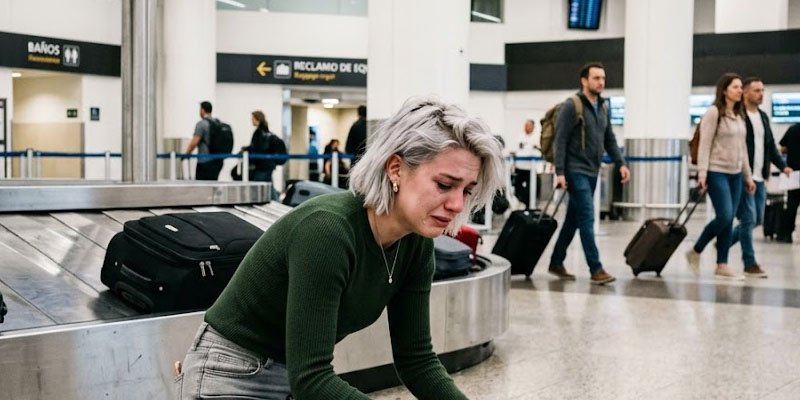
While collecting my luggage, one of my suitcases burst open, sending James’s clothes spilling across the baggage claim floor. I knelt down, gathering everything while struggling to hold back my tears.
An airport employee named Gloria immediately rushed over to help.
“Are you okay?” she asked softly.
“My husband died,” I whispered. “I just buried him.”
She didn’t try to fill the silence with meaningless sympathy. Instead, she helped me repack the suitcase, walked me to the rideshare pickup area, and gently squeezed my hand before saying goodbye.
In just five minutes, a complete stranger showed me more kindness than my own family had in weeks.
My driver, Paul, carried my bags all the way to my front porch. The instant I stepped inside, I realized something was terribly wrong.
The house was ice cold.
I had asked my mother to switch on the heat before I returned, but she had forgotten. The mailbox was overflowing, and spoiled food sat rotting inside the refrigerator.
Completely drained, I wrapped my coat tighter around myself and curled up in an armchair.
The following morning, I woke to the sound of strange bubbling.
Water was pouring through the kitchen ceiling, spreading rapidly across the floor. Because the heating system had never been turned on, the freezing temperatures had caused one of the pipes to burst.
I shut off the main water supply and called an emergency plumber, only to learn that the earliest available appointment was several days away.
Then I phoned Troy.
“The house is flooded,” I explained. “There’s no heat, and I can’t stay here. Can I use your guest room?”
He paused before answering.
“Tonight won’t work. Lisa has all her craft supplies spread out, and we’re hosting clients.”
Next, I called my parents.
My mother gave me an almost identical response.
“The bridge club is coming over tomorrow. Why don’t you stay at a hotel?”
I stood alone in my flooded kitchen—cold, hungry, and still grieving the husband I had buried only days before.
Desperate to get the heating system running again, I went down to the basement to inspect the electrical panel. The floor was soaked and slippery. As I reached toward the panel, I lost my balance and was struck by a powerful electrical shock that threw me backward.
When I came to, I was confused, freezing, and barely able to think. Somehow, I managed to crawl upstairs and collapse onto the sofa.
Then I heard the carbon monoxide detector.
Beep. Beep. Beep.
The furnace had malfunctioned, allowing dangerous carbon monoxide to fill the house.
My phone was lying only a few inches away, but I was too weak to reach it. My vision slowly began to blur.
Then the front door burst open.
“Fire department!”
My neighbor, Diane, had noticed water running from beneath my front door and heard the alarm sounding. She immediately called emergency services, and that decision saved my life.
PART 2
I regained consciousness in the hospital suffering from a concussion, hypothermia, carbon monoxide poisoning, and injuries caused by the electrical shock.
A nurse named Sarah stood beside my bed.
“You’re safe now,” she said gently. “Your neighbor got to you in time.”
She went on to explain that a local news reporter had been at the emergency department covering the winter storm. After speaking with both the paramedics and my neighbor, he learned that I had just returned from burying James—and that my own family had repeatedly refused to help me.
Sarah switched on the television.
The headline across the screen read:
WIDOW RETURNS TO DISASTER AFTER FAMILY REFUSES HELP
The report showed footage of my damaged home and displayed the text messages my relatives had sent.
We’re busy. Just get an Uber.
Why didn’t you organize this sooner?
The most painful chapter of my private life had suddenly become public.
“Your family is here,” Sarah said softly. “Would you like to see them?”
Before I had the chance to answer, Troy hurried into the room.
“We saw the news,” he said. “They’re making it look like we left you on your own.”
He never asked how I was doing.
My mother followed behind him, clearly more troubled by public opinion than by my health.
“People are criticizing us online,” she said. “Your father’s supervisor has already called, and family members keep asking questions.”
Troy immediately started discussing damage control.
“We’ll tell everyone it was all a misunderstanding,” he said. “Maybe we can say we were planning a surprise for you.”
They had not come to comfort me.
They had come to rewrite what had happened.
A hospital social worker, Ms. Patel, entered the room alongside my doctor.
Without hesitation, my mother declared that I would be staying with them after I was discharged.
“Families take care of each other,” she said, suddenly acting like the caring parent she had never been.
Nurse Sarah stepped closer to my bedside.
“Amelia has the right to make her own decision,” she said firmly.
Ms. Patel explained that the local community had rallied around me. A hotel had offered me a temporary suite, a restoration company had volunteered to repair my house, and a meal service had stepped forward to provide food.
My mother’s face immediately changed.
“You’re not staying with strangers,” she insisted. “You’re coming home so we can put this embarrassing situation behind us.”
I slowly looked around the room.
Troy was worried about how this would affect his clients.
My mother cared only about what people in her social circle would think.
My father stood there without saying a single word.
Then I looked at Sarah—a complete stranger who had remained by my side while I was scared and vulnerable.
“I’d like to hear more about the hotel,” I said.
My mother stared at me in disbelief.
“After everything we’ve done for you?”
At that moment, something inside me finally shifted—not in anger, but in understanding.
“What exactly have you done?” I asked quietly. “When James was dying, you were too busy to visit. When I buried him, you said the airfare cost too much. When I came home after traveling for thirty exhausting hours, you told me to get an Uber. And when my house flooded, your bridge club mattered more.”
Troy instantly became defensive.
“We have our own responsibilities, Amelia. We can’t drop everything every time you need us.”
“Picking me up after I buried my husband wasn’t asking you to sacrifice everything,” I replied. “Making sure my home had heat during a winter storm wasn’t asking for too much. It was the bare minimum.”
“We didn’t realize it was an emergency,” he argued.
“You never bothered to ask.”
Silence filled the room.
“You never asked about James’s funeral,” I continued. “You never asked how I was coping. You never even asked if I was safe.”
My father quietly suggested that my grief was affecting my judgment.
“I’ve never seen things more clearly,” I answered. “For thirty-five years, I accepted the smallest scraps of affection and convinced myself they were love. I don’t have the energy to keep making excuses for all of you.”
My mother tightened her grip on her purse.
“So you’re choosing strangers instead of your own family?”
“I’m choosing kindness over obligation,” I replied. “I’m choosing the people who were actually there.”
I turned toward Ms. Patel.
“I’ll accept the hotel.”
Troy shook his head.
“Don’t expect us to be here when you decide you need us again.”
“That’s exactly the point,” I whispered. “I’ve never been able to rely on you. And now I’m finally going to stop trying.”
My family walked out of the room.
As soon as the door closed behind them, it felt like I could breathe freely for the first time.
Sarah gently squeezed my hand.
“That took real courage,” she said.
“It feels like I’ve lost them,” I admitted.
“No,” she replied. “You finally let go of a burden you were never supposed to carry.”
PART 3
That evening, I settled into a warm hotel suite decorated with flowers from hospital staff.
The restoration company immediately began repairing my home. Volunteers arrived with meals, clothing, and other essentials.
Complete strangers were helping me rebuild my life while my own relatives stayed away.
Sitting beside the hotel window, I quietly spoke into the silence.
“I finally stood up for myself, James.”
During the next three months, my physical injuries gradually healed.
The emotional healing took much longer.
I joined a support group for people who had lost their partners. There, I realized grief was not a sign of weakness. It was simply love with nowhere left to go.
Once my home was restored, Diane started coming over every Sunday for coffee. She had not only saved my life but had also become the kind, dependable presence I had always wished my mother could be.
My biological family rarely reached out.
Mom mailed a generic greeting card. Troy called only once, mostly to complain that the news coverage was damaging his reputation. I remained polite but kept firm boundaries.
Six months after James passed away, I used part of his life-insurance money to create the James Henderson Memorial Scholarship. It provided emergency travel assistance for the families of students studying or working abroad.
I wanted to make sure no one else had to face an international emergency completely alone.
We held the scholarship ceremony in my garden.
The tomato plants James had loved were finally producing ripe fruit.
My parents and Troy sent their apologies for not attending.
Even so, the garden was filled with people.
Diane was there.
Sarah came from the hospital.
Gloria, the airport employee who had helped gather my belongings after my suitcase burst open, attended as well.
Even Paul, my rideshare driver, sent a thoughtful card.
As I presented the very first scholarship to a student preparing to travel to Japan, I looked around at everyone gathered and finally understood something that changed everything.
Family is not defined by shared blood.
Family is defined by action.
Family answers the phone when life falls apart.
Family helps gather your belongings after your suitcase spills open.
Family notices the water leaking beneath your front door.
A week later, I received a handwritten letter from my father.
He offered no excuses.
Instead, he admitted he had failed me. He wrote that James would have been proud of the woman I had become and asked if we might someday build a new relationship founded on honesty instead of old expectations.
I didn’t call him right away.
When I finally felt prepared, I agreed to meet him for lunch.
The conversation was awkward and cautious, but it was sincere.
Little by little, we started rebuilding our relationship with healthy boundaries in place.
My mother and Troy remained distant, and I accepted that I could not make them change.
One year after James’s death, I returned to the airport to catch a flight to Singapore.
I planned to visit his grave and tell him about the scholarship, my restored home, and the people who had become my chosen family.
Before boarding, I sent a message to our group chat.
Heading to the gate now.
The replies appeared almost instantly.
Safe travels.
We love you.
Message us when you land.
Smiling, I walked toward my gate.
One year earlier, I had arrived at that very airport exhausted, heartbroken, and pleading with my relatives for a ride.
Now I understood that my worth was never determined by the people who failed to love me the way I deserved.
Instead, I was defined by the courage I discovered within myself—and by the family I built from those who chose to remain.
The well had never truly been empty.
I had simply been searching for love in the wrong place.