Part 1
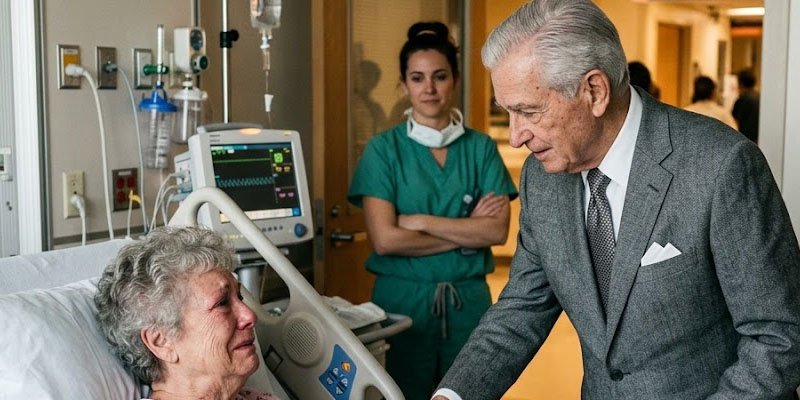
The fluorescent lights above my hospital bed hummed quietly as I opened my eyes.
For a few seconds, I had no idea where I was.
Then the pain in my chest brought the memories rushing back.
The procedure.
The blocked artery.
The operating room.
My cardiologist had described it as routine, but at sixty-four, anything involving your heart feels anything but routine.
I turned my head toward the clock.
3:27 p.m.
Only three hours earlier, I had been wheeled into surgery after asking my three children to be there when I woke up.
David, my thirty-eight-year-old son, had promised to take the day off from his accounting firm.
Sarah, thirty-five, said she would bring flowers.
Michael, my youngest at thirty-two, complained about having to rearrange his sales calls but eventually agreed to come.
Yet when I opened my eyes, the room was completely empty.
No David.
No Sarah.
No Michael.
Only the steady rhythm of the machines.
A few minutes later, a nurse entered. She had gentle eyes and strawberry-blond hair tied back in a ponytail.
“Mrs. Davis? How are you feeling?”
“My children,” I whispered. “Where are they?”
Her expression shifted.
“They were here earlier.”
“And now?”
She paused.
That hesitation frightened me more than whatever answer she was about to give.
Finally, she said:
“They left about an hour ago.”
I stared at her.
“Why?”
She looked uncomfortable.
“Someone at the front desk heard them mention that the parking fees were getting too expensive. They said they’d come back and check on you later.”
For a moment, I wondered if I had heard her correctly.
“Parking?”
The nurse tried to make it sound less terrible.
“I’m sure they just needed something to eat or some fresh air. They’ll probably be back soon.”
But we both knew she was only trying to make excuses.
My three children had abandoned their mother after heart surgery because they didn’t want to pay for parking.
I began to cry.
Not quietly.
Not gracefully.
I cried as though something inside me had finally broken after years of carrying too much.
The nurse handed me some tissues.
“Is there anyone else I can call?”
I shook my head.
Then footsteps stopped outside my room.
A tall man wearing a dark, perfectly tailored suit appeared in the doorway.
He seemed to be in his mid-fifties, with salt-and-pepper hair, wire-rimmed glasses, and a leather briefcase in one hand.
“Is this Adrienne Davis?”
The nurse looked uncertain.
“Yes, but visiting hours—”
The man stepped nearer.
“Mrs. Davis, my name is Malcolm Chen.”
I stared at him.
He swallowed.
“You probably don’t remember me.”
I waited.
Then he said something so unexpected that, for a moment, I forgot about my tears.
“You bought my lunch every day when I was in third grade.”
I blinked.
“What?”
He gave me a sad smile.
“You were sixteen. You worked as a teacher’s aide at Franklin Elementary.”
A faint memory began to surface.
Barely there.
Then Malcolm continued.
“You always made sure a little boy who never had lunch money had something to eat.”
The nurse interrupted.
“Sir, unless you’re family—”
Malcolm calmly turned toward her.
“I own this hospital.”
The nurse’s eyes widened.
Mine probably did too.
“You own this hospital?”
He nodded.
“May I sit?”
I gestured toward the chair.
Malcolm sat beside me and set his briefcase on the floor.
“I’ve been looking for you for years.”
I studied his face, trying to find the child I remembered inside the accomplished man sitting before me.
“My name back then was Malcolm Peterson,” he explained. “I was adopted by the Chen family when I was twelve.”
Then I remembered.
A thin little boy with dark hair and clothes that never seemed to fit.
A child who sat alone in the cafeteria and pretended he wasn’t hungry.
“Little Malcolm,” I whispered.
His eyes filled with tears.
“You remember.”
“You were always so quiet.”
“Because I was hungry.”
Suddenly, I remembered slipping him lunch tickets.
I used to tell him the cafeteria had extra food so he wouldn’t feel ashamed.
I remembered the change in his expression whenever he realized he would have something to eat that day.
Malcolm reached over and took my hand.
“You made sure I had lunch every day for two years.”
I shook my head.
“It wasn’t anything extraordinary.”
“It was to me.”
He gently squeezed my hand.
“You showed me that somebody cared whether I ate. Whether I mattered.”
I looked at him.
“You became a doctor.”
He smiled.
“Eventually.”
“And now you own a hospital.”
“Four, actually.”
I laughed through my tears.
Malcolm reached inside his briefcase and pulled out an old yellow lunch card.
Its edges were worn.
The paper had faded with time.
“I kept this.”
I touched it carefully.
“Why?”
“When I felt as though nobody cared about me, this reminded me that at least one person did.”
He told me that his life had changed completely after he was adopted.
He had a stable family.
An education.
Opportunities.
But he had never forgotten those lunches.
He became a pediatrician, later moved into hospital administration, and eventually created a healthcare network.
Every hospital he owned had programs designed to ensure that children receiving treatment never went hungry.
He had also financed meal programs in low-income schools.
“Because of you,” he said.
I shook my head.
“Because of one school lunch?”
“Because kindness changes people.”
For the first time since waking, the hospital room felt a little less cold.
Then Malcolm asked:
“Why are you alone?”
The pain returned immediately.
“My children left.”
His expression tightened.
“They said parking was too expensive.”
Malcolm became silent.
Then he said:
“Well, then I’m glad I found you today.”
He looked straight at me.
“Because years ago, I promised myself that if I ever found the woman who made sure a hungry boy wasn’t alone, I would make sure she wasn’t alone when she needed someone.”
Malcolm stayed with me through dinner.
He had food brought up for both of us and shared more about his life.
Then, gently, he began asking about mine.
He already knew more than I expected.
He knew I had raised three children following my divorce.
He knew I had worked several jobs.
Cleaning offices at night.
Substitute teaching during the day.
Working weekend shifts at a grocery store.
He knew my retirement income was modest.
And he knew I had continued financially supporting my children even after they were grown.
I had borrowed against my pension when David’s accounting practice struggled.
I had helped Sarah pay off her credit-card debt.
I had given Michael money toward a car.
Malcolm’s voice stayed gentle.
“Adrienne, when was the last time one of them visited you before today?”
I looked away.
“I don’t know.”
“Six months.”
My chest tightened.
“They’re busy.”
“I know you want to believe that.”
Then Malcolm opened his briefcase.
“But there are some things I think you need to know.”
He placed a manila folder on the bed.
“What is that?”
“Information I found while trying to locate you.”
His expression turned serious.
“Three weeks ago, David met with an elder-law attorney.”
I frowned.
“Why?”
“He asked about having an elderly parent declared mentally incompetent.”
The room seemed to tilt.
“No.”
Malcolm continued carefully.
“Sarah has been researching assisted-living facilities. Michael has been asking people how guardianship works.”
I shook my head.
“They wouldn’t do that.”
“I hoped I was wrong too.”
He opened the folder.
The first document was an email from the attorney David had contacted.
Apparently, David had asked how quickly an elderly parent could be declared incompetent if that parent was being “too generous” and making financial choices that could affect the family inheritance.
I read the paragraph twice.
Then a third time.
“He thinks my generosity means I’m losing my mind?”
Malcolm said nothing.
Instead, he handed me another document.
It contained screenshots of messages Sarah had sent to an old friend.
Sarah complained that I had donated five hundred dollars to charity while she was struggling with debt.
She complained that I behaved as though I would “live forever.”
She wrote that the money I was giving away should eventually belong to the family.
Then came another line.
David thinks we need to do something before Mom gives everything away.
My hands began to tremble.
The next document was my credit report.
David’s accounting firm had accessed it.
Beside my monthly animal-shelter donations, someone had written:
Unnecessary charitable spending. Could be redirected.
I whispered:
“He’s been monitoring my donations.”
Malcolm nodded.
“There’s something else.”
He pulled out his phone.
“A hospital security employee recorded this yesterday in the parking lot.”
I didn’t want to hear it.
But I did.
David’s voice came first.
“She’s fine. The procedure went well. There’s no reason to sit around paying twenty dollars for parking.”
Then Sarah.
“I still feel strange leaving her.”
Michael laughed.
“She’s always alone. She won’t notice.”
Then David said something that changed everything.
“The important thing is that we showed up. Later, when we need to make decisions about her care, we can show that we’ve been concerned.”
Sarah asked when he thought that would happen.
David replied:
“A couple of years. Maybe sooner. We just need to establish a pattern that she’s making irresponsible financial decisions.”
Michael asked:
“Like giving money to charities?”
“Exactly.”
Sarah reminded him that I wasn’t confused.
I was simply generous.
Then David said:
“Generous with our inheritance.”
I stopped listening for a moment.
Our inheritance.
Not my money.
Not my life.
Their inheritance.
Then the recording continued.
They discussed the value of my home.
My pension.
My savings.
They talked about portraying my generosity as early dementia so they could eventually control my finances.
When the recording ended, I felt numb.
“They left because of this?”
Malcolm hesitated.
“Not exactly.”
I looked at him.
“What could possibly be worse?”
“They had another appointment this afternoon.”
“With whom?”
“Another attorney.”
I stared at him.
Malcolm spoke softly.
“They didn’t leave because parking cost twenty dollars.”
My throat tightened.
“They left because they had a meeting about taking control of your affairs.”
While I had been recovering from heart surgery, my children had been discussing how to take away my independence.
I leaned back against my pillow.
For years, I had defended them.
They were busy.
They had families.
They had problems.
Suddenly, every excuse sounded absurd.
After a long silence, I asked:
“What happens now?”
Malcolm leaned closer.
“That depends entirely on what you want.”
He opened another folder.
“But I have some options I’d like you to consider.”
Part 2
Five years earlier, Malcolm had established a charity called the Adrienne Davis Foundation.
I stared at the letterhead.
“You named a foundation after me?”
“I hoped I would eventually find you and ask for your permission.”
He explained that the foundation funded school meal programs and supported older adults who had spent their lives helping others.
More than ten thousand children had already received meals through programs connected to it.
I could barely take in what I was hearing.
“You did all this because I bought you lunch?”
“Because you showed me what kindness looked like.”
Then he pushed another document toward me.
“I’d like you to become executive director.”
I laughed because I assumed he was joking.
He wasn’t.
The annual salary was $125,000.
“Malcolm, I’ve never earned anything remotely close to that.”
“That isn’t the point.”
He explained that a staff would handle administration and finances.
My responsibility would be helping select programs, guiding the mission, and making sure the foundation stayed focused on the people it had been created to serve.
More importantly, active employment in a leadership position would make it extremely difficult for my children to claim that I lacked mental capacity.
Then Malcolm showed me photographs of a beautiful single-story house in Sunset Gardens.
It was a peaceful community designed for independent older adults.
“You bought this?”
“For you, if you want it.”
“Malcolm, I can’t accept a house.”
“Why?”
“Because it’s too much.”
He looked at me.
“When you fed me for two years, did you expect anything in return?”
“No.”
“Then why can’t you believe I want to help you in the same way?”
I had no answer.
The house was completely paid for.
No mortgage.
No rent.
Support services were available if I ever wanted them, but I would still be able to live independently.
Then Malcolm showed me one final document.
A draft will.
It redirected my modest estate away from my children and toward scholarships and charitable causes.
It also specifically named people who would be responsible for my care if I ever genuinely became unable to make decisions.
“This leaves my children nothing.”
“That can be changed,” Malcolm said immediately. “Everything here is your choice.”
He paused.
“If tomorrow you decide you want to forgive them and leave them everything, I’ll still support you.”
“Even if you disagree?”
“Yes.”
“Why?”
“Because helping someone doesn’t mean controlling them.”
Those words hit me hard.
My children claimed they wanted to “protect” me.
Malcolm wanted to protect my right to choose.
That was the difference.
Then a nurse knocked.
“Mrs. Davis, your three children are here.”
My heart monitor immediately began beating faster.
Malcolm noticed.
“You don’t have to see them.”
I looked at the documents.
Then at him.
“Send them in.”
Malcolm gathered the papers.
“Do you want me to stay?”
“Wait outside.”
He nodded.
“If you need me, call.”
Before he left, I stopped him.
“Malcolm?”
He turned.
“Thank you for remembering me.”
He smiled.
“Thank you for giving me something worth remembering.”
A few seconds later, I heard my children coming toward the room.
David’s voice came first.
Sarah sounded nervous.
Michael was joking.
Then the door opened.
David walked in wearing his finest navy suit.
Sarah carried a bouquet that looked as though it had been purchased from the hospital gift shop minutes earlier.
Michael was looking at his phone.
Sarah hurried toward me.
“Mom! How are you? We’ve been so worried.”
I stared at her.
“I’m fine.”
David stood at the foot of the bed.
“We spoke with your doctor. Everything went perfectly.”
“That’s what I heard.”
Michael looked up.
“You look pretty good considering.”
“Thank you, Michael.”
Then David sat down.
“We need to discuss some practical things.”
There it was.
The real reason they had come back.
Sarah clasped her hands together.
“We’re worried about you living alone after what happened.”
“What exactly happened?”
“You had heart surgery.”
“One blocked artery. My doctor expects a full recovery.”
David shook his head.
“Mom, you’re sixty-four.”
I nearly laughed.
He spoke as if I were ninety-four.
Sarah leaned closer.
“We’ve looked at some places.”
“What places?”
“Assisted-living communities.”
I stared at them.
“You’ve already researched where you want me to live?”
David’s patience began to wear thin.
“This is about your safety.”
“Is it?”
Michael finally lifted his eyes from his phone.
“Mom, independence is great when you’re healthy.”
“I am healthy.”
“You just had surgery.”
“And I’m expected to recover.”
David leaned toward me.
“You need to think about your finances too.”
There it was.
I remained silent.
He continued.
“Medical care is expensive. You can’t keep living independently forever.”
“And what do you suggest?”
Sarah answered eagerly.
“You could sell your house and use the money for assisted living.”
“And when that money is gone?”
David shrugged.
“Medicaid.”
I stared at them.
They had planned the entire thing.
Sell my house.
Spend my savings.
Move me somewhere they had selected.
Then eventually let the state pay.
“How long have you been discussing this?”
David’s eyes flickered.
“We’ve done some preliminary research.”
“With attorneys?”
His expression changed.
“Why would you ask that?”
Before I could respond, Malcolm knocked and entered.
David immediately stood.
“Are you one of Mom’s doctors?”
Malcolm held out his hand.
“Malcolm Chen.”
Then he added calmly:
“I own this hospital.”
The change in my children was almost amusing.
David instantly became charming.
Sarah straightened.
Michael finally put his phone away.
David enthusiastically shook Malcolm’s hand.
“We’re so grateful for the wonderful care our mother received.”
Malcolm smiled politely.
“Your mother is a remarkable woman.”
Sarah nodded enthusiastically.
“She really is.”
I could hardly believe the performance.
Then David attempted to network.
“Mr. Chen, perhaps you could give us some advice. We’re considering assisted living for Mom.”
Malcolm looked at me.
“And what does Mrs. Davis want?”
David hesitated.
“She’s resistant.”
Malcolm slowly nodded.
“In my experience, people tend to recover better when they remain involved in decisions about their own lives.”
Sarah quickly agreed.
“Absolutely. We want her involved.”
Malcolm’s smile barely changed.
“I’m glad to hear that.”
Then he turned toward me.
“Mrs. Davis, do you feel capable of making decisions about your recovery?”
I met his eyes.
“More capable than I have in years.”
“Excellent.”
Before leaving, he said:
“Call me if you need anything. Anything at all.”
After he left, David stared at the door.
“Why is the owner of this hospital personally checking on you?”
I shrugged.
“Maybe he cares about patients.”
David didn’t seem convinced.
Then I looked at my children.
“You know, maybe you’re right.”
All three immediately focused on me.
“I probably should start making changes.”
David smiled.
“That’s exactly what we’ve been saying.”
I smiled back.
“Yes.”
But the changes I was thinking about were nothing like the ones they expected.
Part 3
Six months later, I stood on the porch of my new home in Sunset Gardens, drinking coffee as the morning mist rose from the lake.
My life was completely different.
Within a week of leaving the hospital, Malcolm’s team helped me move.
My old home was packed.
Everything I wanted came with me.
Everything I no longer needed was donated to charity.
My children were told I had moved into a senior community because of health reasons.
Technically, that was true.
What they didn’t know was that I wasn’t living in the modest assisted-living facility they had imagined.
My house was fully paid for.
I had no mortgage.
No rent.
And my salary from the Adrienne Davis Foundation was nearly ten times what I had previously lived on.
I had also accepted the executive-director position.
My days became busy and meaningful.
I reviewed applications for school lunch programs.
Helped finance scholarships.
Met with community organizations.
Discussed new programs with architects and nonprofit leaders.
For the first time in decades, I wasn’t deciding which bill I could put off.
I was deciding how many children we could feed.
Then one morning, a letter arrived from David.
He wrote that he was concerned because I hadn’t been calling very often.
He wanted to visit.
And, naturally, he wanted to discuss my finances.
I laughed when I reached that part.
He still believed I needed him to control my money.
Later that morning, Malcolm called.
“There’s something you should know.”
“What?”
“Someone contacted the foundation yesterday asking about your job.”
My stomach tightened.
“What did they ask?”
“Your salary. Your responsibilities. Whether you appear mentally capable of handling the position.”
“David.”
“That would be my guess.”
Malcolm explained that his staff had confirmed I was an active executive in excellent standing.
No concerns.
No confusion.
No incompetence.
Then he told me that an elder-law attorney had contacted him as well.
David had apparently continued asking lawyers whether my new employment could be evidence that someone was manipulating me.
I stared across the lake.
“He’s still trying.”
“Yes.”
“Can he do anything?”
“No.”
Malcolm answered immediately.
“You’re living independently. You’re employed. You’re making complicated decisions every day. You’re clearly competent.”
Relief washed over me.
Then something unexpected happened.
I realized I didn’t feel guilty.
For years, I had believed motherhood meant endlessly correcting my children’s mistakes.
Paying debts.
Giving money.
Making excuses.
Now I had stopped.
And I felt free.
“Do you regret it?” Malcolm asked.
I thought carefully.
“I regret that it became necessary.”
I paused.
“But I don’t regret choosing myself.”
“Good.”
A few weeks later, I met Malcolm’s daughter, Jennifer.
She was a university student writing about charitable organizations and wanted to interview me about the foundation.
We met for lunch.
As I sat across from her, I realized something important.
I was forming relationships that had nothing to do with guilt or obligation.
People valued my experience.
My judgment.
My kindness.
Not my bank account.
One afternoon, my neighbor Mrs. Patterson and I were eating lunch when she said something I would never forget.
“You know why I love living here?”
“Why?”
“Because everyone here chose this.”
I looked at her.
“We’re not here because our children dumped us somewhere. We’re here because we finally decided we deserve a beautiful life too.”
That evening, I went home and wrote a letter.
Dear David, Sarah, and Michael,
I want you to know that I am healthier and happier than I have been in years. My home is comfortable. My finances are secure. I have meaningful work that gives me purpose every day.
I understand that the choices I’ve made may not be the ones you expected.
But they are mine.
I do not need anyone to manage my money.
I do not need anyone to decide where I should live.
And I am not being taken advantage of.
I hope each of you builds a happy life of your own.
Love, Mom.
Then I added one final note.
P.S. I’m enclosing information about the Adrienne Davis Foundation. We are always looking for volunteers if any of you ever decide you’d like to help feed children who need it.
I signed the letter.
Sealed it.
And finally stopped explaining myself.
That night, I stood beside my bedroom window and looked across the gardens.
On the nearby table sat Malcolm’s old school lunch card, now framed.
A tiny piece of faded paper that had survived for decades.
When I was sixteen, I thought I was simply feeding a hungry little boy.
I never imagined that one act of kindness would travel through forty years, grow into hospitals and foundations and thousands of meals, and somehow return to me when I needed kindness most.
Six months earlier, I had awakened from heart surgery completely alone.
My own children had left because they believed my life was something they needed to manage and my money was something they would eventually inherit.
Now I lived in a home where I felt respected.
I had work that mattered.
Friends who valued me.
And control over every decision that belonged to me.
It had taken heart surgery for me to finally understand something simple:
My children did not get to determine my worth.
My age did not take away my independence.
And generosity was never evidence that I was confused.
Sometimes kindness disappears into the world, and you never discover what becomes of it.
And sometimes, decades later, it finds its way back to you.