PART 1
A year earlier, I believed accepting a kidney from a complete stranger would be the strangest thing that could ever happen to me.
Then I married the man who donated it to me.
And just minutes after we became husband and wife, Nathan leaned closer and told me the one truth he should have revealed long before I agreed to marry him.
My kidneys had unexpectedly started failing when I was thirty-one. Until that point, I had always considered myself healthy. Suddenly, my world became blood tests, dialysis sessions, medication alarms, and endless hours in hospital waiting rooms. My family was tested as potential donors, but no one was a match.
Two months later, my doctor entered the dialysis room carrying unexpected news.
“We found a living donor.”
I stared at him.
“Who?”
“A man named Nathan.”
I had never heard that name before.
Three days later, Nathan entered a hospital conference room holding two cups.
“Tea or coffee?”
“Coffee. Strong.”
He handed one to me and took the seat across the table.
“Why are you doing this?”
Nathan gave a faint smile.
“Nice to meet you too.”
“I’m serious. You don’t even know me.”
He explained that a mutual acquaintance named Mara had told him about my condition. He had agreed to be tested, discovered that he was compatible, and continued with the donation process.
“Thousands of people need kidneys. Why me?”
He lowered his eyes to his hands.
“Because once I knew I could help you, walking away felt like choosing not to.”
That was all the explanation he gave me.
During the weeks that followed, Nathan underwent more tests and completed countless forms. Every step gave him another chance to change his mind.
He never did.
On the morning of the operation, he found me crying behind a hospital curtain.
“You’re supposed to be the brave one.”
“You’re the idiot giving away a kidney.”
“One kidney.”
“Still an idiot.”
He grinned.
“Then you owe me something.”
“What?”
“Use it well.”
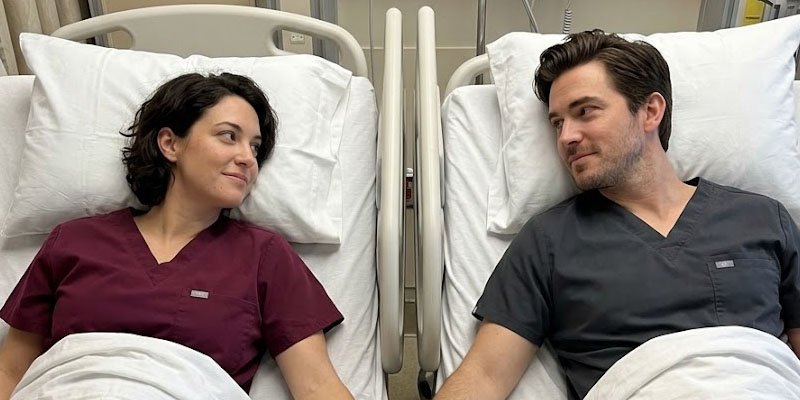
The transplant was successful. My new kidney started working almost immediately, and Nathan recovered quickly enough to begin annoying me within a few days. He wandered into my hospital room wearing absurd socks and carrying pudding he wasn’t supposed to eat.
“You look terrible.”
“You donated a kidney, not your manners.”
“My manners were never medically approved.”
After we left the hospital, Nathan continued finding reasons to appear in my life. Sometimes he brought groceries, sometimes books, and once he showed up with a fern that I almost managed to kill within a week.
“You saved my life and now you’re giving me homework?”
“Keep the plant alive. Think of it as rehabilitation.”
Our friendship developed almost without either of us noticing. We had already experienced something enormous together before discovering the ordinary details of each other’s lives. Before long, I knew how he liked his coffee, which movies he couldn’t stand, and how he would always stop to help a stranger even when no one had asked him to.
Then our friendship became something more.
I began wanting Nathan around even when I didn’t need anything from him.
One rainy evening, we stood beneath the awning outside my apartment.
“You know you can stop thanking me,” he said.
“I haven’t thanked you today.”
“Your face has.”
“Rude.”
“Accurate.”
A month after the transplant, Nathan arrived at my apartment after dark. This time, he wasn’t carrying groceries, books, or making jokes.
“Can I come in?”
He sat at my kitchen table and stared at the dying fern.
“What happened?” I asked.
“My doctors found something during my follow-up.”
My stomach tightened.
“Because of the donation?”
“No. Completely unrelated.”
Then he looked straight at me.
“It’s cancer.”
The doctors had discovered an aggressive form of cancer during his post-donation testing. Treatment might extend his life, but they weren’t talking about a cure.
“How long?”
“They don’t know.”
Nathan reached across the table and held my hand.
“I don’t want to spend whatever time I have left alone.”
“You won’t.”
He gave a quiet laugh.
“Careful.”
“I mean it.”
“So do I.”
Then he pulled a small ring box from his coat and placed it beside the dying fern.
I stared at him.
“Nathan.”
“I know it’s fast.”
“Fast? You just told me you have terminal cancer, and now you’re asking me to marry you.”
“Probably not my best timing.”
He opened the box.
“Marry me.”
I got up and paced toward the sink.
“Do you want a wife, or are you terrified of dying alone?”
He flinched.
“Both can be true.”
That answer scared me because it sounded completely sincere.
I looked at the man who had given me a part of himself before he even knew me. My illness had already taught me that life didn’t always wait for the right or sensible moment.
“I need one promise.”
“Anything.”
“No lies.”
Nathan held my eyes.
“No lies.”
I said yes.
We arranged a small wedding in the garden room of a local restaurant. My parents came, my brother complained about his tie, and Mara began crying before the ceremony had even started.
On the morning of the wedding, I asked Nathan one last question.
“Are we doing this because we’re scared?”
He squeezed my fingers.
“We’re doing it because we’re scared and because I love you.”
The ceremony lasted twelve minutes.
Then the officiant declared us husband and wife.
Everyone applauded.
I turned toward Nathan, expecting to see him smiling.
Instead, his entire expression changed.
He took my hand and leaned close.
“Now I can finally tell you the truth.”
My whole body went cold.
“What truth?”
Nathan glanced toward the doors.
“I have a daughter.”
Mentalhealth support
PART 2
For several seconds, I wondered if I had heard him correctly.
“What?”
“Her name is Sophie. She’s twelve.”
I stared at my new husband.
“You have a twelve-year-old daughter, and you waited until after our wedding to tell me?”
“I was going to tell you sooner.”
“You promised me no lies.”
“I know.”
“Where is she?”
Nathan explained that Sophie mainly lived with her grandmother during the school week. He had her most weekends and for part of every summer. Her mother had been inconsistent since their divorce.
“Does Sophie know about me?”
“Yes.”
That answer hurt even more.
“So your daughter knew I existed, but I didn’t know she existed?”
Nathan rubbed his face.
“She knows about the transplant. She knows we were together. She refused to meet you.”
“Why?”
“She thinks you replaced her.”
I stared at him.
“Did I?”
“No.”
“Then why did you hide her?”
Whenever Nathan mentioned me, Sophie became upset. Then his cancer diagnosis came. Nathan kept telling himself there would eventually be a better opportunity to introduce us.
There wasn’t.
Then he confessed something even worse.
“I thought if we were married, Sophie might understand that you weren’t temporary.”
I stepped away from him.
“You used our marriage to solve a problem with your daughter?”
“No. I married you because I love you.”
“But you also believed the wedding would force her to accept the situation.”
Nathan said nothing.
That silence told me everything.
I walked out through a side door while our guests were still drinking champagne. Nathan followed me into the parking lot.
“Please don’t leave like this.”
I turned around.
“Stay here.”
“What?”
“For once, don’t decide what happens next.”
He stopped.
“Give me Sophie’s grandmother’s address.”
His face tightened.
“She isn’t ready to meet you.”
“You’ve made enough decisions for everyone else.”
“She might hate you.”
“Then she gets to decide that. Not you.”
Eventually, Nathan gave me the address.
Twenty minutes later, still dressed in my wedding gown, I knocked on a stranger’s door.
An older woman answered.
“You must be Claire.”
“Is Sophie here?”
“She doesn’t want to speak to you.”
“I expected that.”
“Nathan called.”
“Of course he did.”
The woman almost smiled.
“You can wait on the steps.”
So I sat there in my wedding dress.
Ten minutes went by.
Then fifteen.
Finally, the door opened.
“This is weird,” a girl said behind me.
I turned.
Sophie had Nathan’s eyes and precisely the same unimpressed expression.
“Probably.”
She crossed her arms.
“Did you marry Dad because you felt sorry for him?”
I considered giving her the simple answer she probably expected.
Instead, I told her the truth.
“His diagnosis affected the timing. But no, I didn’t marry him out of pity.”
Sophie studied my face.
“Then why did he give you part of himself before he even knew you?”
I began to answer, then stopped.
Suddenly, I understood.
Her anger wasn’t really about me.
It was fear.
“You think your dad keeps giving pieces of himself to everyone until eventually there won’t be anything left for you.”
Something shifted in her expression.
Barely.
“Everyone thinks he’s amazing.”
“He is.”
“See?”
“And you’re still allowed to be angry with him.”
That surprised her.
Sophie sat down beside me.
“He fixes everybody’s problems. Friends, neighbors, coworkers. If somebody calls at midnight, he’s already reaching for his keys. Everyone tells me how generous he is. Nobody asks what that costs the people waiting for him at home.”
I looked down at my wedding ring.
I had loved Nathan’s generosity because I had benefited from it more than anyone.
Sophie had spent years living with the other side of it.
“He should have told me about you.”
“Obviously.”
“And he needs to stop making decisions for people and calling it love.”
Sophie snorted.
“Good luck with that.”
When I returned to the wedding venue, the celebration was essentially finished, but my family had remained. My parents stood beside the empty tables, my brother had loosened his tie, and Mara sat quietly with an untouched champagne glass.
Nathan was waiting near the garden doors.
My mother came toward me.
“Are you okay?”
“No.”
She looked in Nathan’s direction.
“What happened?”
Nathan opened his mouth.
I stopped him.
“Tell them.”
He went pale.
“Claire—”
“You’ve been deciding when everyone gets the truth. You don’t get to do that anymore.”
Nathan finally turned toward my family.
“I have a twelve-year-old daughter. And I married Claire without telling her.”
My mother stared at him.
“You allowed my daughter to make a legal commitment to you without knowing something this important?”
“Yes.”
Dad stepped forward.
“Why?”
Nathan swallowed.
“I told myself I was protecting Sophie. Then I said I was protecting Claire. The truth is, I was making sure nobody had the opportunity to tell me no.”
No one comforted him.
I moved closer.
“Our marriage continues only if that stops.”
“What stops?”
“You deciding what everybody else needs and calling it love.”
Nathan closed his eyes.
“Sophie says that too.”
“Then maybe it’s time you listened to her.”
He nodded.
Then he looked at my family.
“I’m sorry. Not because Claire discovered the truth. I’m sorry because I took away her right to choose.”
My mother folded her arms.
“Then give it back.”
Nathan turned toward me.
For once, he waited.
“Claire, do you want me to leave?”
“No.”
He looked surprised.
“But you’re going to learn how to ask.”
PART 3
The months following our wedding were complicated.
There was no instant reconciliation.
Sophie continued calling me Claire. She stayed at our house twice, then refused to come over for three weeks. Sometimes she spoke with me. Other times, she barely acknowledged that I was there.
And I let her decide.
Nathan began changing as well.
When medical appointments conflicted with weekends he had promised Sophie, he stopped automatically deciding what was “best” for everyone. Instead, he asked whether she wanted to come, whether she wanted him to reschedule, or whether she would rather do something else.
That simple act of asking was surprisingly difficult for him.
I also stopped letting Nathan control every part of my health.
One morning, he reached for my medication organizer.
“I can handle my own pills.”
“I know.”
“Practice acting like you know.”
He smiled.
“Fair.”
His cancer treatment was hard. Some scans gave us reasons to hope. Others brought fresh questions. The doctors never took back the word terminal, and we never received enough certainty to pretend that we had unlimited time.
But Nathan gradually stopped treating uncertainty as permission to control the people around him.
He learned that helping someone didn’t always mean rescuing them.
Sometimes it meant allowing them to make a choice he didn’t like.
Sometimes it meant hearing Sophie’s anger without trying to fix it.
Sometimes it meant letting me handle my own health.
Sometimes it meant accepting that generosity could become selfish when the person giving never asked what everyone else actually wanted.
That summer, the three of us returned to the same garden where Nathan and I had gotten married.
There was no ceremony this time.
Just a picnic.
Sophie arrived with two wrapped boxes.
She handed the first one to me.
Inside was a cheap mug that said:
WORLD’S MOST COMPLICATED STEPMOM.
I burst out laughing.
Nathan laughed too.
Sophie pointed at him.
“Don’t get smug. Yours is worse.”
Nathan opened his box.
His mug read:
ASK YOUR FAMILY FIRST.
He groaned.
“Fair.”
“Extremely fair.”
Sophie stole a strawberry from his plate.
I rested my head against Nathan’s shoulder and watched them argue about dessert.
A year earlier, he had entered my life because he believed that if he was capable of helping someone, he should.
That instinct had saved my life.
But it had also become his greatest weakness.
Nathan had spent years believing that love meant fixing problems, shielding people from uncomfortable truths, and making difficult decisions for them.
Sophie had paid the price for that.
So had I.
The kidney was never the problem.
His generosity wasn’t the problem.
The real problem was believing that giving someone part of yourself meant you had the right to decide what happened afterward.
Nathan finally understood the difference.
Sophie was still angry sometimes.
So was I.
Trust wasn’t restored simply because we remained married. It was rebuilt through hundreds of ordinary moments in which Nathan stopped himself before making another decision for us and asked what we actually wanted.
That afternoon in the garden, he looked at his ridiculous mug, then at Sophie, and finally at me.
For once, there was nothing he needed to fix.
Nobody needed rescuing.
Nobody needed to be protected from the truth.
He didn’t need to donate anything, arrange anything, or decide anything.
He simply sat there with his family.
And for the first time since I had known him, I think Nathan finally understood that sometimes love isn’t about giving pieces of yourself away.
Sometimes love means staying still long enough to let the people beside you have a voice.