When the heavy metal gates shut behind me and the sunlight touched my face, my lungs ached.
Not because I was afraid.
Because I was finally free.
For ten years, the world had existed only beyond barred windows, thick security glass, and supervised walks through a small garden where the nurses counted every patient twice before leading us back inside. Now the sunlight rested on my skin without anyone’s permission. The air carried the scent of warm asphalt, diesel exhaust, street food, dust, and wild grass growing along the hospital fence.
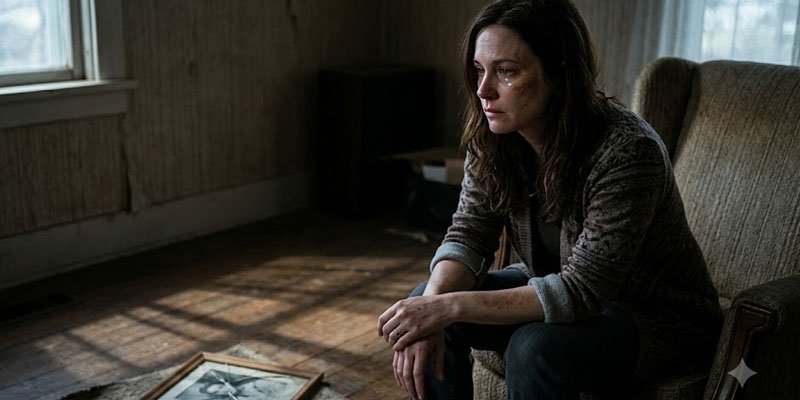
I stood there wearing Lidia’s blouse, Lidia’s worn-out shoes, with Lidia’s purse over my shoulder, and for a brief moment I almost collapsed to my knees.
Then Sofi came to mind.
Three years old.
Struck by a drunken man who insisted on calling himself her father.
The thought alone made me stand taller.
A taxi was parked outside the hospital entrance. Lidia must have arrived in it. I lowered my head the way she always did in public, keeping my shoulders hunched and my eyes fixed downward before getting inside.
The driver looked at me through the rearview mirror.
“Where to, señora?”
I searched through Lidia’s purse and found her address written on a folded utility bill.
“Colonia Las Rosas,” I answered quietly. “Calle Jacaranda.”
The sound of my voice matched hers.
Soft.
Cautious.
Carefully restrained.
It made me despise Damian before I had even laid eyes on him.
The taxi drove away from San Gabriel Psychiatric Hospital, and for the first time in a decade, nobody stopped me.
I watched the gates disappear into the distance.
My sister remained inside wearing my gray sweater, sitting where I belonged, protected behind walls everyone believed were a prison. I was outside wearing the bruises meant for her, walking willingly into the real prison.
As we drove through Toluca, I paid attention to everything.
The traffic signals.
The pharmacy standing on the corner.
The police booth beside the market.
The little grocery store with the torn green awning two streets away from Lidia’s home.
Ten years inside those walls had not left me weak.
They had taught me to observe.
Most people believe danger announces itself.
It doesn’t.
Danger hides in routines.
A man who always chooses the seat facing the entrance.
A woman who recoils before anyone even lifts a hand.
A bedroom door kept locked, marked with scratches around the handle.
A family that rushes to explain bruises before anyone asks.
By the time the taxi came to a stop outside Lidia’s house, the first part of my plan was already clear.
It was a narrow two-story house painted a faded yellow, with iron bars covering the windows and dying flowers sitting in cracked flowerpots beside the front steps. A tiny pink sandal rested near the doorway.
Only one sandal.
Not a pair.
My fingers tightened into fists.
Then I slowly relaxed them.
Stay in control, Nayeli.
Not yet.
I handed the driver cash from Lidia’s purse and stepped onto the sidewalk.
Before opening the door, I studied the windows.
A curtain shifted slightly.
Someone inside was watching me.
Good.
Let them watch the woman they believed they owned return home.
I unlocked the front door using Lidia’s key.
Inside, the house carried the smell of old cooking oil, inexpensive perfume, cigarette smoke, and a sour odor lingering beneath it all. The living room was spotless, but in a lifeless way, as though everything had been arranged for appearances rather than comfort.
A woman sat at the dining table peeling an orange.
She was heavyset, her dyed black hair pulled tightly back, gold rings covering nearly every finger, and eyes sharp enough to peel fruit without needing the knife.
Damian’s mother.
I recognized her before she even opened her mouth.
“So,” she said while looking me over from head to toe. “Did the crazy sister let you cry on her shoulder?”
I kept my eyes lowered.
“Yes, Doña Marta.”
I recognized the name from one of the notes tucked inside Lidia’s purse.
Marta smiled.
There was no warmth in it.
“Good. Maybe she reminded you how fortunate you are that my son still allows you to stay under this roof.”
A young woman stepped into the hallway behind her.
Damian’s sister, I assumed.
She looked to be in her late twenties, wore bright red lipstick, held a phone in one hand, and carried the same cold, bored cruelty on her face as her mother.
She glanced at my cheek.
“Still ugly,” she said.
I remained silent.
That was exactly what they expected.
A quiet woman.
A defeated woman.
Lidia.
My stomach twisted at how natural this routine had become for them.
Doña Marta tossed the orange peel onto the table.
“Where’s the child?”
I paused.
“Sofi?”
“No, the president. Of course Sofi.”
“I thought she was here.”
Marta sighed dramatically.
“Don’t start pretending you’re stupid. Damian took her to his friend’s house. Said he needed some peace and quiet.”
My heart nearly stopped.
Three years old.
Taken away by Damian.
To one of his friend’s houses.
I stepped a little farther into the room, making sure my expression stayed gentle.
“Which friend?”
Marta’s eyes narrowed.
“Since when do you ask questions?”
Damian’s sister laughed.
“Looks like her crazy sister gave her a backbone.”
I looked directly at her.
Only for a brief second.
A little too long.
Her smile disappeared.
I lowered my gaze again.
“Sorry.”
Marta rose from her chair.
“That’s better. Go clean the bathroom. Damian was furious last night. There’s broken glass everywhere.”
Glass.
Bathroom.
Locked inside the bathroom, Lidia had told me.
I walked slowly down the hallway.
By then, my heartbeat had become perfectly steady.
“My wife.”
“No,” I replied. “You never truly had her. You only kept her imprisoned.”
The officers escorted him away.
Marta rushed after them, shouting that her son was innocent and had been set up.
Then Mrs. Molina quietly raised her phone.
“Would you like me to play the recording where you told Lidia she deserved what happened because dinner wasn’t ready?”
Marta froze.
The color drained from her face.
The social worker turned toward her.
“We’ll need a statement from you as well.”
Damian’s sister had remained silent from the moment she realized I wasn’t Lidia.
Now she sat at the table, trembling.
At first, I almost dismissed her as just another part of that poisoned family.
Then I noticed the bruise around her wrist.
It was old.
Fading yellow.
Partly hidden beneath several bracelets.
Families built on cruelty rarely destroy only one daughter.
She looked at me.
There was no hatred in her eyes.
Only something that resembled a plea.
I stayed silent.
For now.
By that evening, Sofi had been taken to a child advocacy clinic.
Lidia was brought from San Gabriel after my psychiatrist, Dr. Ortega, uncovered the switch.
I expected police officers waiting outside the clinic.
I expected handcuffs.
I expected someone to confirm every fear people had ever held about me.
Instead, Dr. Ortega entered the waiting room with Lidia beside him, studied me quietly for a moment, and let out a weary sigh.
“You could have called me,” he said.
A short laugh escaped me.
It sounded shattered.
“Would you have let me leave?”
“No.”
“Then I made the correct decision.”
He looked irritated.
Then exhausted.
Then deeply saddened.
“I would have contacted the police.”
“They never came when Mrs. Molina called.”
He couldn’t answer that.
Lidia spotted Sofi through the glass and released a sound I will never forget.
It wasn’t a scream.
It wasn’t a word.
It was the sound of a mother’s heart breaking apart.
Sofi saw her too.
“Mami!”
The staff brought the little girl out, and Lidia collapsed to her knees as Sofi ran straight into her embrace.
My sister clutched her daughter tightly, crying into her hair.
“I’m sorry,” she repeated over and over. “I’m sorry. I’m sorry. I’m sorry.”
Sofi refused to let go.
I remained a few steps away.
For the first time that entire day, my hands started trembling.
Not because of anger.
Because of what follows anger once your body realizes the child survived.
Dr. Ortega stepped beside me.
“Nayeli.”
“I know.”
“You violated the conditions of your release.”
“I was never released.”
“That makes it even worse.”
I nodded quietly.
He looked through the glass at Lidia holding Sofi.
Then lowered his voice.
“But I also know exactly what I’m going to write in my report.”
I turned toward him.
He continued, “The patient demonstrated planning, self-control, awareness of the situation, protective intent, and the ability to separate necessary defense from uncontrolled violence.”
My throat tightened.
“Doctor…”
“You’re still facing consequences,” he said.
“I know.”
“But perhaps not the consequences everyone expected.”
For the first time in ten years, someone described my self-control before describing me as dangerous.
That almost shattered me.
The legal consequences arrived quickly.
Damian faced charges for domestic violence, child abuse, unlawful confinement, and assault. Marta was charged as well. Damian’s sister, Renata, eventually gave a statement after Mrs. Molina showed her recordings from the neighbors.
Renata had mocked Lidia because cruelty was the language that household understood.
But under oath, she finally told the truth.
Damian had abused Lidia for years.
Marta had covered it up.
Sofi had been struck more than once.
Lidia had been locked inside the bathroom the night before she came to San Gabriel.
And the golf club near the back entrance?
It hadn’t been there for decoration.
The prosecutor asked Renata why she finally chose to speak.
She looked across the courtroom at me and answered, “Because the woman he feared wore the same face as the woman we all watched him abuse.”
Those words stayed with me for a very long time.
The newspapers loved the story.
They called us “The Switched Twins.”
They labeled me dangerous.
Then brave.
Then unstable.
Then heroic.
Then criminal.
They described Lidia as weak.
Then resilient.
Then simply private after she stopped speaking to reporters.
Everyone wanted a version of the story that fit neatly into a headline.
But life is never that simple.
I didn’t leave the hospital to punish Damian.
I left because Sofi was three years old and wearing only one pink sandal.
That was the entire reason.
At my hearing, the state argued that I should be returned to San Gabriel under even stricter supervision.
Dr. Ortega testified.
Mrs. Molina testified.
The social worker testified.
Lidia testified.
My sister stood before the judge, her bruises still fading, and said, “For ten years, everyone believed Nayeli was dangerous because she reacted to violence. But Damian was violent every single day, and people simply called him a husband. My sister did what the rest of us were too frightened to do. She stopped him.”
The courtroom became completely silent.
I lowered my eyes because I knew that if I looked at her, I would break down crying.
The judge did not grant me complete freedom.
Not yet.
But he also refused to send me back behind locked doors the way everyone expected.
Instead, he ordered supervised outpatient treatment, electronic monitoring, therapy, community restrictions, and regular evaluations.
That day, the doors of San Gabriel did not close behind me again.
When I stepped outside legally for the first time, the sunlight touched my face.
My lungs burned once more.
But this time, it felt different.
Lidia stood waiting with Sofi.
Sofi carried two pink sandals.
One in each hand.
She slowly walked over to me.
“You’re Tía Nay?”
I knelt in front of her.
“Yes.”
“You look like Mami.”
“I know.”
“But you’re loud.”
Lidia laughed through her tears.
I smiled.
“Sometimes.”
Sofi examined me with complete seriousness.
“Are you scary?”
I thought carefully before answering.
Then I spoke honestly.
“To bad people.”
She nodded, as though that explanation made perfect sense.
Then she wrapped her arms around me.
Gently.
The careful way children hug adults when they are still learning who is safe.
I embraced her just as softly.
So very softly.
The hands everyone had feared remained perfectly steady.
Several months passed.
Lidia moved into a small apartment close to Mrs. Molina, who gradually became less of a neighbor and more like a guardian angel armed with a broom and endless neighborhood gossip. Sofi began therapy. Lidia found part-time work at a bakery. In the beginning, she apologized for everything.
For taking too long while shopping.
For accidentally dropping a spoon.
For laughing too loudly.
One evening, I watched her apologize after bumping into a chair.
“Sister,” I said.
She stopped.
“You just apologized to a piece of furniture.”
She looked at the chair.
Then at me.
Then burst into laughter so hard that tears filled her eyes.
Healing often begins in the strangest, funniest moments.
Damian’s trial ended with a plea agreement after the evidence became impossible to dispute. He still insisted that I had attacked him. Technically, he wasn’t lying.
But the prosecutor described it as defensive intervention during an immediate threat to a child.
I liked that phrase.
It sounded official.
Marta received a shorter sentence, which made me furious until Lidia quietly said, “Let her spend the rest of her life living with herself. That house was the only kingdom she ever ruled.”
Renata moved away.
Before leaving, she visited Lidia’s apartment.
I answered the door.
She almost turned around and left.
“What do you want?” I asked.
She swallowed nervously.
“To apologize.”
“To me?”
“To her.”
Lidia stepped up behind me.
Renata started crying before she could finish her first sentence.
“I hated you because he hated you,” she admitted. “It was easier than admitting I was afraid of him too.”
Lidia listened.
She didn’t embrace her.
She didn’t forgive her immediately.
But she listened.
That was enough for that day.
One year later, Lidia and Sofi came to visit me after therapy. We sat together in a park where fallen jacaranda blossoms covered the path like purple rain.
Sofi ran happily toward the swings.
Lidia watched her with the fierce, anxious attention of a mother still learning that safety could last longer than a single moment.
“You saved us,” she said.
I shook my head.
“No.”
“Nay.”
“I only opened the door. You were the one who walked through it.”
She looked at me.
“I was afraid.”
“I know.”
“I still am.”
“I know.”
She reached over and took my hand.
“Are you?”
I watched Sofi pumping her legs higher and higher toward the sky.
“Yes.”
Lidia looked taken aback.
“Afraid of what?”
“That everyone will always remember the girl with the broken chair.”
She tightened her grip on my hand.
“I see my sister.”
For ten years, people labeled me unstable.
Explosive.
Dangerous.
Maybe some of those things had been true.
Maybe I had been a storm before I discovered how to turn myself into a blade.
But people confused my anger with the real problem because my anger was louder than the cruelty that had created it.
I wasn’t healed simply because I left the hospital.
I wasn’t redeemed just because I stopped Damian.
I was still the same person.
I still experienced every emotion too intensely.
Happiness burned like fire.
Fear rattled through me like fragile glass.
Anger felt alive inside me.
But now I understood something those white hospital walls had never managed to teach me.
Anger itself is not evil.
Without control, it can destroy.
But when it is disciplined, contained, and aimed at the right target, it becomes protection.
It becomes a door forced open.
It becomes a child finally sleeping without fear.
Years later, Sofi asked me about the night I came home pretending to be her mother.
She was older by then.
Old enough to ask the question.
Still young enough that the truth needed to be told with care.
“Were you afraid of him?” she asked.
We were sitting together in Lidia’s kitchen, making sweet bread. A dusting of flour covered her nose.
“Yes,” I answered.
Her eyes grew wide.
“You really were?”
“Brave people feel fear too.”
She sat quietly for a moment, thinking.
“Then why did you go?”
I glanced across the kitchen at Lidia.
My twin sister smiled gently.
Then I looked back at Sofi.
“Because your mother came to me.”
Sofi frowned.
“That’s all?”
“That’s everything.”
And it truly was.
My life had been defined by one thing I did when I was sixteen. A single violent moment that remained permanently fixed in everyone else’s memory.
But on the night I walked out of San Gabriel wearing my sister’s clothes, I realized that a person can become more than the worst thing they have ever done.
They can also become the one who answers when someone calls.
Damian believed the woman who came home that night was Lidia.
The woman whose courage he had slowly taken away.
The woman he had conditioned to keep her voice quiet.
The woman he believed he could shatter once again because breaking her had become part of his routine.
He was mistaken.
The woman who walked through that door was the girl they had locked away because she was too dangerous to stay silent in the face of cruelty.
Only this time, I wasn’t carrying a chair in my hands or rage in my eyes.
I came with discipline.
A phone filled with evidence.
A neighbor courageous enough to make the call.
A child who needed protection.
And ten years of silence forged into one unwavering purpose.
Damian had spent years convincing Lidia that home was a place where suffering waited.
That night, I taught him a different lesson.
Sometimes the woman you destroyed has a sister.
And sometimes that sister returns wearing her face.