
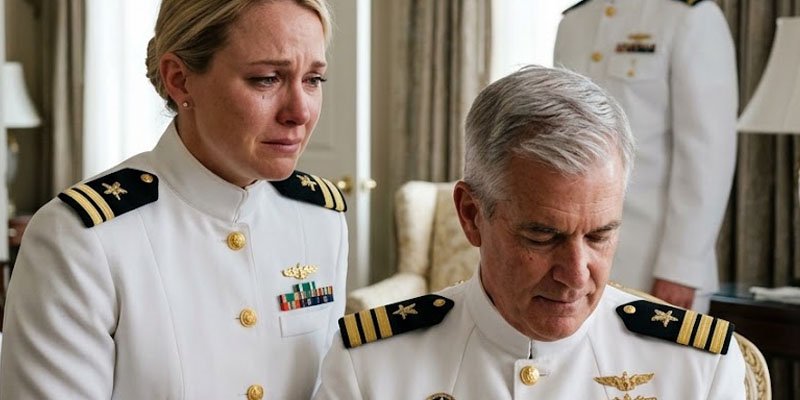
My husband abandoned me while I was in labor because his mother’s birthday dinner meant more to him than being present for the birth of our son. “Deal with it yourself. You’re being dramatic,” he snapped before ending the call. Three days later, however, he stepped through our front door and went completely pale when he saw the man carrying his newborn son.
The contraction was so intense that my knees almost gave way. My phone trembled in my hand as Rowan’s voice turned colder than the hospital floor beneath me.
“Deal with it yourself, Phoebe. You’re being dramatic.”
Then the call ended.
For several moments, I stared at the black screen, struggling to comprehend how the man who had promised to stay beside me throughout childbirth could leave me at precisely the moment I needed him most. Another contraction tore through me, and a nurse quickly came toward me with a wheelchair.
“Is someone on their way?” she asked softly.
I glanced at the silent phone. “Not my husband.”
At thirty-eight weeks pregnant, I was sitting alone outside the maternity ward, one hand resting over my stomach while warm fluid soaked through my dress. For months, Rowan had assured me that he would be there.
But his mother, Selina, had announced that her sixtieth birthday dinner was a “once-in-a-lifetime family occasion.”
Apparently, the arrival of our son didn’t count.
I called Rowan again, desperate enough to give him one final chance. Music, laughter, and the sound of glasses clinking came through the phone.
“Rowan, my water broke,” I said through another contraction. “The contractions are four minutes apart.”
Before he could respond, Selina’s voice came through the line.
“Tell her women have been giving birth for thousands of years.”
Rowan actually laughed.
“See? Mom understands,” he said. “Call a cab.”
Something inside me became completely still.
The fear was still there. The pain was still there. But the part of me that had continued pleading for my husband to choose me disappeared.
“Okay,” I whispered. “Enjoy the cake.”
Then I called the one person I had intentionally avoided calling for almost two years.
My father.
“Dad,” I managed when he answered.
He heard one shaky breath before his voice immediately changed.
“Where are you?”
Twenty minutes later, Gideon Sterling arrived at the hospital wearing an old gray coat. There was no entourage, no driver, and nothing about him suggested that financial newspapers regularly printed his photograph beside descriptions such as founder, chairman, and billionaire investor.
Rowan knew exactly who Gideon Sterling was.
What he didn’t know was that Gideon Sterling was my father.
When Rowan and I first met, I had been using my late mother’s surname. I wanted one relationship in my life that had nothing to do with Dad’s fortune. When Rowan made jokes about “trust-fund parasites,” I stayed silent. When Selina described my father as “some absent retired salesman,” I allowed her to believe it.
That night, Dad held my hand through fourteen painful hours of labor.
Rowan never showed up.
At 4:17 a.m., Leo was born.
Dad carefully held him against his chest as tears quietly streamed down his face.
“He’s perfect,” he whispered.
As I watched my father hold my sleeping baby, I felt the final fragile part of my marriage crack.
Then my phone illuminated.
Mom loved the watch I bought her. Coming home Monday. Don’t start another fight.
My hands became still.
I took a screenshot.
Rowan still believed I was the woman who would cry, forgive him, and remain exactly where he had left me.
He had forgotten one important thing.
I was a forensic accountant.
Three days later, Rowan finally opened our front door.
Gideon Sterling was seated in our living room, Leo sleeping peacefully in his arms.
Every bit of color drained from Rowan’s face.
“Phoebe…” Rowan whispered. “Why is Gideon Sterling holding my son?”
Dad slowly raised his eyes.
Before I could respond, he spoke the six words that made Rowan freeze.
PART 2
“Perhaps you should ask your wife.”
Rowan looked at him.
Then at me.
Then at Leo.
His suitcase was still beside the entrance, one hand wrapped around its handle. His jacket was wrinkled from traveling, and a gift bag from Selina’s birthday weekend dangled from his wrist.
“Phoebe,” he said slowly, “what is happening?”
I sat at the opposite end of the sofa with a blanket covering my legs. Three days after giving birth, almost every movement still caused discomfort, but for the first time since I had entered the hospital, I felt strangely composed.
“Shut the door,” I said.
He did.
His eyes stayed on Dad.
“I know who that is.”
Dad adjusted Leo in his arms without replying.
Rowan swallowed. “Everyone knows who that is.”
“I’m sure not everyone does,” Dad said calmly.
Normally, Rowan would have noticed the dry humor.
Not today.
He looked back at me.
“Why is Gideon Sterling in our house?”
“Our house,” I repeated.
Something about my tone made him pause.
I hadn’t meant for the words to sound that way, but once they were spoken, I realized exactly what I meant.
The house had never felt less like ours.
Rowan stepped farther inside.
“Phoebe.”
“He’s my father.”
Silence.
Not ordinary surprise.
Something much deeper.
The kind of silence that seemed to rearrange everything that had happened before.
Rowan opened his mouth, but no words came.
I could almost watch him mentally recalculate five years of marriage.
“My father’s surname is Sterling,” I said. “My mother’s surname was Vale. I started using hers after she died.”
“You told me your father was retired.”
“I told you he had stepped away from the day-to-day operations.”
“You said he traveled.”
“He does.”
“You said he was terrible at remembering birthdays.”
Dad looked mildly offended.
“I have improved.”
I nearly smiled.
Nearly.
Rowan continued staring at me.
“So all this time…”
His eyes moved around the room.
The modest oak table we had purchased together.
The secondhand bookshelf I had refinished one summer.
The framed photograph from our honeymoon in Lisbon.
Nothing in the room had physically changed, yet he seemed to be looking at everything through completely different eyes.
“You’re Gideon Sterling’s daughter.”
“Yes.”
“And you never told me.”
“No.”
“Why?”
It was a reasonable question.
Possibly the first reasonable question he had asked since returning home.
I glanced toward Dad.
He understood immediately.
“Leo and I can inspect the garden,” he said.
“He’s three days old,” I replied.
“Then I assume his standards are forgiving.”
Dad carefully stood while holding Leo.
Rowan moved without thinking.
“I can take him.”
Dad stopped.
So did I.
It was the first time Rowan had offered to hold his son.
The realization appeared on his face as well.
Dad looked at me.
I nodded.
He gently placed Leo into Rowan’s arms.
My husband’s expression changed.
The anger was still there.
The confusion remained too.
But beneath both was wonder.
Leo stirred and made a tiny noise.
Rowan looked down at him.
His shoulders loosened.
“Hey,” he whispered.
It was so gentle that it hurt.
Because this was the man I had expected to appear at the hospital.
The man who had spent an entire Sunday assembling Leo’s crib twice because one rail looked slightly uneven.
The man who had put his ear against my stomach and laughed whenever Leo kicked.
People were rarely just one thing.
That was exactly what made disappointment so painful.
If Rowan had been cruel every day, walking away would have been easy.
But he hadn’t been.
He had been funny, attentive, ambitious, and sometimes insecure.
Too desperate for his mother’s approval.
Too willing to make himself smaller beneath her expectations.
And at the most important moment of our marriage, he had failed us.
Dad left the room.
Rowan sat across from me with Leo still resting in his arms.
For several minutes, neither of us spoke.
Finally, he asked, “Why didn’t you tell me?”
I folded my hands.
“Because when we met, everyone I knew had an opinion about my father’s money.”
“That doesn’t explain why you kept it from your husband.”
“No. It explains why I didn’t tell the man I had just met.”
“And after we got married?”
I looked at him.
“That’s more complicated.”
His jaw tightened.
“I’m listening.”
So I told him.
Not dramatically.
Not defensively.
Honestly.
My childhood had been comfortable in ways most people could hardly imagine. Private schools. Drivers. Houses with rooms that nobody ever used.
But money had complicated almost every relationship.
At university, two friends suddenly became interested in “business opportunities” after discovering who Dad was. A boyfriend before Rowan borrowed money without asking because, as he later explained, I “wouldn’t notice.”
After Mom died, I wanted a smaller life.
A life where I could discover who I was when nobody recognized my surname.
Then I met Rowan at a professional seminar.
He spilled coffee across my notes.
I laughed.
He bought me another cup.
For six months, everything felt wonderfully ordinary.
“You remember our third date?” I asked.
He looked down at Leo.
“The Italian restaurant with the terrible chairs.”
“You spent twenty minutes complaining about the CEO whose company your firm was auditing.”
“I remember.”
“You said wealthy children were usually useless because they never learned consequences.”
His expression shifted.
“I was speaking generally.”
“I know.”
“Phoebe—”
“I almost told you that night.”
He looked up.
“Why didn’t you?”
“Because I liked the way you looked at me before you knew.”
The words affected him more than I expected.
Rowan became quiet.
Leo briefly opened his eyes before closing them again.
“After that, waiting made it harder. Then your mother began making comments about women marrying above themselves, and every time I considered telling you, it felt like I would be dropping a bomb into something I wanted to keep simple.”
“So you lied.”
“Yes.”
He clearly hadn’t expected such a direct answer.
“Yes,” I repeated. “I kept something important about myself from you. And I understand why you’re hurt.”
He exhaled.
“But that doesn’t erase what happened three days ago.”
His eyes lowered.
“I know.”
It was the closest he had come to apologizing.
So I asked the question that mattered.
“Why didn’t you come?”
His fingers tightened around Leo’s blanket.
“I thought there was still time.”
“I told you my contractions were four minutes apart.”
“Mom said first babies take forever.”
“You laughed.”
His face tightened.
“I know.”
“You told me to call a cab.”
“I know.”
“You stayed another two nights.”
That was the part I still couldn’t understand.
The dinner itself had been terrible enough.
But after Leo was born, Rowan received a message Dad had sent while I was asleep.
Leo arrived safely. Mother and baby doing well.
Four hours later, Rowan replied:
Great. Tell Phoebe I’ll call.
He didn’t call until evening.
By then, Selina had apparently convinced the family that I wanted to “punish Rowan” because I slept instead of accepting a video call.
“I should have come home,” he said.
“Yes.”
“I should have left before dinner.”
“Yes.”
He rubbed his face.
“I don’t know what I was thinking.”
I did.
That was the problem.
“You were thinking your mother would be upset.”
He said nothing.
“And somewhere along the way, avoiding her disappointment became more important than avoiding mine.”
His eyes met mine.
The truth remained between us.
Dad returned ten minutes later, and the conversation ended without an answer.
That night, Rowan slept in the guest room.
I didn’t tell him to.
He didn’t ask to sleep in ours.
For the next two days, we lived in an uncomfortable but peaceful arrangement.
Rowan changed diapers.
He learned how to warm bottles of expressed milk.
At 2:00 a.m. Wednesday, I found him standing beside Leo’s bassinet, watching our son sleep.
“You don’t have to stare at him,” I whispered.
Rowan glanced toward me.
“I keep thinking he’ll stop breathing if nobody watches.”
“Welcome to parenthood.”
He gave me a tired smile.
For one brief moment, we were ourselves again.
Then the hospital came back to me.
The phone call.
His empty chair beside me.
The smile disappeared.
Dad had rented a hotel room nearby rather than staying with us, but every morning he arrived with groceries and every evening he brought dinner.
He never criticized Rowan.
Somehow, that made Rowan even more uncomfortable.
One Thursday afternoon, I found the two of them alone in the kitchen.
Dad was slicing pears.
Rowan stood beside the sink.
“You can say it,” Rowan told him.
Dad looked up.
“Say what?”
“That you think I’m a terrible husband.”
Dad considered the pear.
“I don’t know you well enough to decide what kind of husband you are.”
Rowan laughed without humor.
“You know what happened.”
“I know what Phoebe told me.”
“And?”
Dad placed the knife down.
“I think you made a very poor decision.”
“That’s all?”
“No.”
Rowan waited.
Dad remained composed.
“I also think Phoebe married you because she believed you were more than your worst decision. Whether she still believes that is something only she can answer.”
I stood quietly in the hallway.
Then Dad added, “You should probably stop worrying about my opinion. Mine isn’t the one that matters.”
That evening, Dad asked me to take a walk with him.
We left Leo with Rowan and went to the small park two blocks away.
Early spring had softened the air, and daffodils were beginning to bloom.
“You’re thinking too loudly,” he said.
“Sorry.”
“Your mother used to do that.”
I smiled faintly.
“What would she say?”
“That depends.”
“On what?”
“Whether she was talking to you or talking to Rowan.”
I laughed.
It felt strange after everything.
But good.
Dad stopped beside a bench.
“Phoebe, I want to tell you something before you make any decisions.”
“I’m not staying because of Leo.”
“I know.”
“And I’m not leaving because you’re angry.”
“I’m not asking you to.”
He looked toward the playground.
“Marriage is rarely decided by one terrible day,” Dad said. “But sometimes one terrible day reveals something you’ve been refusing to see.”
I studied him.
“What do you think I’ve been refusing to see?”
“That is for you to discover.”
Then he started walking again.
Typical Dad.
Even billionaires could be frustratingly vague.
The next morning, Selina called.
I almost ignored it.
Curiosity won.
“Hello?”
“Phoebe.”
Her voice was unusually controlled.
“Selina.”
“I understand your father is visiting.”
Of course, that was where she started.
“Yes.”
There was a pause.
“Rowan explained who he is.”
“I imagine that was interesting.”
“I had no idea.”
“No.”
Another pause.
“I think perhaps we should meet.”
“No.”
The response came so quickly that even I surprised myself.
Selina inhaled.
“I’d like to apologize.”
“You can do that over the phone.”
Silence.
“I shouldn’t have said what I said while you were in labor.”
“No.”
“And Rowan should have left dinner.”
“Yes.”
“I was upset.”
“I know.”
“It was my sixtieth birthday.”
“I know that too.”
Her voice softened.
“It felt important.”
“My son’s birth felt important too.”
“I understand that now.”
Something in her voice sounded almost sincere.
Almost.
But I had learned not to mistake regret for understanding.
Then she said something that caught my attention.
“I never meant for all this to happen, Phoebe.”
“All what?”
“The distance. Between you and Rowan.”
“You’ve been encouraging that distance for years.”
“That isn’t fair.”
“I think it is.”
“You don’t know everything.”
My accountant’s instincts immediately switched on.
“What don’t I know?”
She changed the subject.
Classic Selina.
“I hope I can meet Leo when you’re ready.”
“That will be Rowan’s and my decision.”
“Of course.”
After we ended the call, I stood in the kitchen staring at my phone.
You don’t know everything.
The words bothered me.
Not because I expected some dramatic secret.
Real life rarely arranged itself that neatly.
But there had been strange tension for months.
Rowan taking calls outside.
An argument with Selina at Christmas that ended the instant I walked into the room.
A loan application arriving at our house in January, which Rowan claimed belonged to a colleague who had accidentally used our address.
At the time, I believed him.
Now I remembered the bank’s name.
Midlands Commercial Bank.
I was a forensic accountant.
Suspicious paperwork was practically an invitation.
That afternoon, while Leo slept, I opened the filing cabinet in our home office.
Rowan and I kept tax returns, mortgage statements, insurance records, and other financial documents there.
Nothing secret.
Or so I had believed.
The bank letter was missing.
I searched the desk.
Nothing.
Then I noticed a folder marked HOUSE—2025 had been moved.
I opened it.
The first documents were ordinary.
The final page wasn’t.
Personal guarantee agreement.
Borrower: Mercer & Lane Hospitality Group.
Guarantor: Rowan Hale.
Amount: $480,000.
I read it twice.
My husband worked in financial compliance.
He did not own a hospitality company.
Then I noticed the date.
Seven months earlier.
It was the same week Rowan told me we should delay renovating the nursery because he wanted us to “be more conservative with money.”
My hands became cold.
Not because of the amount.
Because I had never heard of Mercer & Lane.
I searched the state business registry.
The company existed.
Managing member:
Selina Hale.
I slowly leaned back.
So that explained the Christmas argument.
And the mysterious bank letter.
Selina’s words suddenly sounded different.
You don’t know everything.
When Rowan returned from the pharmacy an hour later, I was waiting at the dining table.
Leo was sleeping in his bassinet beside me.
The photocopy lay between us.
Rowan stopped when he saw it.
His expression answered me before he spoke.
“Where did you find that?”
“In our filing cabinet.”
He closed his eyes.
“How much?” I asked.
“Phoebe—”
“How much money have you guaranteed for your mother?”
He pulled out a chair.
“It’s complicated.”
“That phrase has never improved an accounting problem.”
He almost smiled.
I didn’t.
“How much?”
“Four hundred eighty thousand.”
“And Mercer & Lane?”
“A restaurant project.”
“Your mother owns a restaurant project?”
“She and two friends were opening an event venue with a restaurant attached.”
“Were?”
His silence answered.
“Rowan.”
“The financing fell apart.”
“When?”
“January.”
“What does that mean for the guarantee?”
He looked exhausted.
“It means there may be exposure.”
“How much exposure?”
“I don’t know yet.”
“You work in compliance.”
“I know.”
“You understand personal guarantees better than most people.”
“I know.”
“And you signed one without telling your wife?”
His voice became quieter.
“I thought it would be temporary.”
There it was.
Not some dramatic betrayal.
No secret second family.
No criminal conspiracy.
Something painfully ordinary.
A husband trying to rescue his mother from a financial mistake and hiding it because he knew his wife would object.
I looked down at the document.
“Does this affect our house?”
“No.”
“Our joint accounts?”
“No.”
“How can you be certain?”
“Because the guarantee is mine.”
“We’re married.”
“I protected you legally.”
I looked up.
That wording bothered me.
“You protected me how?”
Rowan reached into his laptop bag.
After several seconds, he pulled out another folder.
“I was going to tell you.”
“When?”
“I don’t know.”
Inside was a legal document prepared six months earlier.
Postnuptial financial separation agreement.
Unsigned.
My name was on the first page.
“You planned to ask me for a postnup?”
“To separate my potential liabilities from you.”
“But you never did.”
“No.”
“Why?”
“Because every time I tried, I couldn’t work out how to explain why we suddenly needed one without telling you everything.”
For the first time, I saw fear in his expression.
Not fear of Dad.
Not fear of money.
Fear of losing me.
“You should have told me,” I said.
“I know.”
“You keep saying that.”
“Because I do know.”
“After the fact.”
He looked down.
“Yes.”
Leo stirred softly beside us.
Both of us immediately turned toward him.
Our son stretched before settling again.
When I looked back, Rowan’s eyes were wet.
“I thought I could fix everything,” he said. “Mom’s business. The guarantee. Your pregnancy stress. Work. Everything.”
“By keeping me uninformed?”
“By carrying it myself.”
“That isn’t the same as protecting me.”
“I understand that now.”
“Do you?”
For once, he didn’t immediately defend himself.
“I’m not sure,” he admitted.
That surprised me.
Maybe because it sounded completely honest.
I closed the folder.
“Is there anything else?”
He hesitated.
Too long.
My stomach tightened.
“Rowan.”
“There’s one thing.”