
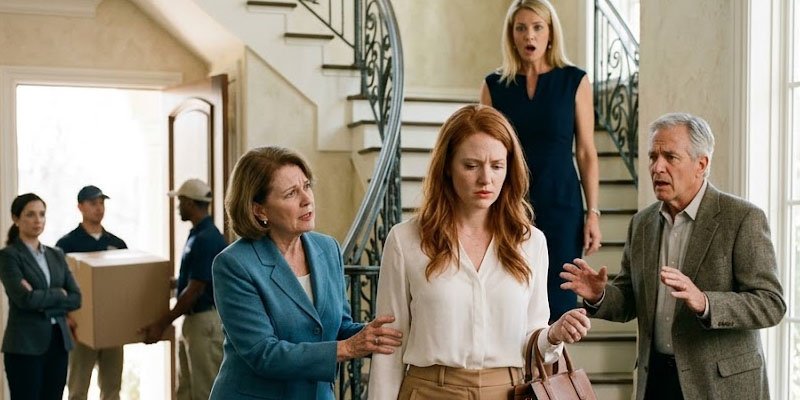
My mother called me “chemical sludge,” shut me outside the home I paid for, and told me to eat in the garage.
So, on Saturday morning, I sold the house right out from under the entire family.
My mother called me “chemical sludge” through the locked front door of a house I had paid for.
Not rented.
Not contributed toward.
Paid for.
The same house where my father, my brother, his wife, their two children, and my mother lived under a roof that only my name had managed to save from foreclosure.
At 9:40 p.m., I stood on the porch wearing my work boots, still carrying the smell of disinfectant and industrial cleaner from the plant. In my hand was a grocery bag containing Dad’s blood pressure medication.
Mom had changed the locks.
Again.
Through the side window, I could see my brother Tyler sitting at the kitchen island eating takeout. His wife was absorbed in her phone. Dad remained in his recliner, pretending the television was loud enough that he couldn’t hear me knocking.
“Mom,” I said, forcing myself to stay calm, “open the door.”
She pulled the curtain aside.
“Not until you wash somewhere else. I don’t want that chemical odor inside my house.”
My house.
I swallowed hard.
“I brought Dad his medicine.”
“Put it in the garage,” she fired back. “You can eat out there too. I left your plate beside the toolbox.”
Tyler laughed from inside.
That sound was what finally cracked something in me.
For four years, I had worked twelve-hour shifts at a sanitation chemical facility because the salary was good and my family depended on my help.
When Dad’s business went under, I caught up on the mortgage.
When Tyler lost his job, I covered his truck payments.
When Mom insisted the grandchildren needed stability, I refinanced the house under my name because nobody else could qualify.
They called it temporary.
Temporary stretched into years, with my paycheck disappearing while my bedroom was moved from upstairs to the converted laundry space, and eventually to the garage “until things settled down.”
Nothing ever settled.
Mom began behaving as though my job made me disgusting.
She sprayed air freshener whenever I came inside.
She made jokes about my “hazard pay perfume.”
And now she had locked me outside and decided the garage was suitable for the daughter whose income kept the household afloat.
I looked at the plate sitting on the workbench.
Cold rice.
A single dry chicken thigh.
A plastic fork.
Next to it was an envelope from the mortgage company addressed to me.
Final refinance confirmation.
Mom must have taken it from the mailbox and then forgotten to conceal it.
I tore it open beneath the garage light.
Inside was paperwork my real estate attorney had sent two weeks earlier confirming that I had complete legal authority to sell the property because every payment, deed transfer, and rescue loan had been completed in my name.
Then my phone vibrated.
Grace, my attorney.
Buyer is ready. Cash offer expires Saturday morning. Are you sure?
I stared at the locked kitchen door.
Then I looked at Dad, still pretending he couldn’t hear me.
Finally, I looked down at the cold meal sitting beside the toolbox.
I typed one word.
Yes.
Saturday morning, the house was sold before Mom had even finished breakfast.
At 8:03, I signed the closing documents in Grace’s office.
At 8:17, the wire transfer confirmation appeared on my phone.
At 8:22, the new owner’s representative showed up at the property carrying a clipboard, accompanied by a locksmith and a notice to vacate.
That was when my phone began blowing up.
Mom called first.
Then Tyler.
Then Dad.
Then Tyler’s wife, who usually contacted me only when she needed money for groceries.
I answered on speaker while sitting across from Grace.
Mom was shouting.
“There are people changing the locks!”
“Yes,” I replied. “The house has been sold.”
Silence.
Then Tyler yelled, “You can’t sell our family home.”
“It wasn’t our family home,” Grace said evenly. “It was my client’s property.”
Mom sounded stunned.
“Who is that?”
“My attorney.”
Dad finally took the phone.
“Emily, you’ve gone too far.”
I shut my eyes.
Too far was the garage.
Too far was being forced to eat next to paint cans.
Too far was paying for a bedroom I wasn’t even permitted to use.
“No,” I said. “This is simply paperwork.”
Tyler cursed at me.
“Where are we supposed to go?”
“The same place you told me to eat,” I answered. “Somewhere else.”
Mom immediately broke down crying.
“After everything we did for you?”
Grace slid a folder across the desk toward me.
Inside were four years of mortgage payments, utility bills, pharmacy receipts, truck payments, and a recording from the garage security camera.
Mom’s voice was unmistakable.
Emily will keep paying. She has nowhere else to go. Just make sure she understands this is still my house.
I sent the recording into the family group chat.
Nobody replied.
Eventually Tyler typed:
You recorded Mom?
I answered:
No. The garage did. That’s where you put me.
Grace checked her watch.
“There is one more thing they need to know.”
I nodded.
“Look at the eviction notice,” I said. “The buyer is someone you already know.”
Mom stopped crying.
“What do you mean, someone we know?”
Grace responded.
“The buyer is Mr. Howard Mason.”
Dad made a noise as though hearing the name had physically hit him.
Howard Mason had been Dad’s former business partner—the man Dad had always blamed for the company’s collapse.
But Grace’s records told a completely different story.
Howard had offered Dad a reasonable buyout before the bankruptcy.
Dad turned it down because of pride.
Howard hadn’t purchased the house to get revenge.
He bought it because Grace told him I needed a fast sale, and he remembered me sitting in their old office doing my homework.
He also remembered Dad using my college savings to help cover the company’s debts.
Mom whispered, “Emily, please. Don’t let him have it.”
I stared at the wire confirmation.
For the first time, the amount in my account felt like freedom.
“The house is already his.”
Tyler tried threatening me.
Then he switched to guilt.
Then came panic.
None of it changed the deed.
Howard gave them thirty days to leave, which was more compassion than they had ever shown me.
Dad moved in with his sister.
Tyler and his wife rented a small apartment and discovered what life actually cost without my income supporting them.
Mom told relatives that I had thrown my family onto the street.
Grace sent them the payment records along with the garage recording.
The calls stopped.
I moved into a one-bedroom apartment above a bakery downtown.
In the mornings, the place smelled like coffee instead of air freshener being used to hide resentment.
I bought a secondhand couch, clean sheets, and a small dining table with a single chair.
Because peace was worth more than living in a packed house where I was treated like garbage.
Two months later, Dad appeared in the parking lot outside my plant.
He somehow looked smaller.
“I should have opened the door,” he said.
I looked at him carefully.
“Yes.”
He nodded, tears filling his eyes.
“Can we start over?”
“Maybe,” I said. “But not inside a house I pay for.”
That night, I ate dinner at my own table.
Hot soup.
Fresh bread.
Actual silverware.
Nobody told me to go to the garage.
Nobody called me sludge.
And when I locked my front door that night, every key in my hand belonged to me.