
King Charles’ Bloodshot Eye Sparks Health Concerns During French President Macron’s Historic State Visit
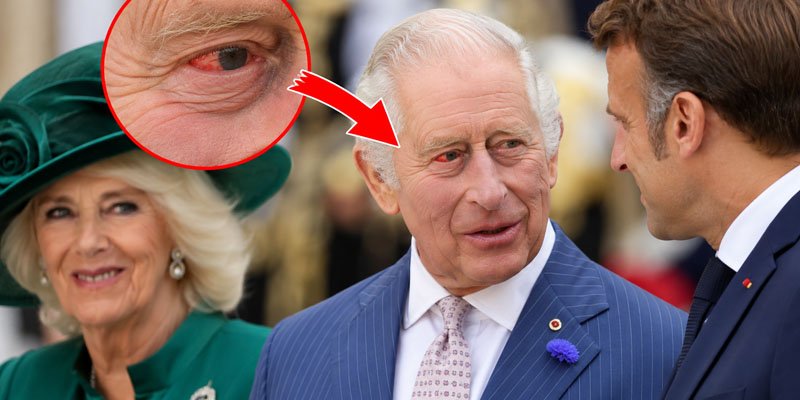
King Charles III attracted widespread attention during French President Emmanuel Macron’s state visit to the United Kingdom after royal observers noticed a striking redness in the monarch’s right eye. Despite concerns surrounding his health and ongoing cancer treatment, Buckingham Palace sources offered reassurance that the condition was not connected to his cancer diagnosis.
King Charles’ Appearance Raises Questions During Windsor Welcome
King Charles III welcomed French President Emmanuel Macron and French First Lady Brigitte Macron to Windsor Castle on July 8, 2025, marking an important occasion in diplomatic relations between Britain and France.
The 76-year-old monarch was accompanied by Queen Camilla, while Prince William and Catherine, Princess of Wales, participated in the ceremonial welcome.
The royal family appeared in high spirits as they greeted their French guests, highlighting the significance of the state visit and the longstanding relationship between the two European nations.
However, as photographs from the event began circulating online, attention quickly shifted toward an unexpected detail in the King’s appearance.
Several images showed noticeable redness in Charles’ right eye, prompting questions among royal watchers about his health.
The development attracted particular attention because the monarch had been undergoing treatment for an undisclosed form of cancer since his diagnosis was announced in February 2024.
Although Charles appeared cheerful and comfortable throughout the welcoming ceremony, the unusual appearance of his eye became a major talking point.
Palace Source Explains the King’s Bloodshot Eye
As speculation grew, a palace source provided clarification about the monarch’s condition.
According to information shared with Fox News Digital at the time, Charles had experienced a burst blood vessel in one eye.
The source explained that the issue was unrelated to the King’s cancer diagnosis or his ongoing medical treatment.
This clarification helped address concerns that the redness might indicate complications associated with his existing health condition.
A burst blood vessel in the eye, medically known as a subconjunctival hemorrhage, occurs when a small blood vessel breaks beneath the transparent surface covering the white part of the eye.
Although the resulting bright red appearance can seem dramatic, the condition is generally harmless and often disappears without medical intervention.
There was no public indication during the Windsor ceremony that Charles was experiencing pain or significant discomfort.
Instead, he continued his scheduled engagements and welcomed the visiting French president with the traditional formality associated with a royal state visit.
What Causes a Subconjunctival Hemorrhage?
Medical experts explain that a subconjunctival hemorrhage can occur for several reasons, many of which are relatively minor.
According to the Mayo Clinic, the condition may develop after sudden pressure changes caused by coughing, sneezing, straining, or other everyday activities.
In some cases, it can appear without an obvious cause.
The affected eye may look intensely red because blood becomes trapped beneath the conjunctiva, the thin membrane covering the white portion of the eye.
Unlike certain other eye conditions, a typical subconjunctival hemorrhage does not cause significant pain or affect vision.
Most cases resolve naturally within approximately one to two weeks, although recovery time can vary.
Medical professionals generally recommend seeking an examination if redness is accompanied by pain, changes in vision, an injury, or repeated bleeding.
Importantly, the presence of a bloodshot eye alone does not establish a connection to cancer or another serious illness.
In Charles’ case, the palace source specifically indicated that the burst blood vessel was separate from his existing medical condition.
King Charles Continues Royal Duties Amid Cancer Treatment
The incident came against the backdrop of King Charles’ ongoing health journey.
Buckingham Palace announced in February 2024 that the monarch had been diagnosed with cancer following medical treatment for an enlarged prostate.
The palace clarified that the cancer diagnosis was not prostate cancer, although the specific type was not publicly disclosed.
Following the announcement, Charles temporarily reduced his public-facing engagements while receiving treatment.
He nevertheless continued handling constitutional responsibilities and official state business.
Over time, the monarch gradually resumed more public appearances, participating in ceremonial events, meeting international leaders, and representing the United Kingdom on important occasions.
His determination to maintain an active royal schedule has remained a central theme of coverage surrounding his health.
The French state visit offered another example of that approach, with Charles taking part in the official welcome despite continuing medical treatment.
Royal aides have previously emphasized that the King intends to follow medical advice while maintaining as much normality as possible in his daily responsibilities.
Speaking to People magazine, a royal aide described Charles’ approach as one focused on managing his illness while continuing with life.
The aide also expressed confidence in modern medical treatment and suggested that the monarch remained committed to fulfilling his responsibilities.
Such comments reflected the palace’s broader message that Charles was continuing his royal work while receiving appropriate medical care.
President Macron Receives a Grand Royal Welcome
Beyond the attention surrounding Charles’ eye, the French state visit represented a significant diplomatic occasion.
President Emmanuel Macron and his wife, Brigitte, arrived in Britain for a visit intended to reinforce relations between the United Kingdom and France.
The royal welcome at Windsor Castle featured traditional military pageantry, ceremonial honors, and appearances by senior members of the royal family.
Prince William and Catherine played prominent roles in the opening proceedings, reflecting their growing responsibilities within the monarchy.
King Charles and Queen Camilla subsequently welcomed the French presidential couple as the formal ceremonies continued.
The occasion combined diplomatic discussions with the traditions of the British monarchy, providing an opportunity to celebrate cooperation between the neighboring countries.
The visit also demonstrated the importance of royal diplomacy, which often helps strengthen international relationships through ceremonial engagements and personal connections.
Despite the unexpected discussion about his appearance, Charles remained focused on his duties as host.
Photographs from the ceremony showed the King speaking with Macron, greeting guests, and participating in the day’s formal proceedings.
Queen Camilla and Princess Kate Take Center Stage
Queen Camilla also played an important role in welcoming the French visitors.
Appearing alongside her husband, she participated in the formal reception and helped represent the monarchy during the high-profile diplomatic occasion.
Catherine, Princess of Wales, also drew attention as she joined Prince William in the opening events.
Her participation carried additional significance following her own cancer diagnosis and treatment in 2024.
In January 2025, Catherine publicly announced that she was in remission, marking an important development in her recovery.
Her return to major royal engagements became an encouraging moment for royal supporters who had followed her health journey.
During the French state visit, the presence of Charles, Camilla, William, and Catherine emphasized the monarchy’s commitment to maintaining its public responsibilities.
Their coordinated participation also highlighted the increasingly visible roles of the Prince and Princess of Wales.
A State Banquet Adds to the Historic Occasion
The July 8 program also included preparations for a formal state banquet at Windsor Castle.
The evening gathering in St. George’s Hall was designed to honor President Macron and the French delegation.
State banquets are among the most prestigious events hosted by the British monarchy, bringing together senior royals, government representatives, diplomats, and invited guests.
Such occasions traditionally feature formal speeches, ceremonial traditions, and discussions celebrating the relationship between the visiting country and the United Kingdom.
King Charles and President Macron were expected to deliver remarks emphasizing the importance of British-French cooperation.
The banquet formed part of a wider diplomatic program covering shared interests, international partnerships, and the historical ties connecting the two nations.
For Charles, hosting the event also represented another significant public engagement during his cancer treatment.
Royal Health Remains a Subject of Public Interest
The reaction to Charles’ bloodshot eye illustrates the considerable attention surrounding the health of senior members of the royal family.
Since the announcement of his cancer diagnosis, even relatively minor changes in the King’s appearance have attracted scrutiny.
His public engagements are frequently examined for indications of how he is managing treatment and maintaining his responsibilities.
However, medical experts caution that visible symptoms should not automatically be interpreted as evidence of a serious underlying condition.
A red eye can have numerous explanations, and determining its cause requires appropriate medical assessment rather than speculation based on photographs.
In this instance, the explanation provided by a palace source pointed to a common eye condition that generally resolves without lasting complications.
The source’s comments also distinguished the incident from Charles’ cancer treatment, an important clarification given the public interest in his medical condition.
Buckingham Palace has generally maintained privacy around the specifics of the King’s cancer diagnosis while providing occasional updates about his treatment and official schedule.
That approach has allowed the monarch to continue his work without publicly disclosing every aspect of his medical care.
King Charles Demonstrates His Commitment to the Crown
Throughout the July 8 welcoming ceremony, King Charles appeared engaged and attentive as he carried out his responsibilities.
His conversations with President Macron and participation in the royal proceedings suggested that the visible eye condition was not preventing him from fulfilling the day’s schedule.
The event also reflected the broader balancing act facing the monarch as he continues treatment while serving as Britain’s head of state.
Although his health remains an important consideration, Charles has repeatedly demonstrated a desire to maintain continuity in the monarchy’s public activities.
The French state visit was particularly significant because it brought together royal ceremony, international diplomacy, and the participation of several senior members of the royal family.
Rather than allowing concerns over his appearance to overshadow the occasion, Charles proceeded with the welcome and helped mark an important chapter in British-French relations.
What the Incident Means for the King’s Health
The most important distinction surrounding the incident is that the reported burst blood vessel was not identified as a complication of Charles’ cancer treatment.
A subconjunctival hemorrhage can look alarming, especially when captured in close-up photographs, but its appearance does not necessarily reflect the severity of the condition.
The palace source’s explanation offered reassurance regarding this particular incident, although it did not provide a broader medical update about the monarch’s cancer.
Charles’ long-term health and treatment progress remain separate matters that cannot be determined from the appearance of his eye during a public engagement.
The King continued participating in the visit, with no visible indication that the redness interfered with his ceremonial responsibilities.
Final Thoughts
King Charles III’s bloodshot eye became an unexpected focus of attention during President Emmanuel Macron’s July 2025 state visit to Windsor Castle.
While the noticeable redness initially raised questions among royal watchers, a palace source attributed it to a burst blood vessel and indicated that it was unrelated to the monarch’s ongoing cancer treatment.
The incident highlighted the intense public interest surrounding Charles’ health, particularly as he continues balancing medical care with the demands of the monarchy.
Above all, the Windsor welcome demonstrated the King’s determination to carry out his official responsibilities while hosting one of Britain’s most important international diplomatic occasions.
As King Charles continues his royal duties, the episode serves as a reminder that an unusual physical appearance does not necessarily indicate a serious medical problem—and that verified medical information is more reliable than speculation based on photographs.




