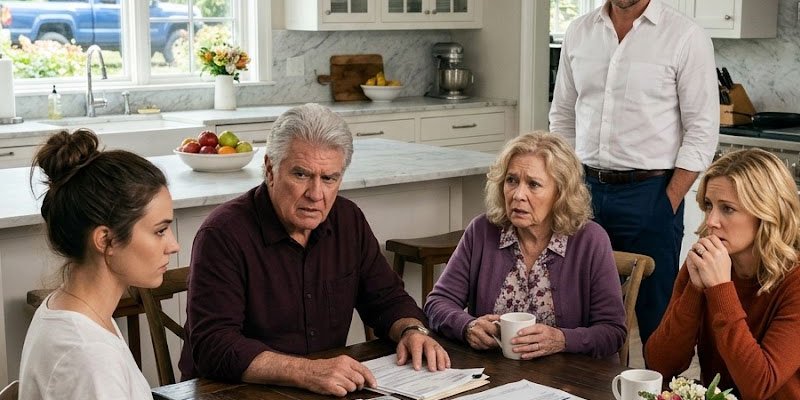
Just three days after selling my farm for $39 million, I overheard my sister telling our parents I was broke. Then Dad revealed how much money they’d been giving her for me. Just three days after quietly selling my farm for $39 million, I visited my parents’ house with two grocery bags in hand. Before I had a chance to press the doorbell, I overheard my sister explaining to them I was having financial difficulties and too ashamed to request assistance. That was when my father asked a question that sent a chill through me. “Ranata, exactly how much money have we already given you to help Fay?” I stood motionless. My parents had supposedly been supporting me? That couldn’t be true. I had never requested them for money, and I hadn’t received even one dollar from my sister. I silently carried the groceries to my truck and left without a word. But when my mother called several hours afterward and asked me to come back, I learned that my $39 million land sale wasn’t the greatest money-related secret in our family. The real shock was what my sister had been doing without my knowledge for eleven years. I’m Fay. I’m thirty-seven, and for fifteen years, my family believed I was just scraping by. I drove an old pickup with over 200,000 miles on it, wore well-worn flannel shirts, and usually began working ahead of sunrise. During family get-togethers, my father would glance at my truck and give his head a shake. “Fay, are you still driving that old thing?” “Naturally, Dad. It runs just fine.” My older sister, Ranata, would grin. “That’s Fay. Too headstrong to buy herself anything nicer.” They would all laugh. As time passed, those casual comments created an image of me that had very little resemblance to the truth. In Ranata’s version of events, my farm was always close to money problems. She told relatives that equipment repairs were eating away at my savings, that I had difficulty covering bills, and that I was too proud to acknowledge I needed help. What was strangest? Not one person asked if any of those claims were accurate. Fifteen years before, I’d purchased eighty acres of farmland with savings I had accumulated and a loan I had carefully organized. It was far from easy. For years, I worked on repairing fences, maintaining equipment, reducing my debt, and putting almost all my earnings back into the farm. I kept my old pickup because I could depend on it. I wore work clothes since my job kept me outside. And I seldom talked about finances because I didn’t believe my bank balance was something other people needed to know. My family saw the truck and muddy boots. They had never seen my financial paperwork. Then, two years before the situation changed, a land survey showed that my property was situated in a region attracting significant commercial growth. A company planning a large expansion expressed interest in buying the land. One discussion turned into the next. Then came property appraisals, legal reviews, negotiations, and offers that kept improving. I kept the whole process confidential. I didn’t want relatives weighing in on every choice or putting pressure on me before the deal was completed. Three days before that unforgettable visit to my parents’ house, the sale was officially finalized. The agreed sale price was $39 million. I sat in my truck outside the attorney’s office, looking at the confirmation on my phone. For a number of minutes, I sat unable to move. Fifteen years of dedicated effort had led to something far beyond anything I had imagined. Yet I didn’t rush to buy a high-end car. I didn’t call my sister. I didn’t share the news on the internet. I drove home, placed the closing documents in a brown folder, cooked dinner, and turned in for the night. The next morning, I woke ahead of sunrise as I always did. For a change, I wanted to discover whether the people in my life could value the life I had built without knowing the size of my fortune. That Saturday, Mom asked whether I could pick up groceries for her. Milk. Bread. Coffee. Her favorite cinnamon creamer. It was an ordinary request. I arrived at my parents’ house a little past four in the afternoon. Ranata’s SUV was sitting in the driveway. I picked up the grocery bags and walked toward the front porch. Then I overheard voices through the window that was slightly open. Ranata was speaking. “Fay will never admit it herself. She’s too proud.” I halted. Mom replied, but I couldn’t make out her words. Then Ranata said: “There’s no need to worry. I’ve been handling everything.” A chair dragged against the floor. Dad spoke. “How much does she need this time?” I remained completely motionless. Need? What on earth did they mean? Mom spoke with concern. “Are you sure Fay can’t manage without more help?” “Of course,” Ranata replied. “I wouldn’t be asking if I weren’t.” Then Dad asked something more puzzling. “How much has she paid back?” Silence followed briefly. “Not yet,” Ranata answered. “She just doesn’t have the money.” I looked down at the grocery bags in my hands. I had never taken a loan of money from them. I had never requested Ranata to pay a farm expense. I had not the slightest idea what they were discussing. My phone buzzed. It was a message from my accountant to confirm that the completed sale papers had been prepared. Inside the house, my parents thought they were financially assisting their financially struggling daughter. Outside, that same daughter had just sold her property for $39 million. But suddenly, demonstrating my success seemed unimportant. I wanted to know where the alleged support had gone. I carried the groceries back to my truck. I never rang the doorbell. I just headed back home. As soon as I stepped into my house, I went straight to my office. I opened the drawer holding fifteen years of financial paperwork. Equipment purchases. Property taxes. Mortgage payments. Insurance. Repairs. Operating expenses. Every major expense had come from accounts belonging to me. There wasn’t one transfer from Ranata. Not a single payment from my parents. Not one unexplained loan or gift. I went through the documents once more. Then a troubling thought occurred to me. If Mom and Dad truly thought they’d been giving Ranata money to support me, where had it really ended up? At 7:12 that evening, Mom called. “Fay, sweetheart, can you come over?” Her voice seemed tense. “Is Ranata still there?” A lengthy silence came next. “Yes.” “What’s happening?” I overheard Dad speaking in the background. Then Mom whispered: “We’ve found some records. We have to talk.” Twenty minutes afterward, I returned to their house. All the lights were burning. When I walked into the kitchen, no one welcomed me. Dad sat at the head of the table with papers laid out in front of him. Mom clutched a coffee mug. Ranata stared at the countertop. Her husband, Desmond, stood near the sink, visibly uneasy. Dad eventually looked up. “Fay, I need you to answer a question.” “Okay.” He slid a document in my direction. “Has Ranata ever given you money that came from us?” My sister shot me a sharp look. I replied without hesitation. “No.” Mom carefully set down her cup. Dad pushed more pages across the table. I studied the pages. There were dates, sums, and explanations of transfers. Farm equipment. Emergency repairs. Utility assistance. Financial support for Fay. The list ran on for page after page. I could hardly accept what was in front of me. Dad looked toward the brown folder beside my chair. “What’s that?” “Something unrelated to these payments,” I answered. “But I’ll explain it later.” Ranata moved uneasily. “Before everyone overreacts, there are entirely reasonable explanations.” I looked at her. “Then explain why Mom and Dad have been giving you money in my name.” She crossed her arms. “The situation is complicated.” “Eleven years of supposed financial help that I never knew existed? I’d say that’s extremely complicated.” “Stop being sarcastic.” “I’m asking a question, Ranata.” Dad slammed his open hand on the table. “Enough!” Both of us fell quiet. My father was seventy-one, and I’d never seen him appear so drained of color. He turned toward Ranata. “I’ve asked you repeatedly. Where did the money go?” She kept her eyes on her hands. “Dad, please—” “Where?” Desmond coughed lightly to speak. “Maybe everyone should calm down.” Dad turned toward him. “Did you know about these transfers?” Desmond stopped briefly uncertainly. “I knew some money had been coming in. But I didn’t know the whole story.” Ranata shot him an angry stare. “Desmond, don’t.” He looked at her. “What do you expect me to do? Lie to them?” The room fell quiet. Mom finally spoke. “Fay, we thought we were helping you keep your farm.” My chest felt tight. “What amount of money are we talking about?” Dad turned the final page toward me. At the foot of the page was a total. $684,250. Recorded over eleven years. I looked at the number once more. Then a third time. Almost seven hundred thousand dollars. My parents had given my sister that much money because they believed it was being used to help me. And I’d not gotten a penny of it. I turned toward Ranata. “Where is the money?” She looked down. “Ranata.” Her answer was almost too quiet to hear. “I don’t have it anymore.” Mom put her hand over her mouth. Dad shut his eyes. I sat back against my chair. For fifteen years, Ranata had described me as the family’s daughter who had failed. For eleven of those years, she’d apparently used that made-up financial struggles to get money from our parents. I had worked long days, repaired broken machinery, and given up holidays to build something of my own. Meanwhile, my sister had been taking money while using my name. “Why?” I asked at last. She looked at me. “You wouldn’t understand.” “Try explaining.” Her face grew stern. “Because you were always the center of everything!” Dad stared at her. “What?” “Fay this. Fay that. Everyone was so proud that she bought a farm and worked independently.” I nearly laughed. “So you told them I was broke?” “You always got attention!” Ranata shot back. Mom flinched. Ranata’s eyes became wet with tears. “I was raising children, running a household, and struggling to keep our lives together. But everyone praised Fay for doing everything herself.” Dad shook his head slowly. “Ranata, we helped with your house down payment.” “That was years ago!” “And your car,” Mom added. “And your business loan,” Dad continued. Ranata dismissed their words with a gesture. “That’s different!” “How?” I asked. She turned toward me. “Because you never needed anybody!” I looked down at her. For fifteen years, she’d told our entire family the exact opposite. And suddenly, it became clear to me. It wasn’t only about the money. She couldn’t bear the thought that I might be successful without needing anybody’s approval. So she’d invented a narrative in which I was continually having difficulties while she looked capable and successful. The money was an added advantage. But controlling how the family viewed me had been another element of the lie. I looked toward Desmond. “How much did you know?” He pressed a hand to his forehead. “Ranata told me her parents were helping with some expenses.” “Whose expenses?” He stopped briefly uncertainly. “Desmond.” “Our expenses,” he eventually confessed. Ranata jumped up from her seat. “Are you seriously turning against me?” He appeared worn out. “You told me your parents were giving us early inheritance money.” Mom let out a gasp. Dad stared at him. “Early inheritance?” Desmond nodded. “That’s what I believed.” Ranata surveyed the room. “You’re all acting like I stole something!” Dad’s voice shook. “You told us your sister was going to lose her farm.” “She was having problems!” “No,” I answered. I unfastened my brown folder and took out several financial paperwork. “I wasn’t.” I laid my tax papers, loan confirmations, and equipment invoices on the table. “I bought my property using money I earned. I paid my mortgage myself. Every insurance premium, every repair, every tax bill—those were my responsibilities.” I fixed my gaze on my sister. “You never helped me financially because I never asked you to.” Then I faced my parents. “And I never asked you because I didn’t want you worrying about me.” Mom started to cry. Dad stared at the documents. “Then all these payments went somewhere else?” “Yes.” Ranata sank into her chair. For the first time that evening, she seemed truly scared. Dad hid his face in his hands. “Why didn’t we simply ask Fay?” Mom brushed tears from her cheeks. “Ranata said she’d be humiliated if we mentioned it.” I looked at my sister. She wouldn’t look me in the eye. “She said Fay was too proud to acknowledge she needed help,” Mom continued. “She told us sending money through her was the only way to help without embarrassing you.” That revelation stung more deeply than I anticipated. Throughout those years, my parents had believed they were rescuing me. Whenever I spoke proudly about buying new equipment, they likely believed I was pretending. Whenever I brought homemade gifts at Christmas, perhaps they figured I lacked the money for anything nicer. Whenever I thanked them for a birthday present without mentioning money, they probably wondered why I was so ungrateful. Dad finally looked at me. “Fay, we thought you knew.” I swallowed hard. “I didn’t.” He nodded slowly. Then he faced Ranata. “I want each bank statement. Every invoice. Every record showing where this money went.” She shook her head. “Dad, you can’t seriously expect me to—” “I want the truth.” Her eyes grew wide. “And until we understand what happened, you won’t receive any more money from us.” Ranata turned toward Mom. “Are you going to let him do this?” Mom stared at her. “I was giving you money because I believed your sister might be going hungry.” Her voice faltered. “I worried about Fay working outdoors in winter. I worried that she’d lose her land. I worried she couldn’t afford groceries or repairs.” She looked at me. “And you were managing all this time?” I stopped briefly uncertainly. “There were difficult years, Mom. But I handled them. If I’d truly needed help, I would have told you.” She began sobbing. I stretched my hand across the table and took her hand. “I wish you’d asked me directly.” “I do too, sweetheart.” Ranata rose once more. “I can’t believe everyone is blaming me for destroying this family.” Dad jerked his gaze upward. “You accepted money based on false information.” “I planned to pay it back!” “With what?” Desmond asked. She turned toward him. “Don’t start.” He sighed. “We refinanced our house twice, Ranata. We have credit card debt. You told me we were using inheritance advances to stay afloat.” I looked at him. “What happened to nearly seven hundred thousand dollars?” He kept his gaze on the floor. “The boutique. Home renovations. Private-school tuition. Vacations. Vehicles. Then we used more money to cover earlier debts.” I remembered Ranata’s social-media photographs. The beautifully renovated kitchen. Designer handbags. European vacations. Her recent SUV. She had presented those luxuries as proof of how successful her family was. At the same time, she was telling our parents that I could hardly pay her electric bill. I shut my folder. Then Dad looked at the remaining documents. “What haven’t you shown us yet, Fay?” I stopped briefly uncertainly. Until that moment, I still wasn’t sure whether to disclose the sale. But my sister’s lies had survived partly because I’d never taken the trouble to challenge the family’s assumptions. I was not accountable for her deception. Still, I wasn’t going to allow her to continue shaping how others saw my life. I pulled out the completed closing statement. “Three days ago,” I said quietly, “I sold my farm.” Mom blinked. “You sold it?” “Yes.” Dad’s face showed immediate concern. “Fay, why didn’t you tell us things had gotten so bad?” I almost smiled. “Dad, nothing went wrong.” I pushed the paper across the table. He dropped his gaze. Read the page. Then stopped. He straightened his glasses. Read the number again. Finally, he looked up. “Thirty-nine million dollars?” The entire room became utterly quiet. Ranata froze. Mom stared at me. Desmond moved nearer. Dad examined the closing statement once more. “Fay… is this real?” “Yes. The transaction closed three days ago.” For several seconds, nobody spoke. Then Ranata gave a uneasy laugh. “That’s impossible.” I looked at her. “Why?” “Because the farm was just getting by.” “According to whom?” She parted her lips. No words followed. I bent toward the table. “You had told people for years I couldn’t pay my bills. You told Mom and Dad I needed money for machinery, repairs, and emergencies.” I stopped briefly. “And somehow, you never noticed that I never asked for anything.” Ranata stared at the sale price. “Thirty-nine million,” she whispered. “Yes.” Then I saw her face shift. The fear remained, but another emotion emerged. Calculation. She looked over at our parents. Then back at me. “Fay, surely you understand that we’ve been under tremendous money troubles.” I nearly laughed. There was no apology. There was no explanation. She was already considering my fortune. “No,” I answered decisively. She blinked. “What?” “My money is not going to solve the problems you created.” “I wasn’t asking for anything!” “You were about to.” She turned her gaze aside. Dad moved his chair back. “I think everyone needs some time.” Ranata started objecting, but he stopped her. “No. I need to understand how my own daughter could mislead us for eleven years.” Then he turned toward me. “And I need to understand why I believed you were struggling without asking you directly.” I stood and collected my papers. Mom extended a hand toward mine. “Fay, please don’t leave angry.” “I’m not leaving because I’m angry.” “Then why?” “Because I need some time to process this.” She gave a sorrowful nod. As I got to the door, Ranata spoke. “So you’re going to walk away with thirty-nine million dollars while the rest of us deal with this mess?” I turned to face her. “Ranata, I spent fifteen years building something real.” She stared at me. “You spent eleven years convincing everyone I was failing.” I stopped briefly. “Now we both have to live with what we built.” Then I stepped out of the house. The next morning, my telephone started ringing before seven. Dad called. Then Mom. Then family members I had not contacted for months. By midday, several people had offered their congratulations on the farm sale. Others wanted to discuss potential investments. Two relatives casually mentioned business proposals involving the family. And Ranata sent a long message beginning: After everything I’ve done for you… I sent no reply. I called instead my attorney, Evelyn Shaw. She had managed the land transaction and was one of the few people who already knew about the money. After I explained the situation, she heard me out attentively. “Fay, your sister’s financial obligations aren’t necessarily your responsibility just because you share a family connection.” “I understand.” “Good. Don’t make loans or financial promises while everyone is emotional. And don’t sign documents without independent review.” I accepted her advice. She also recommended safeguarding my financial details and reassessing my estate arrangements. Before that week ended, I’d spoken with my accountant, a tax specialist, and a financial adviser. I updated my account passwords and revised essential paperwork. I ensured no one in my family had access to my banking information. I had no objection to assisting people. But I would not turn into a easy answer for relatives who’d shown almost no interest in my happiness before finding out I was wealthy. One week afterward, Dad invited me over. This time, Ranata was absent. Mom had made coffee. Dad sat at the kitchen table with a bulky folder. When I entered, he stood. Then he did something I never anticipated. He hugged me. A genuine embrace. His shoulders shook. “I’m sorry, Fay.” I closed my eyes. For years, I’d hoped he would notice more than my worn clothing and old truck. But standing there, I finally realized I hadn’t wanted him to be impressed by my achievements. I’d wanted him to truly know me. Dad moved away. “I believed Ranata because her story fit the picture I had formed. Your old pickup. Your work clothes. How tired you always looked.” He wiped his eyes. “I presumed you were in difficulty without once asking what you were actually building.” “I didn’t share much,” I acknowledged. “That doesn’t justify it. You shouldn’t have had to prove you were wealthy to be worthy of respect.” Mom began weeping softly. Dad opened the folder. “We’ve retained a lawyer.” Inside were bank records covering years, proof of transfers, and messages from Ranata. Mom pointed toward one. “She said your tractor needed a replacement engine.” I knew the date immediately. I had repaired the tractor myself that month for under four hundred dollars. The transfer Ranata received was $12,000. Another message claimed I needed help paying property taxes. The payment was $18,000. My taxes had been settled already. Then I saw a message claiming I’d been hospitalized and couldn’t afford medical expenses. I gazed at the sheet. “I wasn’t in the hospital.” Dad’s voice faltered. “She used our worry about you.” I nodded. “Yes.” Their attorney was examining the transfers and determining what ways of recovering the money might be available. Dad explained that Ranata had been asked to provide a full breakdown of the funds. “That is a matter for you and her,” I told him. He nodded. “We know.” Mom took my hand. “We aren’t asking you to replace the money.” For the first time since the ordeal began, I began to feel at ease. Dad bent toward the table. “We’re asking whether you’ll allow us to repair our relationship with you.” I looked at them. “You can’t give me back fifteen years of people misunderstanding me.” “I know,” Dad whispered. “But you can quit seeing me like the person Ranata invented.” He nodded. “We will.” Then Mom asked something that caught me off guard. “Will you tell us about the farm?” I gave a small smile. “What do you want to hear?” “Everything.” And so I explained it all. About buying those first eighty acres. About mending fences during rainstorms. About machinery breaking down at the least convenient moments. About learning which investments were worth the cost. About working long days because I believed in the property. Then I described the survey that attracted the developer’s interest. The meetings. The appraisals. The negotiations. And finally, the sale. Dad heard the entire account without interruption. When I finished, he shook his head slowly. “Thirty-nine million dollars.” I let out a quiet laugh. “I still can’t quite believe it.” Then he looked at me. “Your grandfather would have been proud.” My eyes became wet with tears. Grandpa had been the one person who understood why I cared so deeply for the land. He often said that farming was a profession where patience eventually became visible. “I think he would have liked what I built,” I whispered. Dad nodded. “I know he would.” For the first time in years, we talked as a family instead of people defending their assumptions. It could not undo the harm. But it offered us a starting point. In the months that followed, Ranata’s situation became more and more difficult. Our parents’ attorney kept examining the transfers. The records showed that money allegedly meant for me had been spent on her boutique, household expenses, renovations, vacations, and debt payments. In the end, Ranata acknowledged how the dishonesty had started. Years earlier, her boutique had been struggling. She needed money but was ashamed to admit it. Instead of asking our parents for help directly, she told them I was having trouble paying farm expenses. They agreed to help. She took the money. And when it was gone, she made up a fresh crisis. The initial falsehood made the next one simpler. Then came another. As time passed, the amounts she asked for increased. She had invented a narrative she could not readily get out of without admitting what she’d done. When our parents confronted her, she first rejected every accusation. Then she blamed her husband. Then the struggling boutique. Finally, she acknowledged she had been afraid of letting them down. Dad later told me what he’d said. “Ranata, needing help wouldn’t have disappointed us. Using your sister as an excuse to get money did.” That words remained in my mind. Because the lost funds wasn’t the only damage. Ranata had also harmed my standing in the family. For years, relatives had treated me with unspoken sympathy. Some offered financial guidance I had not requested. Others made jokes about my truck. A few steered clear of talking about the farm because they believed it was an humiliating disaster. My dedicated effort had become a warning story in someone else’s version of my life. But I decided not to spend the next fifteen years challenging every false account. When relatives asked what happened, I gave them the facts. Calmly. Briefly. I’d never received money through Ranata. My parents had been misled. The issue was being addressed in private through proper legal procedures. That was all I needed to say. I didn’t need to publicly disgrace my sister. But I wasn’t going to continue covering up her fabricated account. When autumn arrived, I’d left the old farmhouse. The sale agreement obliged me to move out by October, and I’d searched for several months for a new place. I didn’t purchase an lavish estate. I didn’t buy costly performance cars. Instead, I found a pleasant house with four bedrooms with views across a peaceful lake. It had a roomy kitchen, a workshop, a garden, and a broad veranda where I could drink coffee while watching the water. I kept my old pickup. The motor still worked wonderfully. When Dad first visited, he laughed when he saw it standing next to my new home. “You really aren’t replacing that truck?” I smiled. “Why should I?” He shook his head slowly. Then smiled. “That makes sense.” Mom assisted me with unpacking the kitchen. She took twenty minutes to choose where my coffee mugs should go. I was happy to let her. Not because I needed assistance. Because I liked her company. That afternoon, we made soup side by side. As we worked, she surveyed the room. “You seem happy, Fay.” I considered her words. “I am.” She smiled. “That makes me happy.” Then she added quietly: “I wish we’d seen your life clearly earlier.” I looked at her. “You see it clearly now.” She nodded. And for the very first time, that seemed sufficient. In November, Ranata got in touch with me. Her message was lengthier than any message she’d sent in years. She acknowledged she’d lied about my financial situation. She acknowledged that she’d accepted money from our parents through dishonest claims. She explained that she’d been envious of my self-reliance and afraid her own life wasn’t as successful as she wanted everyone to believe. Then she wanted to know if we could meet. I went through her message repeatedly. Part of me wanted to hear her account face-to-face. Another part needed more time. I wrote back: I appreciate that you’re beginning to acknowledge what happened. But I need more time. Please continue working with Mom and Dad to address the financial damage. I’ll decide when I’m ready to talk. Her reply was short. I understand. I could not tell whether she truly did. But at least she made no argument. That Christmas, Mom and Dad held an intimate family meal. I arrived with dessert. A few family members joined us. Ranata was absent. She and Desmond were still facing the repercussions of their financial situation, and our parents had decided not to pressure us into an quick reconciliation. We sat together around the same kitchen table where everything had been revealed months earlier. Dad carved the turkey. Mom poured coffee. Nobody made fun of my truck. Nobody teased me over my working clothes. Nobody asked whether I could afford my bills. At one point, Dad lifted his glass. “To Fay.” I looked up. He smiled. “Not because of the money she earned from selling the farm.” The room grew silent. “But because she spent fifteen years building something with her own hands. We should have recognized her commitment well before anyone assigned a value on that land.” My eyes became wet with tears. I lifted my own glass. “Thank you, Dad.” We drank. Then my cousin Mason asked whether I intended to farm again. I laughed. “Perhaps a smaller one this time.” Dad grinned. “Knowing you, you’ll have another hundred acres before spring.” Laughter went around the table. For the first time in years, I wasn’t having to justify my decisions. I was simply sharing a pleasant dinner with my family. Afterward, Dad accompanied me to my pickup. The cold air carried the scent of pine and burning wood. He stood beside the driver-side door for a moment. “Fay, can I ask you something?” “Of course.” “Why didn’t you tell us about the farm sale?” I looked toward the house. Then back at him. “Because I wanted to know whether you could be proud of me before you knew I was rich.” His face grew serious. He dropped his gaze. For several seconds, we both remained silent. Then he nodded. “I understand.” I pulled open the pickup door. But before I could climb inside, Dad rested a hand on my shoulder. “For what it’s worth, Fay, I’m proud of the fifteen years before the sale too.” My felt a lump in my throat. “That’s worth more than you could imagine.” He hugged me. Then I drove home. The lake lay in darkness when I arrived. Moonlight glimmered across the water. I carried the remaining dessert into the kitchen, made a cup of tea, and stepped onto the porch. The surroundings were silent. For fifteen years, my family had believed I was just getting by. They saw an old pickup, modest clothing, and lengthy workdays. They assumed those things proved I was failing. They had never seen the documents. The investments. The thoughtful preparation. The challenging discussions. Or the things I had given up because I believed in what I was building. And when my sister realized people were willing to believe I was struggling, she turned that assumption into a way to get money. Her deception had cost our parents almost $700,000. It had cost me years of people misunderstanding me. But the experience left me with an important lesson. I didn’t need to change who I was simply because my financial balance was different. I didn’t need fashionable designer outfits. A high-end car. An massive mansion. Or outsiders praising my riches. I had built a life that felt right to me. And the people who truly cared for me could learn to appreciate that life without knowing how much money I had. I looked over at my truck parked beside the workshop. Its paint had lost its shine. There was a minor dent on one fender. The mileage counter had crossed two hundred thousand miles years earlier. I smiled. Tomorrow, I’d probably take it into town. Buy some groceries. Go to the hardware shop. Maybe drop in at my parents’ place for coffee. And if someone saw my old truck and figured I lacked the money for something better, I would leave them to think so. Because I had finally learned the distinction between looking successful and living with genuine freedom. Thirty-nine million dollars had changed my financial future. The truth had changed my family relationships. But neither one had altered the woman who spent fifteen years waking ahead of sunrise, working hard, and building something she believed in. I was still Fay. I still liked old trucks. I still favored work boots over expensive shoes. And I still believed that life’s greatest treasures could never be calculated from a bank balance. Trust. Dignity. Independence. Family relationships rooted in truth. And the fulfillment of knowing that everything I’d achieved was genuine, even when the people closest to me didn’t believe in it. I drank the rest of my tea and went inside. Tomorrow would be one more normal day. And after everything that had happened, an simple and peaceful existence was exactly the form of richness I valued above all. The end.
Just three days after secretly selling my farm for $39 million, I arrived at my parents’ house carrying two bags of groceries—only to overhear my sister telling them I was still too broke to take care of myself.
152 views