“Mom, we have our own lives. Please don’t keep calling us.”
That was what my son Michael told me the last time I begged my three children to make room for me in their lives.
For years, I had told myself they were merely busy.
Jennifer was managing a demanding job.
Michael had a family and responsibilities of his own.
Lisa had her hands full bringing up her children.
I tried to understand.
At least, I desperately wanted to.
But something inside me changed for good that afternoon.
I quit calling.
I no longer asked when they might come over.
I stopped texting just to find out whether everything was all right.
I no longer stood at the window on weekends, wishing one of them would surprise me with a visit.
Then I called my lawyer.
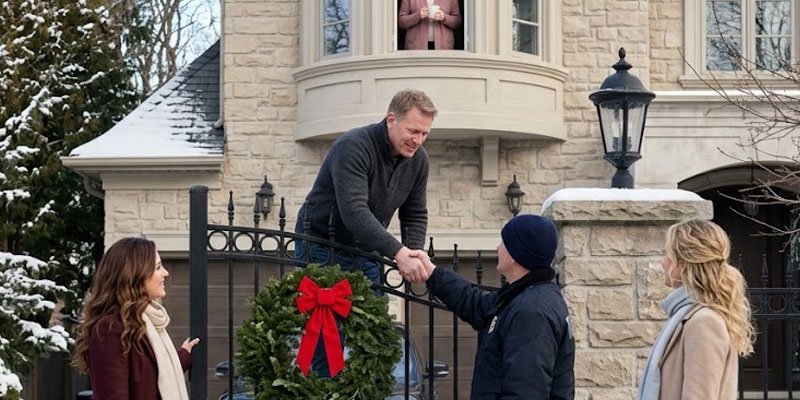
Three months later, when my three children arrived at my house expecting our usual Christmas celebration, my son walked to the front gate and entered the code he had used for years.
A red light flashed on the keypad.
ACCESS DENIED.
He tried the code a second time.
Still nothing.
Jennifer then pressed the intercom.
“Mom? Open up for us.”
I watched them on the security monitor.
Three cars.
Their spouses.
My grandchildren.
Christmas gifts wrapped in colorful paper filled the rear seats.
And there stood my three adult children, apparently certain that my house would always be open to them.
They had no idea how much had changed.
I’m Margaret Whitmore, although almost everyone has called me Maggie for as long as I can remember.
I was 72 years old.
And nearly all my adult years had been dedicated to being a mother.
My husband Richard and I raised our three children in Denver.
Jennifer.
Michael.
Lisa.
They were the center of our lives.
I packed lunches, drove them to school, supported them at soccer games, watched their performances, helped with assignments, and spent sleepless nights caring for them when they were sick.
When they became teenagers, I heard all about their arguments, heartbreaks, and worries over friends and school.
As adults, they still received the kind of support mothers so often give.
I was there to help.
I answered their calls.
I lent financial support whenever they struggled.
I cooked for them when illness struck.
I looked after my grandchildren whenever their busy routines demanded it.
I never kept track of what I gave.
Then Richard died.
He was only 59.
A sudden heart attack took him from us, transforming everything and leaving a painful void behind.
Until then, I had never really imagined a future without him.
After we lost him, the children promised I would never be lonely.
For a while, they kept their word.
But eventually, their calendars became crowded.
Our weekly get-togethers slowly dwindled to once a month.
Monthly visits became gatherings reserved for holidays.
In time, even those holiday visits were no longer certain.
I was always the person reaching out.
“Maybe we can do next weekend, Mom.”
“I’ve got so much going on.”
“Can I ring you later?”
“Sorry, Mom. It’s a hectic day.”
I kept making excuses on their behalf.
Mothers sometimes do that.
We protect our children from painful realities because admitting those realities can wound us more deeply than it wounds them.
Then one morning forced me to see things differently.
I woke up with pain in my chest.
It was nothing like the usual minor ache.
I was terrified.
I immediately thought of Richard’s heart attack, and for several frightening minutes, I feared something dangerous might be happening while I lay alone in my room.
I called 911.
Doctors kept me in the hospital for observation overnight.
Lying under the harsh fluorescent lighting, I picked up my phone.
First, I rang Jennifer.
My call went straight to voicemail.
Two hours later, she sent a text.
“OMG, Mom. So relieved you’re okay. Work’s been insane.”
She didn’t call me back.
Six hours passed before Michael responded.
“Glad you’re all right. Get some rest.”
Lisa answered the next day.
Not one of them came. No one sat with me in the hospital. No one offered to drive me home.
When I was released, I ordered an Uber.
I made the journey home alone.
And I felt something inside me change.
Over the following weeks, I began noticing things I had once dismissed.
Jennifer started asking about Richard’s life-insurance money.
Michael wanted to know whether my estate documents were “all in order.”
Lisa repeatedly suggested selling my house and moving to a retirement community.
At first, I told myself their questions came from genuine concern for me.
Then I looked carefully at the numbers.
My house was worth around $900,000.
I had about $600,000 in savings and investments.
Richard had left behind a life-insurance policy worth $250,000 as well.
All at once, their interest began to feel different.
It wasn’t only my health they were asking about.
They wanted to know about what I owned.
Still, I hoped I was reading too much into it.
So I called each of my three children.
“If anything serious happens to me,” I asked, “can I count on you to be there?”
Jennifer sighed heavily.
“Mom, can we please not start this again?”
Michael’s voice carried irritation.
“We have lives of our own.”
Lisa tried to respond more kindly.
“Mom, you’re in good health. You have financial security. You’ll be fine.”
I reminded them about being hospitalized.
“Not one of you came to see me.”
“We sent messages,” Lisa said.
“But I was scared,” I told her.
At last, Michael snapped.
“Mom, stop phoning every time you’re anxious or alone. We have our own lives. You’re healthy and you’ve got money. Figure it out on your own.”
I hung up.
Then I sat at my kitchen table and cried.
It wasn’t that I wanted to see my children as cruel people.
It was that, deep down, I knew they had spoken sincerely.
For most of my life, I had made being needed my purpose.
That afternoon, I realized no one was going to rescue me from the loneliness I had accepted for so long.
So I let go of that expectation.
The next day, I got in touch with Thomas Brennan.
Thomas was the attorney who had handled Richard’s estate and had represented our family for years.
“There are some things I want to change,” I told him.
He didn’t ask whether anger was driving me.
Nor did he suggest punishing my children.
He simply advised me to think everything through.
Over the next three weeks, we reviewed every detail.
My will.
My house and other property.
My investment holdings.
My insurance policies.
My named beneficiaries.
My bank accounts.
My passwords.
My documents proving ownership.
Thomas reminded me that decisions about an estate belong to careful judgment, not temporary feelings.
I therefore took my time.
I wasn’t trying to hurt my children.
I wanted the years I had left to belong to me.
I changed my estate plans.
I updated the people listed as beneficiaries.
And I took one step that would later leave all three of my children stunned.
The $250,000 life-insurance proceeds would go toward a Denver nonprofit promoting literacy, a cause Richard had always valued.
I strengthened the security around my home too.
New locks.
Fresh passwords.
Changed access codes.
More surveillance cameras.
And, in the end, a completely new security gate.
My children knew the exact spot where I used to keep the spare key.
They knew the old gate combination.
They also knew far more about my money than I had realized.
But none of them knew what I had recently put in place.
The next three months passed in silence.
They didn’t contact me.
I didn’t contact them either.
To my surprise, I started enjoying life more.
I went out for walks.
I spent time talking with neighbors.
I joined a small book club.
I cooked the food I liked instead of planning every meal around my children’s tastes.
I even began planning little trips I had put off for years while trying to fit around everyone else’s timetable.
Two weeks before Christmas, Jennifer finally called.
She sounded exceptionally cheerful.
“We’re all coming to your place for Christmas.”
I paused before answering.
“All of you?”
“Jennifer, Michael, Lisa—the whole family. Spouses and kids included. It’ll be just like the old days.”
For a moment, I was speechless.
It had been more than a year since they had visited me.
“Why now?”
There was a brief pause.
Then her tone turned serious.
“We’re worried about you.”
I said nothing.
“We think we ought to talk about what comes next for you,” she added. “Maybe it’s time to consider a smaller place that’s easier to look after.”
The same subject had returned.
My house. My future. Everything I owned.
“I’m not having the family over for Christmas,” I said.
Jennifer laughed softly.
“Mom, we’ll be there on the 23rd.”
“No.”
She stopped laughing.
“I don’t want anyone coming over.”
She sounded completely taken aback.
“You can’t seriously mean that.”
“I mean it.”
I ended the call.
Three days later, at exactly 2:00 p.m., my security system sent me a notification.
Vehicle detected at front gate.
I opened the camera feed.
Three cars were parked outside.
Jennifer’s SUV.
Michael’s pickup truck.
Lisa’s sedan.
My grandchildren were climbing out of the vehicles.
Someone was carrying a stack of wrapped gifts.
Michael strode up to the keypad as though nothing could stop him.
He didn’t hesitate at all.
He punched in the four numbers he remembered.
The keypad flashed red.
DENIED.
He stared at the display.
Then he tried the same code again.
Red again.
Access denied.
Jennifer walked over to the intercom.
“Mom?”
I silently watched the screen.
“Mom, would you please let us through?”
I pressed the talk button.
“No.”
Several seconds of silence passed.
Michael looked directly at the camera.
“What’s going on here?”
“I didn’t invite you.”
Jennifer sounded offended.
“But it’s Christmas.”
“I know that.”
“We’re your children.”
“And I am your mother,” I replied. “That doesn’t mean you can turn up whenever it suits you.”
Michael moved back toward the gate.
To my disbelief, he grabbed the metal bars and tried to climb over them.
Before he reached the top, a different voice came over the speaker.
“Sir, move away from the gate right now, please.”
Michael froze.
A security guard was standing nearby.
My children turned to face him.
The guard looked toward the camera.
“Ma’am, these people are not on your approved visitor list. Do you want me to escort them off the premises?”
I looked at my children through the screen.
For so many years, I had been the one to welcome everyone in.
The person who always made room.
The person who forgave.
The person who adapted.
The person who sacrificed.
But I no longer believed that loving without conditions meant allowing people into every part of my life without limits.
“Yes, please ask them to leave,” I said.
The next morning, though, I decided to let them come inside on one condition.
We had to have an honest conversation.
Not about my house.
Not about money.
Not about what they might inherit one day.
About what our family had become.
We sat together at my kitchen table while the grandchildren played close by.
I told them what had happened at the hospital.
I described just how afraid I had been.
I explained that coming home to an empty house had made me reconsider everything.
“I stopped reaching out because I finally saw that I was the only one trying to hold this family together,” I said.
Nobody spoke over me.
I then told them I had changed my estate plans.
Jennifer’s eyes widened.
Michael looked down.
Lisa seemed distinctly uncomfortable.
Eventually, Jennifer asked a question far earlier than she should have.
“Is the house still going to remain in the family?”
The room went quiet.
I looked straight at her.
“That,” I said gently, “is the very reason we needed to talk.”
Jennifer finally admitted she had thought about selling my house.
Lisa acknowledged that some of her advice about moving had been influenced by what seemed more convenient for everyone.
Michael said nothing for several minutes before admitting something of his own.
“I just thought there would always be more time to come see you.”
I knew he meant it.
But accepting his explanation didn’t mean erasing what had happened.
“I’m not asking you to call every day,” I said. “I’m not asking you to give up your own lives. I just want you to take an interest in mine while I’m still here to live it.”
We ate dinner together that night.
For the first time in a long while, they didn’t ask me anything about my house or assets.
They asked about me instead.
Was I feeling well?
What had I been reading lately?
Where did I want to go on my travels?
What did my days look like now?
It wasn’t a perfect reunion.
No one offered grand promises.
No one claimed our bond would immediately become what it had been when they were young.
Still, it was a beginning.
Once they had gone, I walked down the hallway and stopped in front of an old family photograph.
Richard was standing in the center.
The children were still small.
I was smiling.
I ran my fingers lightly over the frame.
Taking charge of my future had never required me to stop loving my children.
It simply required me to stop putting my own needs last for their benefit.
The new code on the gate had never been just a safety measure.
It was a symbol of boundaries.
For years, my children had believed my door would open automatically because I was their mother.
And in one respect, they had been right.
I would always love them.
But love doesn’t mean surrendering your peace of mind.
It doesn’t mean agreeing that your whole existence is nothing more than property waiting to be passed down.
And it certainly doesn’t mean being endlessly available to people who value you only when they need something.
If my children truly wanted to be part of my life, they were still welcome.
From then on, however, they would have to knock first.
Above all, they would have to come for the right reasons.