
“Dad. Please don’t call 911! I didn’t do anything!” But he trusted my sister’s lies and let the police take me away. During 18 months in prison, not one family member visited. The day I finally walked free was the day they lost everything…
“Dad, don’t call 911, please! I haven’t done anything!” I pleaded, but his finger had already touched the screen.
My sister waited behind him in the hallway, dressed in a white sweater and crying into her palms as though she were the blameless victim. Broken glass from Dad’s office safe littered the floor. Its door hung open, the charity account documents were gone, and a transfer request appeared on Dad’s laptop with my name entered in the login box.
“You’ve stolen from your own father,” Dad told me, his voice colder than the marble under my bare feet.
“I haven’t,” I said faintly. “Look at the cameras. Look at the timestamps. Please, check something.”
My sister Lena lifted her eyes, wet with tears. “She threatened me last week. She told me half the business should belong to her.”
“None of that is true.”
Lena flinched as if I had hit her. “Look! She’s starting again.”
Mom remained beside the stairs, offering neither tears nor a word in my defense. My brother Grant rested against the wall with his arms crossed, flashing the same self-satisfied smile he always wore when things went wrong for me.
I had always been the reserved daughter—the one who sorted out payroll mistakes, handled supplier problems, repaired Dad’s contracts, and never asked for credit. Lena was the beloved child, Grant the heir, and I was merely convenient.
Eleven minutes later, two police officers arrived.
Dad gestured at me.
“She forced her way into my safe,” he told them. “She attempted to take two hundred thousand dollars from our foundation.”
For one last moment, I looked directly at him. “You know who I am.”
He looked away.
While the officers secured the handcuffs around my wrists, Lena moved closer. Her crying had stopped. Her lips almost didn’t move.
“You should have known your place, Claire.”
All at once, I understood. Nobody was panicking. This had been arranged.
The following eighteen months consisted of concrete walls, metal meal trays, women weeping through the night, and relatives pretending I had ceased to exist. There were no visits, no letters, no birthday cards. Dad arranged for my apartment to be cleared out. Mom handed away my clothing. Grant took possession of my car. Lena posted pictures from charity galas with Grandmother’s pearls around her neck.
Still, prison offered me one thing.
Quiet.
In that quiet, every detail returned: the passwords Dad used over and over, the private company documents I had backed up, and the questionable transfers I had noticed before being arrested.
They thought I was powerless.
They’d forgotten I designed the very system they used to frame me….
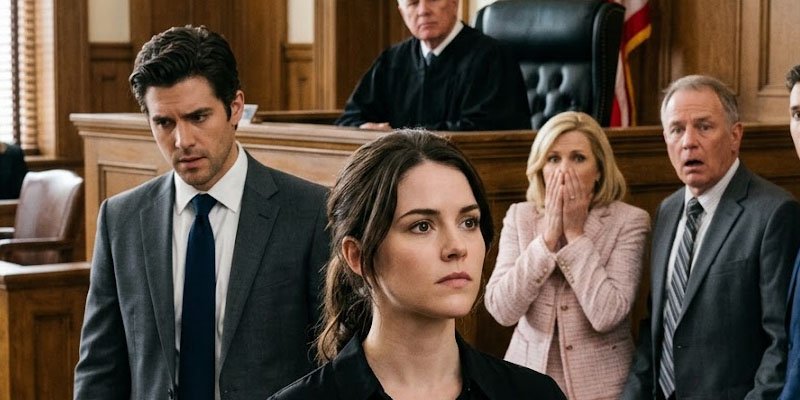
At my sentencing, Lena occupied a front-row seat in navy clothing, holding Dad’s hand like an angel overcome with grief. When the judge handed down eighteen months, she lowered her face. To everyone else, she looked devastated.
To me, she looked relieved.
I got through prison by drawing as little attention as possible. I worked in the library, assisted other inmates with letters from the courts, and read legal cases until my eyes burned. One afternoon, an older prisoner called Marisol brought some papers to my table and observed, “You examine numbers the way a lawyer examines blood.”
She had been a corporate investigator before her imprisonment. From her, I learned how to follow shell companies, spot altered metadata, make official evidence requests, and make influential people nervous without ever lifting my voice.
With six months left before my release, I filed my first motion on my own.
A second followed.
After that, I lodged a complaint with the state charity bureau.
Then I requested the original security footage from Dad’s home, instead of the cut version Lena’s attorney had submitted.
A sloppy error gave me my first opening.
The laptop login that implicated me had been created at 9:14 p.m. The police report placed me inside Dad’s office at that time. But my prison intake records included location data from my phone, obtained that evening without anyone appreciating what it meant. At 9:14 p.m., I had been at a gas station twelve miles away, buying cold medicine for Mom.
What I uncovered next was even more compelling.
The charity documents allegedly taken from the safe had never been destroyed. Someone had changed their names and placed them in an archive folder on the company server—the same system I had programmed to run automatic backups at 2 a.m. every night.
Those backups exposed the whole scheme.
Lena and Grant had spent three years diverting money through fake vendor invoices. At first, Dad had been unaware. After learning what they were doing, he covered it up to protect the family’s good name. When I started asking about the payments, they concluded that I needed to be removed.
By the time I stepped out of prison, my hair had been cut shorter, my face had grown leaner, and my heart had become something hardened, precise, and restrained.
Not one of them was there to collect me.
That was fine with me.
A black sedan sat waiting close by.
Attorney Samuel Price was inside, the sole person who had answered my letters. He passed me a paper cup of coffee and a folder.
“Your conviction has been overturned,” he told me. “The prosecutor’s office is opening the case again.”
I took the folder from him.
Inside were subpoenas, financial documents, statements given under oath, and a date for a civil hearing.
Samuel searched my face. “Are you prepared to face them?”
I looked back as the prison gates shut behind our car.
“They had eighteen months,” I replied, “to come and visit me.”
“What happens now?”
“They can see me in court.”
The hearing room was smaller than I’d imagined, which suited me.
Dad was the first to arrive, wearing a gray suit. He looked noticeably older, although his arrogance still seemed to shield him. Mom came behind him with her lips tightly set. Grant entered chuckling at something on his phone. Lena arrived after everyone else, wearing cream and a string of pearls, her expression a picture of innocence.
Then her eyes found me.
The smile left her face.
Dad halted. “Claire?”
I remained on my feet beside Samuel Price without a word.
Lena broke the silence. “She’s harassing us. That woman is a convicted thief.”
“Her conviction was overturned,” Samuel answered evenly. “Last Thursday.”
Something shifted in Grant’s face.
The judge came in, and we all sat down.
Samuel produced the gas station video, the timestamps, the receipt, and the location data. He then showed the altered security footage used to incriminate me, followed by the original version retrieved from the server backup.
In the complete recording, Lena walked into Dad’s office at 8:52 p.m. Grant came in behind her with a laptop bag. Ten minutes later, Dad joined them. He looked weary, but not startled.
Mom pressed a hand over her mouth.
“That’s been fabricated,” Lena muttered.
Samuel clicked again.
An audio recording began.
Dad’s voice said, “Be certain Claire’s name is attached. She’s getting too close with her questions.”
Grant replied, “She’ll give in. She always has.”
Then Lena: “Once she’s out of the way, we divide her shares as well.”
The room fell so quiet that I could hear my father breathing.
Finally, I turned toward him.
“You dialed 911 without looking at the cameras,” I told him. “Without asking me a single genuine question. I pleaded with you.”
His lips parted, but no words came.
The judge ordered the evidence referred for criminal review. Before sunset, Lena and Grant were facing questions concerning fraud, perjury, and evidence tampering. During that same week, Dad was removed from the foundation’s board. The charity’s accounts were frozen, donors brought lawsuits, and journalists assembled outside the office he had once displayed with such pride.
And it wasn’t over yet.
The civil case came next.
Twenty percent of the company still belonged to me, a gift of shares from my grandfather that Dad had no power to wipe away. During my incarceration, those shares had been illegally diluted. My apartment had been emptied without my permission, and my name had been ruined in public while my relatives toasted their dishonesty with champagne.
Reaching a settlement took three months.
Grant had to sell his house.
Lena parted with the pearls.
Dad sold the lake property he treasured, apparently caring more about losing it than about offering an apology.
I never asked for it all.
I reclaimed what I was legally owed and obtained a public statement restoring my good name.
That was enough for me.
Six months afterward, I opened a forensic accounting firm of my own in a sunlit downtown office. My grandfather’s old brass nameplate hung behind my desk, buffed to a bright shine.
A letter from Dad arrived one afternoon.
Claire, I made a mistake. Please give me a chance to explain.
After reading it a single time, I put it through the shredder.
Outside my window, the city carried on without seeking anybody’s approval. My coffee was still warm, my office door was locked, and my name was clear again.
For the first time in eighteen months, there was no anger inside me.
Only peace.
And that was something they had forfeited for good.




