
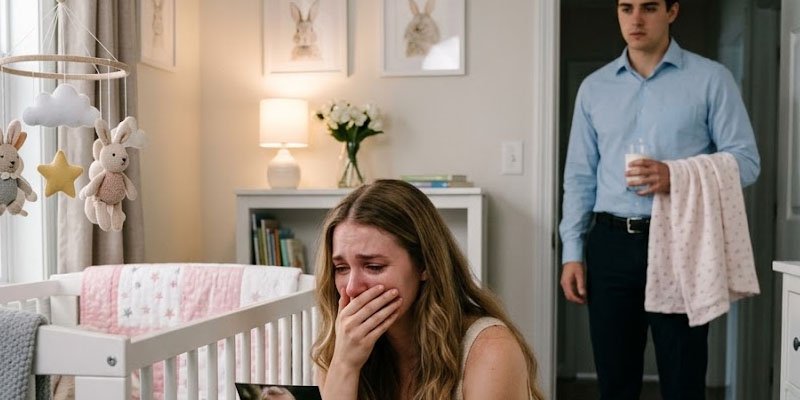
## Chapter 1: Fifty-one calls
Lily went to bed with a headache.
That evening offered no warning of the nightmare ahead.
She’d eaten half a grilled-cheese sandwich, rejected the odd-smelling tomato soup, and snuggled against me beneath her yellow blanket from kindergarten.
At nine-thirty, I took her temperature.
101.8.
I gave her our pediatrician’s recommended fever medication, fetched water, and stayed while she complained the hallway light hurt her eyes.
By midnight, her temperature topped 104.
At 12:26, she threw up.
At 12:41, sitting upright was almost beyond her.
At 12:53, she cried when asked to lower her chin toward her chest.
An icy fear swept through me.
I phoned the pediatrician’s after-hours service.
Within thirty seconds, the nurse said, “Mrs. Vance, get her to the emergency room immediately.”
I dressed over my pajamas, wrapped Lily in her coat, and carried her barefoot through the garage because her legs felt strange.
She weighed forty-seven pounds.
Six months earlier, she’d proudly declared her weight after stepping onto our bathroom scale.
“Mommy, I’m nearly fifty pounds.”
Those forty-seven pounds felt impossibly heavy that night.
At a hospital near Chicago, events unfolded at speed.
One nurse lifted Lily out of my arms.
A physician asked me questions.
A second nurse sliced open her pajama sleeve to place an IV.
I heard someone say lumbar puncture.
Someone else mentioned bacterial meningitis.
Then, intensive care.
My first call to David was at 1:18 a.m.
Directly to voicemail.
I tried again at 1:21.
Next, 1:24.
Then 1:29.
After two rings, his phone disconnected.
David was on vacation in the Bahamas.
Officially, he needed a break from being “burned out.”
That expression had entered his vocabulary after Christmas.
Worn out by his job.
By his obligations.
By having everyone rely on him.
He especially resented reminders that fatherhood offered no temporary leave.
Two weeks before, he’d declared he was taking a yacht trip.
He described it as “a reset.”
According to him, he would be traveling alone.
Without business calls.
Without social media.
Without family interruptions.
When I questioned two weeks away with our seven-year-old at home, he regarded me as unreasonable.
“This is precisely why I need this, Sarah. You never give me room to breathe.”
Later, I found out Julianne Mercer was with him.
Twenty-five-year-old Julianne had worked as his fitness instructor for eight months.
At our first meeting, she laughed, resting her hand unnecessarily long on David’s shoulder.
Afterward, I brought it up.
He laughed it off.
“She puts her hands on everyone. That’s part of her work.”
Evidently, her services also included sleeping with married clients.
At 2:47 a.m., Dr. Patel led me to a little consultation room.
His youthful appearance struck me.
Grief retains peculiar details.
Not always meaningful ones.
His spectacles.
Coffee staining his white coat.
A shoelace left undone.
“Your daughter is gravely ill,” he told me cautiously.
I was already aware.
“What should I do?”
“We’re pursuing aggressive treatment. But if there’s a second parent—”
“I’m trying to reach him.”
David intentionally declined the following three calls.
My screen confirmed it.
Call declined.
Unlike unanswered calls, these meant he’d seen my name and deliberately refused.
I entered a message:
LILY IS IN INTENSIVE CARE. PHONE ME IMMEDIATELY.
No response.
I forwarded a photo.
Lily lying under the hospital’s white covers.
Intravenous lines.
Supplemental oxygen.
Monitoring equipment.
Her little purple summer-camp bracelet still encircled her wrist.
Again, no response.
By four o’clock, my calls totaled twenty-six.
By five, the total was thirty-nine.
At 5:38, David finally texted.
Stop it, Sarah.
I looked at it until my vision blurred.
I tried calling once more.
Declined.
Another text came at 5:41.
I already said I’m taking a digital detox.
Your insistence on constantly contacting me is precisely why I told you I feel smothered.
If nobody is actually dying, deal with it yourself until I return.
My eyes stayed fixed on that line.
If nobody is actually dying.
Twenty feet away, behind glass, six medical workers fought for his daughter’s life.
My answer was:
SHE IS DYING.
Followed by:
DAVID, WE COULD LOSE LILY.
Then:
PLEASE PHONE HER.
His answer arrived at 6:02.
He didn’t call.
Another text came.
I can’t go through this with you anymore.
For two weeks, I need every emergency to stop being my responsibility.
My phone is going off.
Don’t get in touch with the yacht.
That yacht.
Never mind his wife.
Never mind his daughter.
Never mind the hospital.
Keeping his holiday undisturbed was what mattered to him.
Fifteen minutes later, my older sister Rebecca arrived in mismatched shoes and a coat over pajamas.
She found me outside Lily’s room, studying David’s text.
She read it.
Her face shifted.
“Where has he gone?”
“To the Bahamas.”
“Is she with him?”
I raised my eyes.
Rebecca had suspected Julianne long before I acknowledged the possibility.
“She is.”
Rebecca sat beside me.
This time, she gave me no marriage advice.
She simply took my phone.
“Don’t call him anymore.”
“I need to let him know.”
“You already have.”
“He is her dad.”
“And you already told him.”
“What if she wakes wanting him?”
Rebecca swallowed hard.
“We’ll handle that if it happens.”
For a short time, Lily woke.
It was 10:17 that morning.
She was barely conscious.
Her eyes half-opened.
I instantly bent over her.
“Mommy is here with you.”
Her lips stirred.
I bent nearer.
“What is it, sweetheart?”
“I’m cold.”
That was all.
Between my palms, I warmed her hand.
“You’re all right. Mommy’s here beside you.”
Those were her final words to me.
By lunch, the doctors stopped expressing hope.
At four, the discussion turned to catastrophic swelling.
At five-thirty, they asked about bringing other relatives.
Rebecca phoned our mother.
I didn’t contact David again.
Fifty-one calls appeared on my phone.
At 6:14 p.m., the sound of one monitor altered.
A nurse pulled the curtain closed.
Beside Lily’s bed stood Dr. Patel.
I held her right hand while the machines stopped sustaining what her body could no longer do.
I kept smoothing her hair.
When nightmares frightened her, Lily would slip into my bed and murmur, “My hair, Mommy.”
She wanted her hair brushed from her forehead until she slept.
That was exactly what I kept doing.
Stroking back her hair.
Once more.
Then once more.
And once more.
Until Dr. Patel softly said she was gone.
I don’t recall screaming.
Later, Rebecca told me I never did.
I just pressed my forehead to Lily’s, repeating myself.
“I’m right here.”
Eventually, the nurse covered Lily’s body to her shoulders.
Slowly, the hand I held grew cold.
My phone buzzed at 7:03.
For a single, senseless second, I wished it would be David.
Instead, an automated school reminder announced Friday’s Pajama Day.
A laugh escaped me.
A shattered, dreadful sound.
Then I switched my phone off.
David wouldn’t learn his daughter was dead through another call he could refuse.
He wanted to be unreachable.
I granted him that wish.
Entirely.
## Chapter 2: The funeral without her father
For four days, I faced questions no mother should hear.
Pink or white flowers?
Casket closed or open?
Which picture should go on the memorial card?
What would Lily wear?
Which song did she love most?
Cremation or burial?
I discovered mourning’s endless paperwork.
The forms were indifferent to my daughter’s death.
The funeral home required signatures.
The cemetery required permission.
The school needed informing.
The insurer needed numbers.
I managed everything because nobody else could.
Rebecca offered to choose, but selecting Lily’s blue dress myself somehow mattered.
The daisy-embroidered one she wore for my mother’s birthday.
David hadn’t attended that occasion either.
His job.
It was always his job.
Until something besides work kept him away.
The morning after Lily died, I texted David once more.
It wasn’t because I wanted him there.
I wanted eventual proof that I’d tried everything.
Yesterday at 6:14 p.m., Lily passed away.
The funeral will be at St. Matthew’s on Monday, at 10 a.m.
There will be no further messages from me.
Delivery was confirmed.
He didn’t answer.
Months afterward, Julianne confirmed David had read it.
He simply disbelieved me.
She said he looked at his phone and remarked, “She wants to make me come back.”
Those words eventually reached me through lawyers.
For a long while, I wished they never had.
Monday began with freezing rain.
Under a black umbrella, Lily’s teacher stood with twenty-three parents from her class.
The principal was there.
So was her soccer coach.
The elderly neighbor three houses down who gave Lily peppermints every Halloween.
Dr. Patel attended as well.
He stayed quietly at the back, departing before I could thank him.
David’s parents came by plane from Arizona.
His mother, Elaine, collapsed against me upon seeing the tiny white coffin.
“Where has he gone?”
I met her eyes.
She already knew.
Her son remained in the Bahamas.
Richard, his father, covered his mouth and looked away.
Neither of them attempted to excuse David.
I hadn’t realized how much that would mean.
Rain ran over my face at the cemetery, concealing the tears.
The minister concluded.
Mourners began departing.
I remained.
Rebecca placed a hand on my shoulder.
“Sarah.”
“Give me five minutes.”
“I’ll be at the car.”
After the others were gone, I knelt down beside the flowers.
Sometimes the body understands what the mind rejects.
My arms longed to take hold of Lily.
Pick her up.
Bring her back to the car.
Switch the heat on.
Say we were free to leave that dreadful place.
Instead, for the final time, I laid my hand on the chilly wood.
“I’m sorry your daddy didn’t come.”
I spoke before I could hold the words back.
Then I changed what I’d said.
“No.”
I wiped off rain.
“I’m not the one who owes that apology.”
It was my first clear thought in four days.
His failure to come belonged to David.
His choices belonged to him too.
As did his cruelty.
I wouldn’t spend my life dressing his failures as love.
I went back to the house that afternoon.
A four-million-dollar monument in limestone, glass, white oak, marble, and quiet.
David had insisted on purchasing it three years earlier.
He prized the address’s prestige.
Its round driveway, heated garage, wine room, gym, and vast windows facing the ravine.
For Lily, only one part mattered.
Her bedroom’s window seat.
I sat there until evening.
On the pillow was her stuffed bunny.
Next to the bed sat a library book, open and face down.
When I lifted it, I could almost hear her objection.
“You’ll damage the spine, Mommy.”
I closed it correctly.
Then my attention caught on David’s office door across the hall.
It was locked.
Nothing unusual.
He locked it whenever traveling.
For years, his explanations had satisfied me.
Private information about clients.
Delicate business documents.
His personal privacy.
Grief, though, alters fear.
The compliance that fear once produced falls away.
While our daughter was dying, David had left me on my own.
I no longer cared whether entering his office violated his privacy.
His emergency key occupied the drawer beneath the built-in wine fridge.
For years, I’d known where he kept it.
Never touched it.
The office held hints of cedar and his expensive meeting cologne.
The desk was spotless.
His laptop was missing.
His files were straight.
His pens were orderly.
One personal possession remained.
Lily’s photograph.
No family portrait.
Only our daughter.
For an instant, that nearly undid me.
Her picture stood in his workspace.
But as she died, he wouldn’t take a call.
I began opening drawers.
Records of taxes.
Documents for property.
Business records.
It was all ordinary.
Then I noticed the bottom drawer opened less fully than the others.
I pulled it out entirely.
Behind it, a slim steel lockbox occupied the cabinet.
David had never mentioned its existence.
One little key on his office ring unlocked it.
It held another laptop, three prepaid cellphones, two passports, and a hardback biography of Winston Churchill.
The weight of the book seemed wrong.
Its pages contained a hollow.
Bank statements were tucked inside.
They weren’t issued by our bank.
Nor by any institution familiar to me.
The Cayman Islands.
The British Virgin Islands.
Singapore.
I’d to look at the balances again.
$814,000.
$1.2 million.
$463,500.
Unfamiliar business names filled the pages.
Mariner Ridge Holdings.
Blue Reef Procurement.
Caldera Advisory.
David was listed as the beneficial owner on one paper.
Instructions for transfers appeared on another.
Then one discovery steadied my trembling hands.
It was my name.
Sarah Vance — authorized guarantor.
That account was completely new to me.
I hadn’t signed any of its documents.
But the signature was an almost flawless match.
Almost flawless.
For twelve years, David watched me sign birthday cards, mortgages, school forms, checks, and tax returns.
He understood how I curved the S.
Yet he always omitted the slight upward flick ending my surname.
I lowered myself into his desk chair.
Stared at the phone that wasn’t ringing.
Then at Lily’s photograph.
There wasn’t any sense of strength or cleverness.
Just exhaustion.
But something firm existed underneath it.
A limit.
I photographed every paper in place.
Then I called Margaret Cole, our home-purchase and estate-planning attorney.
Three rings passed before she picked up.
“Sarah? I heard what happened to Lily. I’m terribly, terribly sorry.”
“I appreciate that.”
I looked over the foreign account records.
“I need your help.”
“Regarding the estate?”
“Regarding David.”
Quiet.
“What’s happened?”
“I believe my husband has concealed money.”
She paused again.
“How much money?”
“I haven’t established that.”
I looked at the pile.
“Enough that guessing frightens me.”
Margaret became businesslike while remaining kind.
“Leave everything in place. Don’t challenge him about it.”
“Photograph whatever you can. Don’t access accounts that aren’t lawfully yours.”
“One more thing, Sarah?”
“Yes, Margaret?”
“If you’re considering divorce, tell me plainly now.”
I looked in the direction of Lily’s room.
“I am going to divorce him.”
Since laying my daughter to rest, I hadn’t made another decision.
Unlike everything else that week, those words didn’t hurt.
## Chapter 3: The locked drawer
Next morning, Margaret introduced forensic accountant Nathan Bell.
Sixty-two-year-old Nathan spoke softly and looked like a cherished grandfather.
His reading glasses hung on a cord; his battered leather briefcase looked older than David’s entire office.
He spent two hours asking questions.
Was Mariner Ridge Holdings a name I knew?
It wasn’t.
Had I authorized accounts overseas?
I hadn’t.
Was I aware that David held stakes in external procurement companies?
I wasn’t.
Did I recognize the sums in the wire transfers?
I didn’t.
One particular paper made Nathan pause.
“Remind me of your husband’s position?”
“He’s Vance Meridian’s chief operating officer.”
David founded Vance Meridian, a regional logistics and medical-supply distributor, with two college friends.
It employed almost four hundred across Illinois and Wisconsin.
None of the ownership was mine.
David had never let me forget it.
The business predated our marriage.
Nathan set a pair of documents next to each other.
One transfer within the country.
One deposit abroad.
The sums matched.
So did the dates.
“What does that mean?”
“I haven’t determined that yet.”
He studied the papers.
“But I recognize what it looks like.”
“Like what?”
“Diversion of vendor payments.”
I just looked at him.
He explained how an executive authorized to pay a genuine supplier $300,000 could divert it through his own business, pad invoices, split payments, or create a shell company.
A single bogus invoice might look suspicious.
Several dozen might constitute a coordinated operation.
“How serious is this?”
“I can’t say yet.”
He touched the papers.
“Until I can, make no assumptions.”
For the first time that week, someone discouraged expecting the worst.
I was thankful for that.
Sadly, the evidence kept pointing toward the worst explanation.
A password secured the other laptop.
I made no attempt to get around it.
Margaret had expressly advised against that.
Instead, she arranged copies of lawfully held records and safeguarded my undisputed assets.
Though we bought the house during marriage, a documented $1.6 million of the down payment came from my father’s inheritance.
My mother had owned several of the paintings.
The dining table had been my grandmother’s.
My inheritance account bought much of the furniture before funds were commingled.
Punishing David wasn’t Margaret’s objective.
Keeping assets from vanishing was.
Within forty-eight hours, she filed for divorce and sought emergency financial restrictions over suspected offshore marital-fund transfers.
A judge temporarily barred both of us from selling, transferring, hiding, or encumbering major marital assets.
I followed the order to the letter.
That was important.
For years, David had acted however he liked, then justified himself later.
I wouldn’t follow his example.
Everything removed belonged to Lily or me, or had explicit legal approval.
Every object was photographed.
Everything was put in a catalogue.
Each box was logged.
All the while, Nathan kept looking into the records.
His call came on Thursday afternoon.
“Is anyone with you, Sarah?”
I sat sorting schoolwork on the floor of Lily’s room.
“No, I’m alone.”
“Please come over to Margaret’s office.”
My stomach clenched.
“What for?”
“This has become more than a divorce issue.”
Two hours afterward, Nathan placed a yellow legal notepad in front of me.
He’d located eighteen transfers exceeding $6.4 million over four years.
A number went through companies under David’s control.
Others seemed linked to suppliers for Vance Meridian.
Several crossed offshore accounts, returning to the United States as loans or consulting earnings.
Next, he produced the paper carrying the imitation of my signature.
It made me a guarantor for obligations associated with a shell business.
“Had this fallen apart,” he explained, “somebody could have claimed you participated.”
Nausea washed over me.
“Is he able to do that?”
“He’s already done it.”
Margaret moved closer.
“Proper documentation makes the forged signature more helpful than harmful.”
David’s text came back to me.
Not every emergency is my responsibility.
Apparently, hidden transactions worth millions were within his responsibilities.
Until taking on the risk required my signature.
Nathan put forward a different record.
Over twelve months, Blue Reef Procurement had sent JM Performance Consulting $186,000.
The business used Julianne Mercer’s mailing address.
For several seconds, no one said a word.
I almost let out a laugh.
There was nothing funny about it.
The figure felt obscene beside Lily’s desired $35 soccer cleats that autumn.
David insisted she wait for Christmas because “money doesn’t grow on trees.”
He’d lectured our seven-year-old about responsible spending for ten minutes.
At the same time, Julianne’s business was paid $186,000.
“What did she advise them about?”
Nathan moved his head from side to side.
“I couldn’t tell you.”
“Pilates is what she teaches.”
“Then logistics procurement consulting pays her extraordinarily well.”
I opened the door of Lily’s closet that night.
Along the floor were her small shoes.
Her cleats for soccer.
Her boots for rain.
Pink sneakers marked along one side by her attempt at writing her name.
I sank down onto the carpet.
At last, I wept over David.
The affair wasn’t why.
Neither was the money.
Not even the calls he wouldn’t take.
I wept over countless explanations to Lily for his absences.
Daddy has things to do.
Daddy was at a meeting.
Daddy wished he could come.
Even when Daddy can’t come, he loves you.
For years, I’d translated David’s selfishness into reasons Lily could tolerate.
She died while I was still attempting to get him home.
Margaret phoned the following morning.
“Nathan has talked to someone.”
“To whom?”
“Someone he knows at the federal level.”
I shut my eyes.
“Have I done something wrong?”
“You haven’t.”
That surprised me.
She went on.
“However, an investigation is already underway.”
My eyes opened.
“What do you mean?”
“Apparently, irregular vendor payments put Vance Meridian under review months ago. They lacked evidence directly linking David to the offshore entities.”
My eyes went to his locked office.
“What about now?”
“Perhaps now they have it.”
Special Agent Marcus Hale came that afternoon.
He didn’t burst through my door.
No threats.
No theatrical speeches.
At my kitchen table, he accepted Rebecca’s coffee, presented identification, and explained what he could disclose.
There was an active investigation.
Some details couldn’t be disclosed.
The papers I’d found seemed pertinent.
He wanted the exact circumstances of their discovery.
I gave him the whole account.
The service for Lily.
The office kept locked.
The concealed drawer.
The lockbox made of steel.
The statements from banks.
The additional laptop.
After I finished, he waited a moment.
Then he asked, “Mrs. Vance, did your husband know you’d discovered these records?”
“He wasn’t.”
“Is he aware you’ve initiated a divorce?”
“He isn’t.”
“What day does he come back?”
I consulted David’s itinerary left in the kitchen.
“This coming Thursday.”
“Can he use a private plane?”
“Not one of his own.”
“Could he leave the Bahamas for another country?”
“Of course.”
Hale inclined his head.
“Do not discuss any of these matters with him.”
“I’d no intention of it.”
David at last got in touch that night.
Lily had been dead for nine days.
I hope you’re calmer now.
Thursday morning is when I’ll get home.
This trip clarified plenty. We must discuss boundaries.
I went through it a single time.
After that, I handed the phone to Rebecca.
She gazed at it.
“Does he really still not know?”
“He knows what I told him.”
“But Sarah—”
“Not believing it was his choice.”
Another message came twenty minutes afterward.
Julianne’s connection changed; she’s returning through Chicago.
If you run into her, don’t make things awkward.
After reading it, Rebecca murmured, “My God.”
There wasn’t any feeling in me.
Initially, the numbness scared me.
Then it made sense.
Anger cannot reach the bottom of certain wounds.
David had passed the point where I needed his understanding.
He was free to believe whatever suited him.
The truth would be waiting when he came home.
## Chapter 4: Fourteen days
Little by little, the house grew empty.
It wasn’t an act of fury.
No movers ripped televisions from walls while I imagined David’s astonishment.
That would have been simpler.
Every item instead required a decision.
Retain it.
Put it away.
Give it away.
Leave it behind.
Lily’s room presented the greatest difficulty.
Almost all of it stayed with me.
The books she read.
Her bedcovers.
Her lamp shaped like the moon.
Shells collected during our vacation in Michigan.
Her twenty-three bracelets of friendship.
Every handwritten note slipped under my bedroom door.
I love you 100000000 Mommy.
Tomorrow can we eat pancakes?
Sorry for yelling about my bath.
I personally packed those things.
Rebecca wanted to know where I planned to stay.
I’d rented a three-bedroom townhouse twenty minutes away.
A larger place was within my means.
I no longer wanted a monument to David’s ambitions for a home.
The backyard was small.
The kitchen was narrow.
The fireplace didn’t work very well.
Around four, afternoon light spread through the hallway upstairs.
At the first viewing, I pictured Lily dropping her backpack on the stairs.
I almost turned it down.
Then I imagined surviving there.
I put my name on the lease.
Over that fourteen-day period, David placed a single call.
I wasn’t the recipient.
His mother was.
Elaine’s phone rang at my dining table.
She looked at the display.
“It’s my son.”
My chest constricted.
“You’re free to take it.”
“I’ve no idea what to tell him.”
“That’s for the two of you.”
She moved into the living room.
Bits of the conversation reached me.
“Yes, David.”
“No, David.”
“She already told you.”
An extended pause followed.
Then her voice cracked.
“Absolutely not, David. Don’t dare say such a thing.”
Another stretch of quiet.
“Because I was standing next to her coffin.”
My packing stopped.
Elaine started to weep.
“Yes, I mean your daughter.”
There wasn’t any sound.
“No. I am telling the truth.”
Her voice then rose:
“Fifty-one times your wife phoned you!”
“No. You’re going to listen to me,” I heard her say.
I headed upstairs.
Certain conversations no longer involved me.
Twenty minutes later, Elaine found me folding Lily’s sweaters.
“He claims he didn’t realize.”
I went on folding.
“He says he thought you were manipulating him into ending his holiday.”
Another sweater went into the box.
“He says you’d been fighting so much, he assumed—”
“Please, Elaine.”
She fell quiet.
I raised my head.
“His reasons aren’t something I need to hear.”
Her face crumpled.
“He’s still my son.”
“I understand.”
“I do love him.”
“I understand that.”
“But I don’t recognize him now.”
I nodded.
“That, too, I understand.”
“He’d like to phone you.”
“I don’t want that.”
“But Sarah—”
“For twelve hours, I pleaded with him to pick up.”
I didn’t raise my voice.
“I won’t spend a minute easing his guilt over refusing.”
Elaine dropped her gaze.
Then she helped fold the remaining sweaters.
Voicemails from David started coming.
Not once did I pick up.
He seemed bewildered in the first.
“Mom has told me, Sarah. I can’t make sense of what happened.”
“Phone me back.”
In the second, he sounded furious.
“How could you tell me something like that in a text? What’s the matter with you?”
Fear entered his voice in the third.
“Tell me it isn’t true. Please.”
During the fourth, he wept.
“I’d no idea.”
The fifth tried to change the story.
“You knew we had problems. You knew I thought you wanted to force me home.”
The sixth faulted bad reception.
The seventh faulted the holiday.
The eighth faulted Julianne.
The ninth faulted me again.
By message twelve, he finally said the expected words.
“I got it wrong.”
An error.
An error was forgetting to buy milk.
An error was failing to close the garage.
An error was missing a school show when a meeting went overtime.
Deliberately declining fifty-one calls, reading that your child could die, forbidding your wife to contact you, and staying aboard a yacht with your mistress wasn’t one error.
Those were successive choices.
I kept all his messages for Margaret.
Then I quit playing them.
Hale called on two occasions.
The second time, he asked whether David’s return arrangements had changed.
“They hadn’t.”
“Which flight?”
I gave him the information.
His next words took me by surprise.
“Mrs. Vance, let me make something clear about Thursday.”
I listened.
“You aren’t causing what happens to your husband.”
I almost laughed.
Even a federal agent understood what I’d forgotten for years.
“You gave us information.
Our investigators corroborated that information independently.
Charging decisions depend on evidence, not your marriage.”
“I’m grateful.”
“I’m serious.”
“I am as well.”
My first night sleeping in the townhouse was Wednesday.
Very little furniture had made it there.
Only a mattress.
A pair of lamps.
Packing boxes.
Rebecca spent the night with me.
At 3:12 a.m., I dreamed of Lily phoning me from the hospital.
For three waking seconds, I believed she was alive.
Then the truth came back.
I sat beside the mattress, weeping until my throat hurt.
Rebecca came in.
“Are you all right?”
“I’m not.”
She lowered herself beside me.
We both let that answer stand.
When the sun came up, I took a shower.
Dressed in black pants.
And a sweater in gray.
I wore no makeup.
I left off my wedding band.
Arranging the process server had been Margaret’s task.
The remaining arrangements were Hale’s.
Some details were unknown to me.
I’d no need to learn them.
By eight-thirty, I’d driven to our old neighborhood and parked at Susan’s.
Our neighbor Susan had known Lily all her life.
After I explained the situation, she raised her garage door.
“You can stay however long you need.”
The house was visible through her front window.
The place I once called home.
Without my car, the driveway seemed strange.
Inside, three men were waiting.
A pair of Illinois State Police officers.
Along with Agent Hale.
On the table by the entrance lay a thick folder bound in leather.
At 9:17, a black SUV turned onto the street.
My stomach drew tight.
David was home.
## Chapter 5: The house he thought would wait
The SUV halted beneath the bare oak at our driveway’s end.
David emerged first.
He looked tanned.
That sight almost turned my stomach.
While he basked in sunshine, our daughter’s fever had led to her funeral.
He wore white sneakers, navy trousers, shades, and my expensive tenth-anniversary gift watch.
Julianne got out on the passenger side.
A big shopping bag occupied one hand; a straw hat hung from her wrist.
Across the street, I could see David smiling at her remark.
Briefly, irrationally, they resembled an ordinary couple returning from vacation.
Their cases.
Their sun-browned skin.
Their duty-free shopping.
Their driver taking out the bags.
Then David took a closer look at the house.
His smile vanished.
No wreath on the door.
No car out front.
No lights in front rooms.
He made a remark to Julianne.
She lifted her shoulders.
The driver left.
David unlocked the entrance.
He disappeared from my view at Susan’s window.
Hale later recounted events inside.
In the foyer, David called my name.
“Sarah?”
No one answered.
He continued into the house.
Almost nothing remained in the living room.
My mother’s paintings were missing.
My grandmother’s rug had gone too.
The piano Lily practiced on was in storage.
Reportedly, David stared for several seconds.
After that, he laughed.
Nothing had amused him.
Sometimes arrogance greets unexpected reality with laughter.
He called up the stairs.
“Really, Sarah?”
Julianne stayed close to the doorway.
David put his case down.
“Our marriage needed exactly that vacation,” he declared. “If this is some theatrical separation, it isn’t happening.”
At that point, Hale stepped out of the hall.
Behind him were the two state officers.
David froze.
Hale said David looked truly afraid for the first time.
“Are you Mr. Vance?”
David examined their badges.
“Yes, what is it?”
“Are you David Michael Vance?”
“I am.”
Hale unfolded the leather folder.
“My name is Marcus Hale, special agent.”
David looked over at Julianne.
“What’s going on?”
“There is a federal arrest warrant for you.”
Julianne dropped the shopping bag.
David didn’t move.
Hale went on with his explanation.
The actual charges exceeded the detail in later newspaper headlines.
Fraud involving wire communications.
Criminal conspiracy.
Laundering of money.
Allegations of forgery connected to financial instruments.
Other possible offenses remained under investigation.
At last, David found his voice.
“This must be some kind of error.”
Hale responded only with an instruction.
“Turn around, hands behind your back.”
“Just wait.”
A state officer advanced.
David’s tone grew sharp.
“Are you aware of who I am?”
From across the road, Susan let out a sigh.
“Apparently, not as well as he imagines.”
I said nothing.
David scanned the empty foyer, seemingly expecting me to appear and fix everything.
Putting things right had always been my job.
Sorting out timetables.
Organizing dinners.
Dealing with issues at school.
Managing uncomfortable discussions.
Soothing his parents when they were hurt.
Easing Lily’s disappointments.
Correcting David’s errors before they were seen.
This time, I was absent.
He asked something else.
“Where has my wife gone?”
No answer came from Hale.
David faced Julianne.
She’d retreated until her back met the front door.
“What have you done?” he asked sharply.
Her face changed.
“What, me?”
“Have you said anything to anyone?”
“I don’t even understand what’s happening.”
“Blue Reef Procurement.”
Color drained from Julianne’s face.
Catching the reaction, an officer looked toward Hale.
Julianne shook her head.
“No, David.”
“Be quiet.”
“You don’t get to order me to be quiet.”
Before David was handcuffed, the couple who’d enjoyed fourteen days at sea started exchanging blame.
Seeing it gave me no pleasure.
I hadn’t expected that.
For two weeks, I’d imagined this morning ending everything.
It wasn’t one.
His terror altered nothing.
Our daughter remained dead.
There was still no one in her room.
Another day would come regardless.
The officers brought David out at 9:31.
His hands were behind him.
His sunglasses were missing.
He gazed toward the road.
And then he noticed me.
Even through Susan’s window, I saw he recognized me.
“Sarah!”
I stayed still.
He shouted my name a second time.
“Sarah!”
Hale steered him to a vehicle without markings.
David turned his body toward me.
“I’m begging you!”
That plea came close to shattering me.
Not from wanting to rescue him.
It was that Lily deserved to have heard him beg.
Please pick up.
Please return home.
Please act as her dad.
Instead, David Vance’s first desperate plea in fourteen days concerned himself.
I stepped out of the house.
Susan laid her hand on my arm.
“This isn’t something you have to do.”
“I understand.”
The pavement was still dark from the previous night’s rain.
David followed me with his eyes as I crossed.
He suddenly seemed older.
“Sarah.”
Twenty feet from him, I stopped.
“What has happened?”
Initially, I stared, confused.
Then I understood he wasn’t asking about his arrest.
His question was about Lily.
“What happened to our girl?”
Inside me, everything became motionless.
“It was meningitis.”
He shut his eyes.
“God, no.”
“There was one time she woke.”
He looked at me again.
“Was she—”
“She wasn’t.”
His lips shook.
“Wasn’t what?”
“She never asked where you were.”
I hadn’t planned those words.
They were nevertheless true.
He appeared crushed.
“All she said was that she felt cold.”
Tears began to fall.
In twelve years, I’d witnessed David weep only three times.
When we married.
When his father underwent heart surgery.
At Lily’s birth.
Now he cried in handcuffs outside our home.
“I wasn’t aware.”
“Yes, you were.”
“I swear to you, Sarah—”
“You were told she was in intensive care.”
“I believed—”
“You were told she could die.”
“We had been arguing.”
“I sent a photo of her connected to machines.”
“I believed it was your way of making me come back.”
“It was.”
At last, my voice cracked.
“I wanted you to come back.”
He could offer no reply.
“You were supposed to be her dad.”
“I understand.”
“You don’t.”
I shook my head.
“Now you understand.”
He took in the difference.
David’s head dropped.
“I belonged there with her.”
“You did.”
“I can never forgive myself for this.”
“That’s no longer something I’ve to carry.”
He looked up.
“Please, Sarah. Don’t let it be like this.”
“What other way is there?”
“Give me a chance to explain.”
“You were given twelve hours.”
He looked at me.
“I gave you fifty-one chances to explain putting a yacht before your daughter.”
“I failed to understand.”
“You declined the calls.”
“I felt angry.”
“I did too.”
“I believed you wanted to control me.”
“So ignoring Lily was your punishment for me?”
“It wasn’t.”
“Yet it’s exactly what happened.”
His shoulders sagged.
Pale and wordless, Julianne stood behind him next to an officer.
For the first time, I faced her directly.
Her lips parted.
I lifted my hand.
“Not a word.”
Her mouth shut.
There was nothing for Julianne and me to talk about.
She’d never vowed anything to me.
She hadn’t promised to answer when our daughter needed her.
That promise came from David.
He tried again.
“About the money, Sarah—”
“It doesn’t matter to me.”
He seemed astonished.
“What do you mean?”
“Forging my name matters because my attorney says it must.
Keeping myself protected matters to me.
So does protecting innocent people’s jobs from your actions.”
I swallowed hard.
“But do you know what your name brings to mind?”
His face tightened.
“It’s a room in intensive care at 5:41 a.m.”
“Please, Sarah—”
“It’s seeing ‘If nobody is actually dying’ on my screen when your daughter was, in fact, dying.”
Sobs came from him.
Unguarded and powerless.
“Six million dollars have nothing to do with that.”
Hale moved nearer.
“It’s time for us to leave.”
Panic seized David.
“Wait for me, Sarah.”
“I already did.”
I looked toward the emptied house.
“Year after year.”
Then I turned and left.
We never spoke again except in an attorney’s office.
That afternoon, word of his arrest traveled through the area.
Vance Meridian suspended David at once.
A few weeks later, the board fired him.
Both business partners assisted investigators, publicly denying knowledge of the offshore entities.
Nathan ultimately tracked over eight million dollars through related accounts.
The whole sum wasn’t stolen money.
Part of it was undisclosed earnings.
Part of it was business money.
Some transfers were so complicated, attorneys disputed their classification for months.
The inquiry also encompassed Julianne’s consulting company.
She never faced charges for the offenses David ultimately admitted.
Her lawyers insisted he’d told her all of the payments were lawful.
I made no attempt to determine whether she was honest.
Her account belonged to her.
My own was hard enough to live with.
In time, David agreed to a plea deal.
The legal proceedings stretched beyond a year.
People picture justice as a single dramatic moment.
The cuffs.
The judgment.
The sentencing.
In reality, it generally proceeds by way of meetings.
Written records.
Postponements.
Legal representatives.
Recorded messages.
Official forms.
Hearing dates pushed back months when schedules clash.
Paperwork had taught me far more than I ever wished to learn.
The divorce concluded ahead of the criminal proceedings.
My documented inheritance contribution and his financial wrongdoing allowed my lawyers to protect far more than David expected.
In the end, we sold the house.
I’d no wish to keep it.
His attorneys pursued a share of its worth.
Investigators needed to trace which funds touched which assets.
For me, only the boxes holding Lily’s things mattered.
When the sale closed, Margaret asked whether I felt relief.
“It hasn’t.”
“Are you sad?”
“I’m not.”
Her smile was soft.
“How do you feel, then?”
I considered that.
“Done.”
Close enough.
## CONCLUSION — THE CALL I STOPPED WAITING FOR
At 2:47 a.m., a year after Lily’s death, I woke.
The same minute Dr. Patel had explained her critical condition.
For months, I’d feared the approaching anniversary.
I suspected my body would recall it ahead of my thoughts.
It did exactly that.
I opened my eyes in the townhouse, immediately knowing why.
I stayed in the dark for a few minutes.
Then I headed downstairs.
Folded across the couch was Lily’s yellow blanket.
I’d come close to packing it away.
I was thankful I’d kept it out.
With it draped around my shoulders, I made some tea.
By then, the townhouse didn’t seem vacant.
The walls held photographs.
The shelves were full of books.
Rebecca and I’d bought an estate-sale dining table.
There were houseplants I’d trouble keeping alive.
Footwear stood by the back entrance.
Lily’s chipped blue mug, painted at five, held pencils on the kitchen sill.
I’d discovered that moving onward didn’t require erasing her.
Once, nothing had frightened me more than that.
In those early months without her, happiness of any kind seemed like betrayal.
When Rebecca first got a laugh out of me, tears came straight afterward.
After first sleeping through the night, guilt lingered until lunch.
Eventually, grief counselor Dr. Evans said something I later wrote down.
“Loving your daughter doesn’t contradict surviving her loss.”
Believing her took months.
I resumed work on a part-time basis.
Twice monthly, I volunteered in parent support at the hospital where Lily died.
It wasn’t because I’d acquired unusual wisdom.
Most of my time was spent sitting with others.
At times, that alone was enough.
Dr. Patel remained on the staff.
First seeing my volunteer badge, he stopped in the corridor.
“Is that you, Mrs. Vance?”
“Please, Sarah.”
He gave a sorrowful smile.
“Sarah, then.”
I expressed my thanks for his efforts to save her.
His eyes dropped.
“We hoped for more time.”
“I hoped for that too.”
Our conversation ended.
Letters started arriving from David in federal custody.
At first, I sent them back without opening them.
Later, Margaret advised keeping them because one mentioned finances.
I started going through them for anything pertinent to the law.
Most rearranged the same handful of words.
Apologies.
Sorrow.
Error.
Pleas.
Our family.
Pardon.
One spent six pages describing his mother telling him Lily had died.
Halfway through, I put it down.
His experience of hearing she’d died wasn’t another burden for me.
Another letter told of dreams about the fifty-one calls I made.
In some of the dreams, he picked up on the first.
In others, on the tenth.
In others, on the fiftieth.
Every dream ended with him reaching the hospital before Lily died.
Reading that brought tears.
Not for our marriage.
They were for the life we never lived.
The one in which David picked up.
In which our daughter heard him speak.
Where I wasn’t beside my dying child, wondering whether her father deliberately rejected us.
People questioned forgiveness more often than I expected.
Once, Elaine raised it.
His lawyer suggested it indirectly.
One friend we shared said, “Keeping hold of anger harms only you.”
I despised that sentiment.
People often hurry grieving women toward forgiveness because their anger causes discomfort.
In time, I reached an answer of my own.
Each morning didn’t begin with hatred for David.
My evenings weren’t spent devising revenge.
I’d no wish to see him tormented.
His suffering wasn’t something I needed to witness.
Nor did proving I’d healed require calling his actions forgivable.
Being at peace didn’t mean making up.
It didn’t mean granting absolution either.
Letting my anger go didn’t require letting him back in.
For what would’ve been Lily’s ninth birthday, Rebecca brought chocolate cake.
I once feared birthdays would only highlight her absence.
Instead, we invited my mother, Elaine, Richard, and three close school friends of Lily’s with their parents.
We told stories about her.
Sophie, her friend, spoke of Lily concealing peas in a napkin at lunch.
Her teacher recalled Lily fixing a classroom poster’s spelling, then apologizing to it.
Richard remembered teaching her fishing, pretending not to see her secretly return every worm to the garden out of pity.
Our laughter turned into tears.
Then our tears turned back into laughter.
Elaine had a little box with her.
“This turned up at our place.”
A photo lay within it.
In it, David cradled Lily as a newborn.
He was twenty-nine years old.
Utterly tired.
Full of fear.
Entirely in love.
My breath caught for several seconds.
“Forgive me,” Elaine hurried to say. “Perhaps I shouldn’t have brought—”
“Please, no.”
I rested my fingers on the photo.
“I’m happy you brought it.”
That David had been real.
It was one more truth of grief that hurt.
He’d loved our daughter.
He’d also let her down.
Neither truth canceled the other.
His last betrayal wasn’t erased by happy recollections.
Yet his betrayal didn’t falsify every happy memory.
The photograph went into the box of Lily’s memories.
It wasn’t an invitation for David to return.
He’d been part of her life.
Understanding the difference gave me peace.
Once the guests left, I took the cake dishes to the kitchen.
Beside the sink, my cellphone was charging.
That little device had dictated how I felt for years.
Was David going to ring?
Was he going to pick up?
Was he going to be late?
Back out once more?
Return to the house?
Put us first?
I glanced at its display.
There weren’t any missed calls.
There weren’t any messages awaiting me.
The quiet was comforting for the first time.
I entered the small upstairs room holding Lily’s possessions.
Not a shrine.
Simply a room.
Her beloved books.
Some of her playthings.
Her yellow raincoat.
Her purple hospital bracelet.
Beside the window, I sat and lifted the lid of her memory box.
Underneath lay the records Margaret had advised preserving.
My phone logs from the night Lily entered the hospital.
Fifty-one calls placed to David Vance.
My finger followed the opening entry.
1:18 a.m.
Afterward, the last entry.
5:58 a.m.
For years, that list had represented his desertion.
Something else became visible to me that evening.
They also showed I’d remained.
That I’d phoned.
That I’d fought for her.
Brought her into the hospital in my arms.
Put my signature on the forms.
Voiced the questions.
Kept her hand in mine.
Remained through the last beat of her heart.
David had spent years telling me I was excessive.
Excessively anxious.
Excessively emotional.
Excessively demanding.
Excessively smothering.
Yet those very traits kept me beside our daughter when she needed someone.
I folded up the records and laid them back inside.
Then I lifted a photo of Lily grinning with two missing front teeth.
“I stayed with you,” I murmured.
That was the truth I needed to grasp.
It wasn’t that I’d rescued her.
That wasn’t within my power.
It wasn’t that I’d put everything right.
That wasn’t within my power either.
It wasn’t that I’d brought David to understand.
His understanding had ceased to matter.
This alone mattered:
I stayed with her.
David lost his company, freedom for a time, marriage, reputation, and much of the fortune he’d gambled everything to build.
Still, no loss on that list troubled him the most.
According to Elaine, years later he sometimes woke hearing a phone ring.
Fifty-one calls from the woman he said wouldn’t let him breathe.
Fifty-one opportunities to pick up.
Fifty-one chances to be the father Lily needed before time ran out.
Whether he ever found forgiveness for himself is something I don’t know.
It was no longer something I’d to find out.
A yacht wasn’t the place where Lily’s story concluded.
Foreign bank accounts weren’t its ending.
Nor the empty four-million-dollar house where federal agents arrested her father.
To me, she lived in a yellow blanket, chipped blue mug, concealed peas, rescued worms, friendship bracelets, and the little girl asking for hair strokes after nightmares.
For years, David thought withholding forgiveness was my worst possible act.
He’d misunderstood.
What hurt him most was something far less loud.
At last, I quit waiting for him to pick up.




