
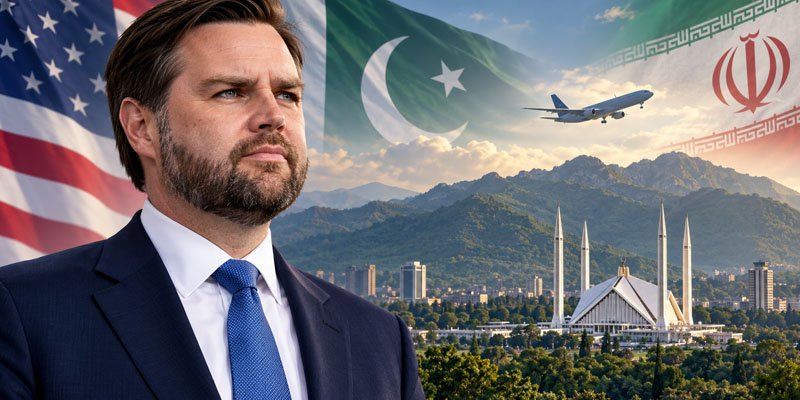
JD Vance Heads to Pakistan for Iran Peace Talks, Expresses Hope for Progress
WASHINGTON, April 10, 2026 — United States Vice President JD Vance departed for Pakistan on Friday to lead negotiations aimed at ending the war involving the United States, Israel and Iran. His departure placed Islamabad at the centre of a diplomatic effort to move the conflict towards a negotiated settlement.
Speaking to reporters before boarding his flight, Vance expressed optimism about the upcoming discussions. Talks with Iran were scheduled for Saturday in the Pakistani capital, with the American delegation preparing to test whether the two sides could find a path forward.
“I think it’s going to be positive,” Vance said, while making clear that meaningful progress would depend on Iran’s willingness to engage sincerely. He indicated that Washington was open to constructive negotiations but would respond firmly to attempts to manipulate the process.
Vance also said President Donald Trump had provided clear instructions for the negotiations. Although he did not publicly outline the full American position before departure, his remarks combined a willingness to pursue diplomacy with caution about the challenges ahead.
The visit came amid a fragile ceasefire and significant disagreements over the conditions needed for a broader settlement. According to Reuters, Iranian demands included a halt to Israel’s military operations against Hezbollah in Lebanon and the release of frozen Iranian assets. Washington and Tehran also remained divided over sanctions, Iran’s nuclear and missile programmes, and arrangements affecting the Strait of Hormuz. Those differences left expectations for a rapid breakthrough limited, despite Vance’s optimistic public message.
The American negotiating team included special envoy Steve Witkoff and Jared Kushner. Senior Iranian figures involved in the diplomatic effort included Parliament Speaker Mohammad Bagher Qalibaf and Foreign Minister Abbas Araghchi. Their involvement underscored the importance of the discussions, even as disputes over Lebanon and maritime access threatened to complicate the process.
For Pakistan, hosting the talks brought a significant diplomatic responsibility: providing a setting in which opposing sides could explore compromises while tensions remained high. The immediate challenge was whether the negotiations could help preserve the pause in fighting and create room for further engagement.
Vance’s departure offered a cautiously hopeful opening to that effort. His remarks signalled American readiness to negotiate, but they did not amount to a prediction that an agreement was assured. As the delegations prepared for Islamabad, the central question remained whether their willingness to meet could translate into concrete commitments.




