
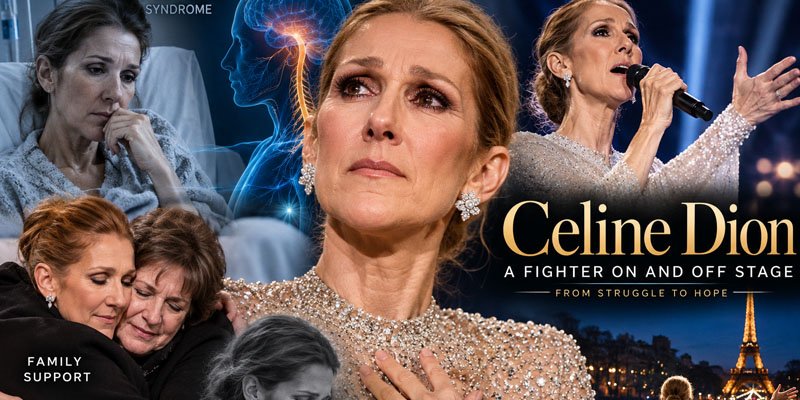
Celine Dion’s Emotional Health Battle: The Rare Neurological Disorder Behind Her Struggle and Her Inspiring Return to the Stage
The legendary singer has faced years of uncertainty, painful physical challenges, and a life-changing diagnosis. Now, as she returns to performing in Paris, Celine Dion is showing the world that her passion for music remains stronger than ever.
For millions of music lovers around the world, Celine Dion is more than just a singer. She is a voice associated with unforgettable memories, emotional ballads, extraordinary performances, and some of the most powerful moments in modern music history. From My Heart Will Go On to The Power of Love, her songs have touched generations of listeners and established her as one of the most recognizable voices in international entertainment.
But behind the glamour of sold-out concerts and spectacular stage productions, Dion has faced a deeply personal health battle that changed almost every aspect of her life. Her diagnosis with stiff-person syndrome, a rare neurological disorder, forced her to step away from the demanding performance schedule that had defined much of her career.
For years, uncertainty surrounded her health and her future in music. Fans worried about whether they would ever see the legendary performer on stage again. Her journey has involved difficult treatment, physical rehabilitation, emotional challenges, and the determination to understand a condition that remains poorly understood.
Now, in an encouraging new chapter, Dion has returned to live performances in Paris after a lengthy absence. Her comeback has brought renewed attention to her health journey and demonstrated how much her connection with music and her audience still means to her.
Celine Dion’s Rare Illness Changed Her Life in Unexpected Ways
Celine Dion publicly revealed her stiff-person syndrome diagnosis in December 2022. The announcement explained why she had been experiencing serious health difficulties and why she could no longer reliably perform at the level her demanding career required.
Stiff-person syndrome, commonly known as SPS, is a rare neurological condition associated with muscle stiffness, rigidity, and painful spasms. Symptoms can vary considerably from person to person. In some cases, sudden movements, loud noises, physical contact, or emotional stress can trigger episodes of muscle spasms.
For a performer whose profession depends on breath control, vocal coordination, physical stamina, and the ability to move confidently on stage, the condition can present particularly difficult challenges.
Dion explained publicly that her symptoms had affected her ability to sing as she once had. She also described how the illness interfered with everyday activities, making even ordinary physical tasks more complicated.
The diagnosis was not simply a medical turning point. It forced her to reconsider the future of a career built around performing for audiences across the world.
Her experience also highlighted a difficult reality faced by people living with rare diseases: finding an accurate diagnosis can take time, and effective management often requires a carefully coordinated medical approach.
Years of Symptoms Before the Diagnosis
One of the most difficult aspects of Dion’s health journey was the uncertainty that came before doctors identified the condition.
In interviews, the singer revealed that some symptoms had begun many years before her diagnosis. She described struggling with physical changes that gradually interfered with her singing and daily routine.
For a long time, she continued trying to fulfill professional commitments while dealing with symptoms she did not fully understand. As the difficulties became more disruptive, maintaining the same performance schedule became increasingly challenging.
The uncertainty was particularly difficult because her voice was not simply a profession. It was a central part of her identity and the connection she had built with millions of fans.
Eventually, her health required her to cancel performances and postpone plans to return to touring. In December 2022, she decided to share the diagnosis publicly rather than leave supporters wondering why she had disappeared from the stage.
Her announcement helped explain the seriousness of the situation and brought greater public attention to a disease many people had never heard of.
What Is Stiff-Person Syndrome?
Stiff-person syndrome is a rare neurological disorder that can affect the central nervous system and interfere with the body’s normal regulation of muscle activity.
Although the exact experience varies between patients, common symptoms can include:
- Muscle stiffness, particularly in the torso and limbs.
- Painful or unexpected muscle spasms.
- Difficulty with movement and balance.
- Increased sensitivity to certain sounds, touch, or emotional stress.
- Challenges with everyday activities when symptoms become severe.
The condition can be unpredictable, and its effects may change over time. Some patients experience significant limitations in mobility, while others have different patterns of symptoms.
There is currently no established cure for stiff-person syndrome. However, treatment may help manage symptoms and improve quality of life. Depending on the individual, care can involve medication, immune-based therapies, physical rehabilitation, and other specialist-led interventions.
Because the disorder is so uncommon, research and clinical experience remain limited compared with those available for more common neurological conditions.
Dion’s decision to speak openly about her diagnosis has therefore helped bring an often-overlooked illness into the public conversation. Her experience has encouraged people to learn more about the condition and recognize that rare diseases can have profound consequences for patients and their families.
The Emotional Cost of Stepping Away From Music
For a singer who spent decades performing before enormous audiences, being unable to work as before can carry a heavy emotional burden.
Dion has spoken candidly about the difficulty of accepting her physical limitations and the pressure she felt while trying to continue performing. She has also described how challenging it was to keep her condition private while fans and concert organizers waited for updates.
Her health struggles affected not only her professional commitments but also her relationship with the activity that had brought her joy throughout her life.
Performing requires more than producing the correct notes. It demands energy, concentration, breath management, confidence, and the ability to respond to unexpected situations. When a neurological condition affects muscle control, all of these elements can become more complicated.
The singer’s experience illustrates why recovery from a serious illness cannot always be measured by a simple timeline. Progress may require patience, adjustments, setbacks, and changes in expectations.
Rather than pretending that everything was normal, Dion eventually chose to speak directly to her audience. Her openness allowed fans to understand the reasons behind her absence and gave greater visibility to the challenges faced by people living with chronic and rare conditions.
Her Sister Claudette Dion Adds to Public Concern
Dion’s family has also played an important role in keeping supporters informed about her health journey.
In December 2023, her older sister, Claudette Dion, discussed the singer’s condition in comments reported by French-language media. Claudette expressed concern about the physical effects of the disease and acknowledged the uncertainty surrounding its course.
Her remarks drew widespread attention because they conveyed how difficult the situation had become for the family.
However, comments made by relatives at a particular point in time should not automatically be treated as a description of a person’s current medical condition. Online claims about permanent wheelchair use or an irreversible loss of independence require reliable confirmation and should not be repeated as established facts without supporting evidence.
What is clear is that Dion has faced genuine physical challenges and has needed specialist care and rehabilitation. Her journey also shows how a rare illness can affect an entire family, particularly when loved ones are trying to provide support while respecting the patient’s privacy.
For fans, the most meaningful updates are those that distinguish confirmed information from speculation and recognize the person behind the headlines.
Family Support and Rehabilitation Remain Important
Throughout her health struggles, Dion has continued to emphasize the importance of working toward better health and maintaining a meaningful connection with her family and music.
Managing a neurological disorder can require a combination of medical treatment, physical rehabilitation, emotional support, and careful adjustments to daily life. Treatment plans must be individualized, since the severity of symptoms and response to therapy can differ substantially between patients.
Dion’s public comments have reflected the effort involved in managing her condition and preparing to perform again.
Her experience should not be interpreted as a promise that every person with stiff-person syndrome will have the same outcome. Rare neurological illnesses can affect individuals very differently, and there is no single recovery path that applies to everyone.
Nevertheless, her willingness to discuss the difficulties has helped challenge the idea that successful people must hide illness or maintain an appearance of constant strength.
Her story is also a reminder that support does not always mean expecting someone to return immediately to their previous abilities. Sometimes it means allowing time for treatment, acknowledging uncertainty, and respecting the individual’s own definition of progress.
Her Documentary Revealed the Reality Behind the Public Image
In 2024, Dion brought audiences closer to her personal experience through the documentary I Am: Celine Dion.
The film offered an intimate look at her life with stiff-person syndrome, including the physical and emotional difficulties associated with the illness. Rather than focusing exclusively on her achievements, it showed the challenges involved in living with a condition that affects movement and the ability to perform.
The documentary also helped audiences understand why the singer had stepped away from touring and why returning to the stage was far more complicated than simply choosing a concert date.
For many viewers, the film provided a new perspective on an artist they had known primarily through polished performances, glamorous appearances, and extraordinary vocal recordings.
It showed that even an internationally celebrated performer can face circumstances beyond professional success or personal determination alone.
Dion’s openness also contributed to greater awareness of stiff-person syndrome. Although public attention cannot replace medical research or specialist care, it can help make rare conditions more visible and encourage more informed conversations about diagnosis, treatment, and support.
Celine Dion Returns to the Stage in Paris
One of the most encouraging developments in Dion’s recent journey arrived in September 2026, when she returned to live performances in Paris after more than six years without a full concert.
The comeback represented a significant milestone following the cancellations and postponements associated with her health problems.
Her return was particularly meaningful because she had spent years uncertain about whether performing at this level would be possible again. The Paris shows gave her an opportunity to reconnect with audiences who had continued to support her throughout her absence.
The performances featured songs from her celebrated catalogue, including music that has remained popular across generations. For fans, seeing her back on stage was not simply another entertainment event. It was a moment that represented the continuation of a long relationship between an artist and her audience.
Dion’s return does not mean that stiff-person syndrome has disappeared or that her medical challenges are over. A successful performance cannot establish that a neurological condition has been cured.
Instead, her comeback demonstrates that she has been able to pursue live music again while managing a serious health condition.
That distinction matters. Living with an ongoing illness and returning to a valued activity are not mutually exclusive, although the demands of performing may still require careful planning and adaptation.
A Recent Onstage Incident Shows Why Her Health Journey Remains Complex
Dion’s return has not been entirely free of difficult moments.
During a Paris performance on October 7, 2026, reports said she briefly slipped on stage but quickly recovered and continued the show. She reassured the audience with a thumbs-up gesture.
The incident attracted attention because fans are understandably conscious of the physical challenges associated with her diagnosis. However, a reported fall alone does not establish that stiff-person syndrome caused the incident or that her underlying condition has worsened.
It is important to distinguish an isolated onstage mishap from a confirmed medical development.
For Dion, continuing to perform while managing a rare neurological disorder may involve balancing ambition with physical limitations. Her return is encouraging, but it should not be used to make assumptions about her long-term prognosis.
Her health remains a personal matter, and any conclusions about changes in her condition should be based on reliable information rather than alarming social media headlines.
Why Her Story Matters Beyond Celebrity News
Dion’s experience has significance beyond the world of entertainment.
Rare diseases can be difficult for patients to navigate because symptoms may be unfamiliar, diagnosis may take time, and access to specialist knowledge can vary. Patients and families may also struggle to explain a condition that friends, employers, or members of the public have never encountered.
When a prominent person discusses such an illness, the conversation can reach people who might otherwise never learn about it.
That visibility can encourage greater understanding, reduce misconceptions, and create opportunities for patients to share their experiences. It can also draw attention to the continuing need for research into rare neurological disorders.
At the same time, celebrity stories should be handled responsibly. Dramatic claims, exaggerated predictions, and unverified medical updates may generate attention, but they can also spread fear and misinformation.
Dion’s own openness provides a more meaningful foundation for public discussion: acknowledge the seriousness of the illness, recognize the uncertainty involved, and allow room for progress without promising an outcome that medicine cannot guarantee.
A Legacy That Extends Beyond the Stage
Celine Dion’s place in music history was established long before her diagnosis. Her recordings, international tours, and extraordinary vocal performances have earned her a lasting place among the most influential singers of her generation.
Her recent experiences have added a different dimension to that legacy.
The years away from regular touring revealed the vulnerability behind a seemingly unstoppable career. Her return has demonstrated that the desire to perform can remain powerful even when illness changes what is physically possible.
Yet her worth is not dependent on how many concerts she completes or whether she can reproduce every aspect of her earlier performances. Her musical achievements already speak for themselves, and her health journey deserves to be understood on its own terms.
For supporters who have followed her career for decades, her return to Paris offers an opportunity to celebrate her music while recognizing the effort required to reach this stage.
For people living with rare illnesses, her public journey may also offer a sense of recognition: serious health challenges can change a person’s life without erasing their identity, ambitions, or capacity to find meaning in familiar passions.
Final Thoughts: Hope Without Ignoring Reality
Celine Dion’s battle with stiff-person syndrome remains an ongoing part of her life. The condition is serious, its effects can be unpredictable, and there is currently no established cure. Her return to live performances is an encouraging development, but it does not mean that every challenge has disappeared.
What makes her story compelling is not the suggestion that she is invincible. It is the willingness to acknowledge the difficulties while continuing to pursue something that matters deeply to her.
Her journey has brought attention to a rare neurological disorder, encouraged conversations about the realities of chronic illness, and reminded audiences that resilience can take many forms.
For millions of admirers, Celine Dion will always be remembered for the extraordinary power of her voice. Today, many are also watching with admiration as she navigates a new chapter of her life.
Her future will depend on her health, her medical care, and the decisions she makes about performing. Whatever comes next, her contribution to music remains secure, and her story continues to resonate with people around the world.
Sometimes, the most powerful comeback is not about returning to exactly who someone was before. It is about finding a way forward while living with the reality of what has changed.




