
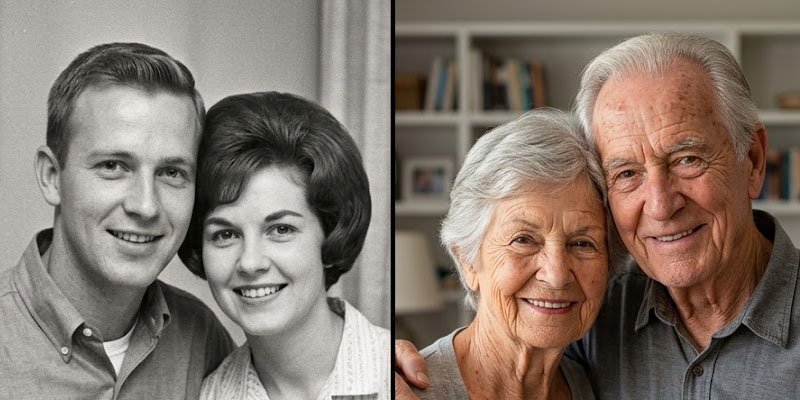
I believed that sixty years together meant I knew Irene better than anyone else.
Then, three days after her funeral, a stranger showed up at my door and told me something that suddenly made the life we had shared feel completely different.
“You and Irene were never legally married.”
I was eighty-six years old, standing barefoot in my doorway, holding a mug of coffee I had prepared out of habit for a woman who would never drink it.
“What did you just say?”
The man adjusted the envelope in his hands.
“My name is Mr. Geller. Irene instructed me to give this to you after she died.”
I stared at him.
“Irene never had an attorney.”
“She did,” he replied carefully. “She came to see me several years ago.”
That alone made me uneasy.
Irene had told me everything.
Or at least, I had spent sixty years believing that she had.
“Why would my wife need a lawyer?”
Mr. Geller extended the envelope toward me.
“Sir, I’m sorry. She left me very specific instructions. You need to read this first.”
I refused to take it.
“What are you not telling me?”
He paused.
Then he spoke the words that changed everything.
“Your wife… technically wasn’t your wife. You and Irene were never legally married.”
For a moment, I genuinely wondered if grief had somehow affected my hearing.
Irene and I had celebrated our sixtieth anniversary only a few months earlier.
We had raised three children.
We had five grandchildren.
I had held her hand as she died.
“Give me the envelope.”
“Robert—”
“Give it to me.”
He handed it over.
My name was written across the front in Irene’s handwriting.
That nearly shattered me.
I had waited for letters written in that same handwriting while I was overseas.
I ripped the envelope open.
The first sentence said:
Robert, there is something I should have told you forty-six years ago.
I stopped.
Then I continued reading.
I was married before I met you.
I lowered the paper.
“Married?”
Mr. Geller remained silent.
Irene explained that when she was eighteen, she had married her high-school boyfriend.
The marriage lasted only a few months.
They argued.
Separated.
Signed paperwork.
And both of them believed they had been divorced.
Except the final decree had never been properly entered.
Irene believed the marriage was over.
Then she met me.
That part of our story I remembered perfectly.
I first saw her in college.
She was sitting three rows in front of me, laughing with a friend.
I stared at her long enough for her to eventually notice me.
Months later, when I finally asked her out, she smiled and said:
“Took you long enough.”
Not long afterward, I joined the Army.
When I learned I would be leaving for Vietnam, I told Irene I wanted to marry her before I left.
“Are you asking because you’re scared?” she asked.
“I’m asking because I love you.”
She smiled.
“Good answer.”
A week later, she wore a white summer dress covered in tiny blue flowers.
After the ceremony, we ate hamburgers at a roadside diner because that was all we could afford.
A few days later, I left.
Her letters followed me overseas.
About a year later, I returned home.
And from there, we built everything.
Three children.
Five grandchildren.
A home.
A lifetime.
On our sixtieth anniversary, Irene squeezed my hand beneath the table and whispered:
“Not bad for a cheap diner wedding.”
Two months later, I held that same hand as she died.
I looked down at her letter again.
When I married you, I truly believed I was free to do it.
For one moment, I could breathe again.
Then I read the next sentence.
Fourteen years later, I discovered that I wasn’t.
I folded the letter.
Mr. Geller moved closer.
“Robert?”
“Not now.”
“There are other documents Irene wanted you to see.”
“I can’t read another thing with you standing here.”
He nodded, placed his card on the table, and walked out.
After the door shut, I stared at Irene’s handwriting.
Then I shouted into the empty house.
“Who were you, Irene?”
My voice echoed through rooms that had spent sixty years holding our conversations.
“You lied to me all those years?”
Irene had always answered me.
This time, she couldn’t.
I called our daughter Penelope because I couldn’t face the truth alone.
She lived closest and had inherited Irene’s ability to hear the difference between “I’m fine” and the truth.
Twenty minutes later, she was sitting beside me.
“Mom was married before me,” I told her.
Penelope stared at me.
“Before you?”
“When she was eighteen.”
“Did you know?”
“No.”
I showed her the letter.
“She thought the divorce was final. Fourteen years after we married, she found out it wasn’t.”
Penelope’s expression shifted.
“So when you married Mom…”
“She was still legally married to someone else.”
Neither of us said anything.
Then I kept reading.
Irene had located her first husband.
He had been shocked too.
He had believed their divorce was complete.
There was no hidden romance.
No second relationship.
No secret life.
Only an old legal mistake.
Near the bottom of the letter, Irene had written:
The rest is in the box where I kept the papers I was most afraid you would find.
I immediately knew which cabinet she meant.
Upstairs, behind the ordinary paperwork in our bedroom, I found a small cardboard box I had never seen before.
Inside were legal papers.
The first confirmed Irene’s earlier marriage.
The second confirmed that it was still valid when she married me.
Then I unfolded another document.
The date was from forty-six years earlier.
Her first husband had written:
Irene, I had no idea either. Tell me what needs to be signed so we can finally fix this.
For several seconds, I felt relieved.
Then I found the final document.
Their first marriage had legally ended forty-six years ago.
Penelope looked at me.
“So after that, Mom was free to marry you?”
“Yes.”
Then we both realized the same thing.
“But she never did,” Penelope said.
I sat down on the edge of the bed.
“Fourteen years could have been an accident.”
I looked at the paper in my hand.
“Forty-six years wasn’t.”
The next morning, I called Mr. Geller.
When he arrived, I placed the divorce documents between us.
“Explain something to me. Once Irene’s first marriage legally ended, why didn’t that automatically make ours valid?”
“Because the original ceremony couldn’t become legally valid by itself later on,” he said. “Once she was free, the two of you would have needed to marry again.”
“So for forty-six years, we were free to marry.”
“Yes.”
“And she knew that?”
He hesitated.
“Yes.”
That answer hurt more than anything else.
“Why didn’t she tell me?”
Mr. Geller shook his head.
“She told me that explanation belonged to you.”
After he left, I finished reading Irene’s letter.
She wrote about how much being her husband had always meant to me.
How I had insisted we marry before Vietnam because I needed to leave knowing that we belonged to one another.
She knew exactly what the word wife meant to me.
And that was why she became afraid.
Every year I waited made telling you harder.
Then I found one unfinished page.
Robert,
I can marry you now. That should be the happiest sentence I’ve ever written, but first I have to tell you why I couldn’t before.
Nothing followed it.
No explanation.
No confession.
Only blank paper.
That afternoon, Penelope found me sitting on the bed with the unfinished letter in my hands.
“She tried to tell me,” I said.
Penelope sat down beside me.
“And then she didn’t. For forty-six years.”
I looked down.
“She was afraid.”
“So were you plenty of times.”
I looked at her.
Penelope’s voice became softer.
“But you still told Mom things.”
That was the truth I couldn’t escape.
“I know she loved me,” I said.
Penelope nodded.
“And she still kept this from you.”
Both things were true.
That was what made it hurt.
That night, I took off my wedding ring and placed it beside Irene’s.
Then I turned our wedding photograph facedown.
I no longer questioned whether she had loved me.
What I questioned was how far love could be stretched around a lie.
The next morning, I stopped trying to understand Irene.
Instead, I began deciding what I would do with what she had left behind.
I called Mr. Geller.
“Did she ask you to make me forgive her?”
“No.”
“What did she ask?”
“To give you the truth after she was gone.”
I laughed once, without any humor.
“So she waited until the only moment in sixty years when I couldn’t ask her anything.”
Later, he told me Irene’s grave marker still required my approval.
The draft inscription read:
Beloved Wife.
At first, I told them to remove the word Wife.
Then I sat with the decision.
Days later, Penelope came with me to finalize the inscription.
She stood silently beside me.
I stared at those two words.
Beloved Wife.
I thought about the courthouse Irene could have taken me to forty-six years earlier.
One afternoon.
A few signatures.
A painful conversation.
A truth we could have faced together.
Instead, she carried it until she was too afraid to confess it.
“Leave it,” I finally said.
Penelope turned toward me.
“You’re sure?”
“Yes.”
I looked at the inscription once more.
“She lied to me. I’m not pretending she didn’t.”
I took a breath.
“But I’m not going to let one legal failure erase sixty years of my life.”
The law could tell me what we technically had not been.
It could not tell me what our sixty years together had meant.
That evening, I called our other children.
I told them everything.
I didn’t soften the dates.
I didn’t hide that their mother had known the truth for forty-six years.
One of them finally asked:
“Does this change anything about us?”
“No.”
“Does it change how you see Mom?”
“Yes.”
“How?”
I thought for a moment.
“She was more frightened than I ever understood.”
I looked at my wedding ring lying on the table.
“And I wish she had trusted me enough to tell me.”
Then came the question I knew someone would eventually ask.
“Do you still think of her as your wife?”
I stared at the ring.
“Yes.”
I paused.
“That doesn’t mean I’m finished being angry.”
The following morning, I walked into the kitchen and instinctively reached for two coffee mugs.
My hand stopped halfway.
For sixty years, I had made two cups.
Irene’s mug remained on the shelf.
I made only one.
Then I went into the living room.
I turned our wedding photograph upright again.
And I picked up my ring.
Irene had taken away my chance to decide what her truth meant while she was still alive.
I could never get that choice back.
But I could decide what happened next.
I slipped the ring onto my finger.
Then I looked at her photograph.
“I’m still angry with you,” I said.
I sat in the chair beside hers and drank my coffee.
Irene and I had laughed.
Argued.
Raised children.
Lost friends.
Built a home.
A missing legal document could not erase that.
Her lie belonged to the life we had built too.
I hated that.
But it was true.
For the first time since Mr. Geller appeared at my door, I no longer needed Irene to answer me.
She had made her choice.
Now I had made mine.




