
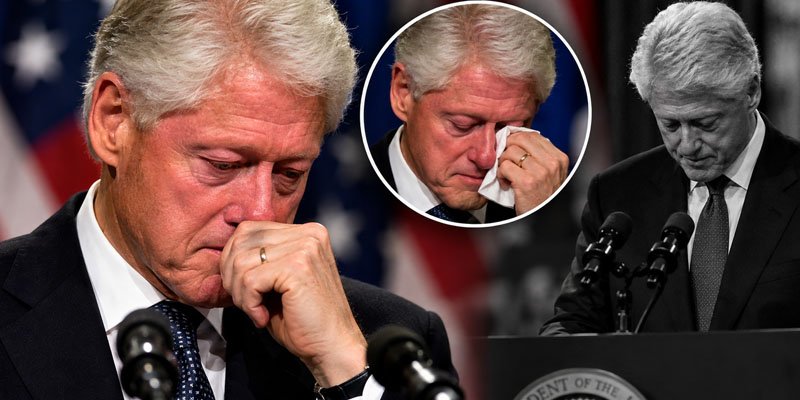
A Rare Moment of Vulnerability: When Power Gives Way to Grief
For a figure accustomed to the intense scrutiny of public life, moments of genuine vulnerability are rare. Yet, according to the account described here, a routine public appearance appeared to take an unexpectedly emotional turn, leaving viewers focused not on politics or policy, but on the deeply human emotions unfolding before them.
What began as an ordinary speech reportedly became a striking moment of reflection. Behind the podium stood a man whose public career had been defined by confidence, influence, and an ability to command attention. For a brief period, however, those familiar qualities seemed to give way to something far more personal: grief, regret, and the weight of memories that cannot simply be left behind when the cameras stop recording.
The most powerful element of the moment was not a political declaration. It was the apparent recognition that influence and authority have limits. Positions of power may provide access, responsibility, and visibility, but they cannot erase personal loss or protect anyone from the emotional consequences of difficult experiences.
When the Public Persona Gives Way to the Private Person
Political speeches are often carefully prepared. Every phrase can be scrutinized, every pause interpreted, and every emotional moment examined through the lens of public relations.
That is what makes an apparently unscripted moment of vulnerability so compelling.
The account describes a man reflecting on long periods of waiting, unanswered calls, old decisions, and the painful question of what might have happened if different choices had been made. Those reflections carry a universal quality. Regardless of political affiliation, many people understand the experience of looking backward and wondering whether a different decision could have changed an outcome.
In that sense, the moment becomes larger than politics.
It becomes a reflection on regret itself.
Empathy and Accountability Can Exist Together
Another important theme emerging from the account is the relationship between empathy and accountability.
Public tragedies often generate immediate anger. People want explanations, responsibility, and answers. Those demands can be legitimate and necessary. But accountability does not have to mean abandoning compassion.
There is a profound difference between demanding honesty and turning another person’s suffering into entertainment.
The hardest response to tragedy is often the most human one: listening before judging, acknowledging the pain of those directly affected, and recognizing that grief cannot always be reduced to political talking points.
That balance is particularly difficult in an environment where public controversy can spread across television, social media, and online platforms within minutes.
The Weight of Decisions After the Applause Ends
One of the most striking ideas in the account is that leadership does not necessarily end when a speech concludes.
For public figures, decisions made years earlier can continue to attract attention long after the original circumstances have disappeared. Supporters may remember accomplishments, critics may remember controversies, and history may interpret both differently over time.
But behind all of those interpretations remains an individual capable of experiencing doubt, sadness, and regret.
That human dimension can sometimes disappear beneath the enormous machinery of political life.
The podium creates distance. The title creates distance. The security detail, cameras, advisers, and crowds all create distance.
Moments of vulnerability can briefly remove that distance.
Why Emotional Moments Resonate With the Public
There is a reason audiences often remember a pause or expression more vividly than an entire political speech.
Facts can inform people. Policies can divide them. Political arguments can disappear from the public conversation within days.
Human emotion tends to remain.
A moment of visible vulnerability can remind viewers that people who occupy powerful positions are still confronted by many of the same fundamental experiences as everyone else: loss, uncertainty, difficult choices, and the desire to undo something that cannot be undone.
That does not erase accountability or change the historical record. Instead, it adds another layer to the way people understand public figures.
Beyond Politics
Ultimately, the most enduring message described in this account is not about political power at all.
It is about what remains when power becomes irrelevant.
When tragedy enters someone’s life, titles and accomplishments cannot necessarily provide an answer. What matters instead can be much simpler: whether people listen, whether they show compassion, whether they take responsibility, and whether they allow grieving people the dignity to experience their pain without turning it into spectacle.
The emotional pause described in this story therefore carries a broader significance. It represents the uncomfortable space where public responsibility meets private humanity.
Politics may demand certainty, confidence, and strength.
Grief rarely does.
And perhaps that is why moments like this can feel so powerful. They remind audiences that behind even the most recognizable public figures is a human being confronting emotions that no office, title, or political legacy can completely control.
Whatever interpretations viewers ultimately draw from the moment, its central theme remains remarkably universal: power has limits, consequences can last for years, and compassion becomes most meaningful when it exists alongside accountability.




