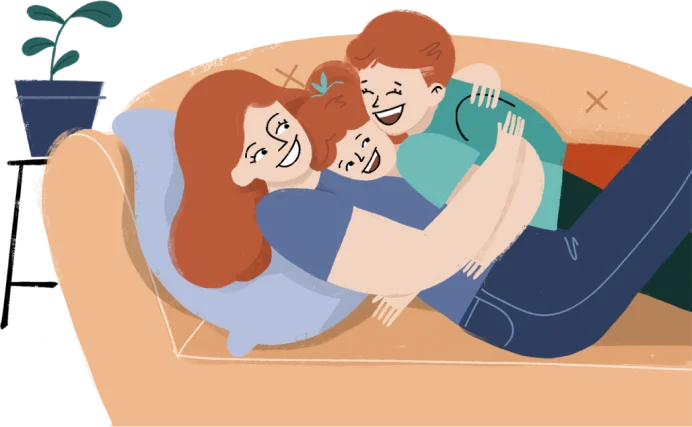

My twelve-year-old twin daughters, Emma and Alice, had always shared the sort of connection that seemed unique to twins.
They bickered over clothes, snacks, bathroom turns, and who would sit in the front seat, yet five minutes later they would be laughing over some joke no one else could possibly understand.
When school started again in September, I expected complaints.
But by the end of August, it was obvious they were ready to return home.
Instead, they were thrilled.
They had spent the entire summer at my mom’s house near the ocean, and they adored being there.
Grandma spoiled them, let them stay awake far too late, and somehow convinced them that pulling weeds qualified as “gardening adventures.”
But by the end of August, it was obvious they were ready to return home.
“I miss my friends,” Alice admitted.
The first few days of school passed without any problems.
Emma rolled her eyes.
“You mean you miss Olivia because she always brings extra snacks in her lunchbox.”
“Same thing.”
Emma laughed.
The first few days of school passed without any problems.
After having them away for two months, it felt wonderful to have the house noisy again.
They came home chatting about their new teachers, cafeteria drama, and which classmates seemed most changed after the summer.
I remember feeling relieved.
After having them away for two months, it felt wonderful to have the house noisy again.
Then, one afternoon, my phone rang.
I was at work.
“Is this Emma and Alice’s mother?”
The caller ID showed the school.
I answered without concern.
“Hello?”
A woman spoke.
“Is this Emma and Alice’s mother?”
Her voice sounded like she was fighting back tears.
“Yes?”
“This is Ms. Harris. I’m Emma and Alice’s math teacher.”
Something in her voice caused me to sit up immediately.
Her voice sounded like she was fighting back tears.
“What happened?”
“Emma suddenly became very sick during class.”
I jumped up so quickly that my chair rolled backward.
My stomach sank.
“What do you mean, sick?”
“She said she was dizzy. Then she collapsed.”
I jumped up so quickly that my chair rolled backward.
“Where is she?”
I barely remembered anything about the drive.
“We called an ambulance. They took her to St. Mary’s.”
“I’m coming.”
“I’m so sorry.”
I barely remembered anything about the drive.
Every red light that delayed me made me increasingly frustrated.
Alice was already there with the school counselor.
When I reached the hospital, someone directed me toward the emergency department.
Alice was already there with the school counselor.
She rushed straight into my arms.
“Mom.”
“Where’s Emma?”
Alice shook her head.
No one could give me any useful information.
“I don’t know.”
Her face looked pale.
I kept asking the nurses for an update.
No one could give me any useful information.
Everything felt hazy, yet somehow time seemed to crawl by and race forward at the same time.
Then a doctor came through the doors.
I already knew before he said a word.
He looked worn out and deeply sad.
I already knew before he said a word.
“I’m sorry.”
I couldn’t breathe.
“Her heart suddenly stopped. We tried to resuscitate her, but unfortunately, we couldn’t bring her back. Is there any history of heart defects in your family?”
“No. She’s only twelve.”
I stared at him.
“No.”
“I’m very sorry.”
“No. She’s only twelve.”
He said nothing.
After that, everything seemed to happen around me in disconnected fragments.
I remember my knees hitting the floor.
After that, everything seemed to happen around me in disconnected fragments.
Forms. Phone calls. People delivering meals. Teachers sending flowers.
For a few moments after waking, I would forget.
My mom arrived and cried so hard that she could barely speak.
The funeral. Then quiet.
Mornings were the hardest.
For a few moments after waking, I would forget.
Alice was the only thing that got me out of bed.
Of course, once I remembered, the grief came flooding back all at once.
Alice was the only thing that got me out of bed.
She grew quieter as well. She stopped sitting in Emma’s regular breakfast chair. She stopped watching the programs they used to enjoy together.
A week after the funeral, the school called.
She slept with the light in her bedroom turned on.
I tried to talk to her.
Sometimes she responded. Other times, she merely shrugged.
A week after the funeral, the school called.
They wanted me to come collect Emma’s belongings.
Eventually, Alice came along with me.
I couldn’t bring myself to face it, so I waited several more days.
Eventually, Alice came along with me.
A secretary gave us a box.
It contained textbooks, notebooks, a sweatshirt, two pens, and Emma’s water bottle.
But her backpack wasn’t there.
“Where is her bag?” I asked.
“We thought you had it.”
The secretary frowned.
“We thought you had it.”
“No.”
She checked with the classroom teacher, the nurse’s office, and lost and found.
Nothing.
I simply didn’t have the strength to keep searching.
Alice stood next to me with her arms crossed.
“Maybe it disappeared when the ambulance came.”
“Maybe.”
I simply didn’t have the strength to keep searching.
A missing backpack felt unimportant compared with everything else that had happened.
A month went by.
Most days, I operated on autopilot.
I was still having trouble functioning. I went back to work. I cooked dinner. I did laundry whenever we had no clean clothes left.
But most days, I operated on autopilot.
Then yesterday morning, I decided it was time to properly clean the house.
Eventually, I made my way to Alice’s room.
I had gone downstairs, tripped over a stray sweater, and eventually sat down on the floor.
“This is em.bar.ras.sing,” I muttered to myself.
So I began downstairs.
Eventually, I made my way to Alice’s room.
She was spending the afternoon with my mom, so I removed her bedding and collected the dirty clothes.
When I pulled off one pillowcase, it slipped out of my hand.
That was when I saw something underneath her bed.
I bent down to pick it up.
That was when I saw something underneath her bed.
Black fabric.
I crouched down.
At first, I thought it was one of Alice’s school bags.
Then I reached for the strap.
Her name was still written in silver marker across the front pocket.
My hands froze.
It was Emma’s backpack.
I recognized it immediately.
Her name was still written in silver marker across the front pocket.
I sat on the floor with it in my hands.
Why was it hidden inside Alice’s room?
Inside was a zippered pouch stuffed with folded pieces of paper.
Why had she told me it was missing?
For several minutes, I could only stare at it.
Then I opened it.
Inside was a zippered pouch stuffed with folded pieces of paper.
Dozens of them.
Some were written on lined notebook paper.
And on top were some of the angriest words I had ever seen from my daughter.
Why did you have to do that to me? Look at what you’ve made me feel!
One had been written on the back of a grocery receipt.
I couldn’t make sense of the resentment.
The only words that came out of my mouth were, “OH GOD, NO! This can’t be real! Alice, WHAT DOES THIS EVEN MEAN?!”
For a moment, I could do nothing but stare. I didn’t even want to touch the notes.
But eventually, my grief and curiosity won out, and I searched farther.
Deeper into the collection of what I could only assume was anger that had been hidden between my children.
Every one began the same way.
Some of the notes had been written on sticky notes.
One had been written on the back of a grocery receipt.
Every single one carried the same message on the front.
To Alice. Or, To Emma.
I unfolded the first one with trembling hands.
Stop taking my socks. I know they’re mine because mine don’t smell weird.
Mom knows you ate the last brownie.
Despite everything, I laughed.
Another said:
Mom knows you ate the last brownie, by the way. I’m not taking the blame anymore.
Another:
If you tell anyone I cried during that dog movie, I’ll deny it forever.
My chest tightened.
The girls had been leaving messages for each other.
These weren’t the messages I had been afraid of.
Yes, the girls had been writing to each other, but they had been writing with love.
And judging by the dates, they had been doing it for years.
I kept reading.
Some were ridiculous. Others were tender.
Fine, you can have half my money.
One referred to a lemonade stand from when they were nine.
Fine, you can have half my money. But only because you did build the stand.
I remembered that afternoon.
Emma had sold almost every cup while Alice had decorated all the signs.
At bedtime, I had heard coins rattling between their bedrooms.
Then I spotted an envelope near the bottom.
Another note said:
You didn’t ruin the talent show. You got nervous. That’s different. Next year we’re doing something where nobody needs to sing.
I remembered that as well.
Alice had frozen onstage.
Before a teacher could intervene, Emma had stepped out beside her and held her hand.
Then I spotted an envelope near the bottom.
READ THIS IF YOU’RE STILL MAD AT ME.
Unlike the others, this one had been sealed.
Across the front, Emma had written:
READ THIS IF YOU’RE STILL MAD AT ME.
I heard the front door open.
“Mom?”
Alice.
Her eyes immediately landed on the backpack.
I stood so quickly that the papers scattered everywhere.
She appeared in the doorway.
Her eyes immediately landed on the backpack.
Then she saw the envelope.
Her entire expression changed.
“No.”
“Don’t open that!”
“Alice—”
“No!”
She hurried toward me.
“Don’t open that!”
“I wasn’t.”
“Give it to me!”
She snatched it.
I held it out toward her.
She grabbed it and hugged it tightly against her chest.
Her breathing had become rapid.
“Why was Emma’s backpack underneath your bed?”
Alice stared at the floor.
“I don’t want to talk about it.”
“Because I took it.”
“You told me it was missing.”
“I know.”
“Why?”
Her eyes filled with tears.
“Because I took it.”
I sat on the bed.
“We had an argument.”
“Why would you take it?”
She didn’t answer.
I waited.
At last, she whispered, “We had an argument.”
“At Grandma’s?”
She nodded.
“What was it about?”
“It was stupid.”
“Nothing.”
“Alice.”
“It was stupid.”
She impatiently wiped her face.
“Emma wanted to come home early. I wanted to stay.”
“Why?”
“She said she missed you. I told her she was acting like a baby.”
“I told her she’d spoil everything.”
I remained quiet.
Alice continued.
“Then she said I only wanted to stay because Grandma let me do whatever I wanted.”
“What did you say to her?”
Her face crumpled.
“I told her she’d spoil everything if she came home.”
“We said worse things too.”
I closed my eyes for a moment.
“We said worse things too.”
“Like what?”
“I don’t want to say.”
“Okay.”
She looked surprised.
“But you weren’t speaking?”
I wasn’t going to force her to talk.
“We came home and pretended everything was normal around you,” she said.
“But you weren’t speaking?”
“Not really.”
I glanced toward the pouch filled with notes.
“Why were all these inside Emma’s backpack?”
Alice’s mouth trembled.
“We kept them in a box at Grandma’s.”
“She put them there after we came home.”
“All of them?”
She nodded.
“We kept them in a box at Grandma’s. I saw her putting them into her bag before school started. I thought she was only trying to annoy me.”
I looked at the sealed envelope in Alice’s hands.
Suddenly, everything became clear.
“She tried to give it to me.”
“Emma wrote this for you.”
Alice nodded.
“She tried to give it to me.”
“When?”
“The morning she passed away.”
My stomach twisted.
“She left it beside my cereal.”
Alice looked down at the envelope.
“She left it beside my cereal.”
“What did you tell her?”
Alice began crying.
“I pushed it away.”
I moved closer.
Her voice broke.
I put my arms around her.
“I said, ‘I’ll read it whenever I feel like it.’”
She covered her face.
“Those were almost the final words I ever said to her.”
I put my arms around Alice.
She resisted for half a second.
Then she sank against me.
Alice wouldn’t look at me.
After some time, she whispered, “The counselor brought our backpacks to the hospital.”
I pulled back slightly.
Alice wouldn’t look at me.
“When we left, I took Emma’s too. I hid it before you could notice.”
That explained the missing backpack.
“Why?”
“I couldn’t leave it behind.”
I picked up the letter.
She looked at the envelope.
“And I couldn’t make myself read this.”
I understood.
“And you didn’t want me to find it.”
She nodded.
I picked up the letter.
For one painful moment, I wanted to open it.
“Emma wrote it for you.”
Then I gave it back.
“It’s yours.”
Alice stared at me.
“You don’t want to know?”
“Of course I do.”
“Then why aren’t you opening it?”
“Because Emma wrote it for you.”
We spent the afternoon arranging the other notes.
Alice looked down.
“I still can’t.”
“You don’t have to.”
We spent the afternoon arranging the other notes.
Every few pages, another note brought back a memory.
The lemonade stand.
The talent show.
She held up three notes.
A Christmas when the girls had secretly bought each other the exact same bracelet.
Then Alice stopped.
“Mom.”
“What?”
She held up three notes.
Each one referred to a tin box.
Don’t forget the tin beneath Grandma’s porch.
One said:
Don’t forget the tin beneath Grandma’s porch.
Another:
Add the blue shell.
The third said:
Do NOT tell Mom. She’ll make this weird.
I almost smiled.
That evening, we drove toward the coast.
“I have no idea what that means.”
Alice suddenly stood.
“We have to go to Grandma’s. I completely forgot we wanted to do this last time.”
That evening, we drove toward the coast.
Mom looked puzzled when we arrived with Emma’s backpack.
The three of us were kneeling beside the porch steps.
Alice immediately asked:
“Do you have a shovel?”
Twenty minutes later, the three of us were kneeling beside the porch steps.
Alice pointed.
“There.”
Underneath the loose soil, we found a cookie tin wrapped in plastic.
Inside were seashells.
Rust had formed around the edges.
Inside were seashells.
Friendship bracelets.
A movie ticket.
A broken dolphin keychain.
Two old photographs.
OPEN WHEN WE’RE OLD.
And another envelope.
Alice picked it up.
Across the front, Emma had written:
OPEN WHEN WE’RE OLD.
Alice laughed.
A real, genuine laugh.
Most of the letter was filled with jokes.
It surprised all three of us.
She opened it.
Most of the letter was filled with jokes.
I bet you’re still stealing my clothes.
I bet Mom still tells everyone about us flooding the bathroom.
Then Alice looked slightly startled.
My mom covered her mouth.
She read the next section aloud.
“I know we’ll probably still argue when we’re eighty, but we should live close to each other when we’re grown up so our kids can be friends too.”
Alice’s voice faded.
My mom covered her mouth.
I reached over and took Alice’s hand.
“We were supposed to have all of that.”
She stared at the letter for a long time.
“We were supposed to have all of that.”
“I know.”
Her hand moved toward the unopened envelope in her pocket.
She didn’t take it out.
Not yet.
After a while, Alice pulled Emma’s envelope from her pocket.
That night, we sat outside beside the ocean.
The waves were loud enough that none of us had to say anything.
After a while, Alice pulled Emma’s envelope from her pocket.
She turned it over once.
Twice.
Then she opened it.
For several moments, she said nothing.
Her eyes moved slowly over the page.
For several moments, she said nothing.
Then she made an odd sound somewhere between a laugh and a sob.
“What?” I asked.
She handed me the letter.
Emma had written:
I’m still mad too. But I don’t like when we aren’t talking. So whenever you’re finished being dramatic, come find me.
“She always understood you so well.”
Alice wiped her eyes.
“She called me dramatic.”
I smiled and hugged her.
“She always understood you so well.”
Alice gave me such an offended look that, for one brief moment, she looked exactly like herself again.
The next morning, Alice placed both letters inside the tin. Then she added a folded page of her own.
“It’s for Emma.”
“What did you write?” I asked.
She hugged the tin tightly.
“None of your business.”
“Alice,” I said, reacting to her cheeky answer.
“It’s for Emma.”
So I didn’t ask again.
Then Alice and I headed toward the beach.
We buried the tin beneath Grandma’s porch.
Then Alice and I headed toward the beach.
Halfway there, she reached over and took my hand.
She hadn’t willingly done that since she was little.
I didn’t say anything about it.
Alice had believed that one angry sentence was the final thing that mattered between her and her sister.
I simply held on.
For weeks, Alice had believed that one angry sentence was the final thing that mattered between her and her sister.
But it wasn’t.
There had been twelve years before that moment.
And now, finally, she had something else to hold onto.