My parents texted me at 8:12 on the morning of their fortieth wedding anniversary.
“Don’t come tonight. The guest list is limited to high-society people. We don’t want things to become uncomfortable.”
I read the message twice from my Cambridge apartment, still dressed in the old gray sweatshirt my mother had once described as “evidence that I had stopped trying.”
My name is Hannah Reed.
I was thirty-six, unmarried, and—in the version of my life my parents preferred to tell—still “doing computer work for some small medical company.”
They favored my younger sister, Olivia.
She had married a cardiologist, lived in Beacon Hill, knew precisely which fork went with every plate, and somehow never appeared in public without a coat that looked expensive.
I typed one word.
“Understood.”
Then I made myself coffee and stayed home.
Their anniversary celebration was taking place at the Ashford Hotel in Boston.
A champagne wall.
A string quartet.
Two hundred guests.
A ballroom Dad proudly referred to as “the room where people finally see what we built.”
At 6:47 p.m., my phone rang.
Olivia.
I nearly let it go to voicemail.
“Hannah,” she said when I answered. Her voice trembled. “Why did you keep this from the family?”
“Keep what from you?”
Behind her, I could hear the noise of dozens of conversations.
“Turn on Channel Seven.”
I turned on the television.
There I was.
Not live.
It was a recorded interview from earlier that afternoon.
The headline beneath my face said:
NORTHSTAR MEDICAL ROBOTICS ANNOUNCES $118 MILLION PARTNERSHIP.
For nine years, I had built Northstar inside a rented workshop behind a rehabilitation clinic.
Our robotic mobility system had just won national distribution through one of the largest hospital networks in the country.
I still held the controlling interest.
My family knew I worked for the company.
They did not know I had founded it.
That had been deliberate.
The last time I mentioned getting promoted, Dad immediately wanted to know how much I could loan Olivia for her kitchen renovation.
On television, the anchor introduced me as “one of Boston’s most closely watched medical-technology founders.”
Olivia whispered, “Mom just dropped her glass.”
Then I heard Dad in the background.
“Give me the phone.”
His voice came through sharp and breathless.
“Hannah, get dressed and come here immediately.”
“You told me not to come.”
“This is different.”
I smiled, though I felt nothing.
“No. It’s exactly the same.”
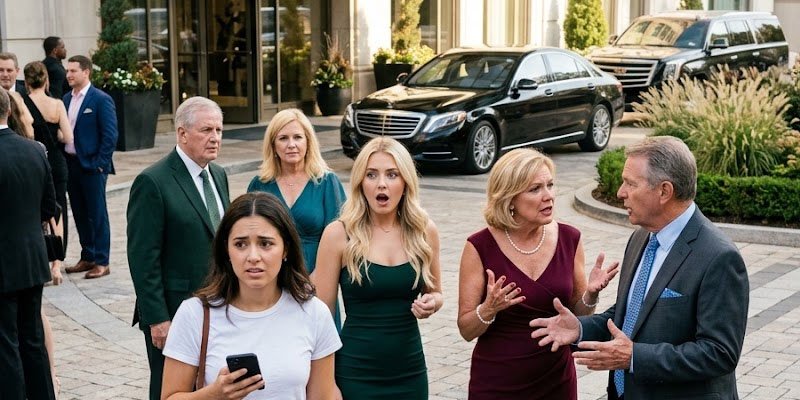
Then Olivia sent me a picture from inside the ballroom.
Next to Dad’s champagne glass was a glossy investment booklet.
Across its cover were the words:
REED CAPITAL DEVELOPMENT — STRATEGIC PARTNER: NORTHSTAR MEDICAL ROBOTICS.
My company.
My name.
And a partnership I had never authorized.
PART 2
I called Northstar’s general counsel before returning my parents’ call.
Her name was Maya Collins, and after six years of working beside me, she had taught me one lesson better than anyone.
Panic was expensive.
“Send me the picture,” she said.
Three minutes later, I heard her tone change.
The booklet stated that Northstar had supposedly agreed to serve as the anchor investor in a luxury senior-living development my father had been attempting to finance outside Boston.
It described a “minimum two-million-dollar commitment.”
It also contained wording that implied I had personally authorized the partnership.
I had never even seen the project.
I had never signed anything.
Olivia called once more.
“They’re asking questions,” she whispered. “Dad told everyone you were coming later to make an announcement.”
“He told me not to come.”
“I know.”
“Did you know about the booklet?”
There was silence.
Then she said, “I knew he was using your company’s name. I thought you had approved it.”
That hurt more than I expected.
Dad finally called from his own phone.
“Hannah, hear me out. Nothing has been finalized. You can fix this by coming here, shaking a few hands, and saying we’re considering an investment.”
“We’re not.”
“You have one hundred eighteen million dollars.”
“No. My company has a distribution partnership valued at that amount. It isn’t cash sitting in my bank account.”
He breathed out sharply, irritated that reality had interrupted his performance.
“You’re humiliating us.”
I laughed once.
“You left me out because you thought I was humiliating you.”
Mom took the phone.
Her voice was softer.
“Hannah, there are important people here. Your father has spent months building these relationships. Please don’t ruin tonight simply because you’re upset.”
I looked again at the original message still glowing on my screen.
Only high-society guests.
“Did either of you intend to tell me you were using my company?”
“We planned to explain once the commitments came through.”
Commitments.
The word made my stomach turn.
Maya called back on the other line.
One investor had already transferred $400,000 into an escrow account after receiving the booklet.
A second had signed a letter of intent.
Both documents referenced Northstar’s supposed involvement.
“Do not go to that ballroom,” Maya said. “Do not say anything that could be taken as confirmation of the agreement.”
I repeated her warning to my parents.
Dad lost his temper.
“You would let your own father lose everything because of some paperwork?”
Then Olivia screamed somewhere behind him.
Someone had given her another document.
She photographed it and sent it to me.
At the bottom of the investor packet was a signature page.
My signature.
Good enough to deceive a stranger.
Different enough to make my hands go cold.
And directly below it was the name of the witness who supposedly watched me sign.
My mother.
PART 3
My mother had witnessed a signature I had never made.
At that moment, the anniversary was no longer about being excluded.
It was evidence.
Maya immediately instructed the hotel to preserve all security footage from the ballroom and asked the event coordinator to gather every investor packet.
She also contacted the escrow agent and demanded that no money be released until the documents had been examined.
The $400,000 remained untouched.
By 9:30 that evening, my parents’ elegant anniversary celebration had turned into private meetings with lawyers.
I stayed home.
For once, I did not drive across the city to protect them from consequences they had created themselves.
The following morning, Dad came to my apartment with Mom and Olivia.
I did not invite them inside.
Instead, we met in the building’s conference room with Maya present.
Dad admitted the truth first.
Reed Capital Development was failing.
He had put most of his retirement savings into the senior-living project and borrowed against their house to keep it going.
Investors had begun pulling away after construction costs rose.
Then word of Northstar’s deal started circulating throughout the industry.
Dad decided my company could rescue him.
He hired a marketing consultant to create the investment booklet.
Mom supplied an old copy of my signature from a family trust document.
She convinced herself the forged signature was only temporary because, once I understood how desperate they were, I would agree.
“You always help family,” she said.
I looked directly at her.
“That’s why you believed you didn’t need my permission.”
She dropped her eyes.
Olivia began crying.
She admitted that she had helped put together the guest list and knew Dad was inviting investors instead of ordinary anniversary guests.
She had not known about the forged signature.
But she had known the celebration was partly being used as a financing event.
My parents had kept me away from a party that had been built around my own reputation.
Northstar released a formal statement confirming that it had no connection with Reed Capital Development.
The investors pulled out.
The escrowed money was returned.
My attorney helped resolve everything through civil claims, repayment of expenses, and a written acknowledgment that my authorization had been fabricated.
Eventually, my parents sold their Cape Cod vacation condo and later the development parcel.
Those sales covered most of their debt.
But the lifestyle they had spent years creating to impress other people became considerably smaller.
Olivia apologized several months later.
Not for calling me after the news broke.
For never calling me before it.
“I knew they treated you differently,” she said. “I just liked being the daughter they were proud to show off.”
That sentence hurt.
It also felt honest.
I did not completely cut my family out of my life.
But I stopped paying for emergencies.
I stopped explaining my career.
And I stopped attending gatherings where affection depended on how useful or impressive I seemed.
One year later, Northstar opened a rehabilitation center outside Boston.
I invited the engineers.
Therapists.
Patients.
Nurses.
And the families who had helped us develop the technology.
My parents were not on the guest list.
Mom called after she learned about it.
“Are you really leaving us out?”
I thought about the message they had sent exactly one year earlier.
Only high-society guests will be there.
“No,” I said quietly. “I’m choosing the people who were there before the headline.”
There was a long silence.
Then I ended the call.
For years, my parents believed status decided who deserved a place in the room.
Without intending to, they taught me something valuable.
A seat means very little when you have spent your entire life building the table.