
PART 1
After returning from a week-long business trip to Europe, I picked up my nine-year-old daughter, Lily, from my parents’ house. By the time we arrived at our small home in Portland, Oregon, it was already late Friday evening. She hardly said a word during the drive, but I figured she was simply worn out. Before we left, my mother repeatedly kissed her forehead, while my father stood behind her with his arms folded, wearing a smile that didn’t seem genuine.
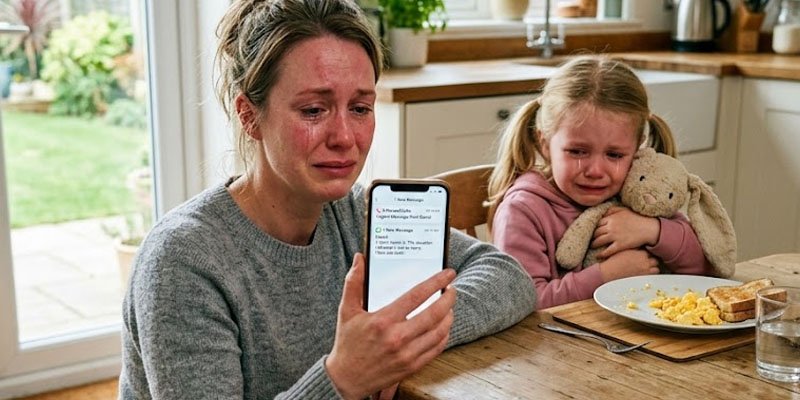
The following morning, I made Lily’s favorite breakfast—scrambled eggs, buttered toast, and strawberries cut into tiny heart shapes. Normally, she would giggle and immediately reach for the biggest strawberry on the plate.
Instead, she just stared silently at her food.
“Why aren’t you eating?” I asked softly.
Her small hands tightened around the edge of the table, and her lower lip began to tremble.
“Am I in trouble?” she asked in a barely audible voice.
The question hit me so unexpectedly that I almost spilled my coffee.
“In trouble? Sweetheart, of course not. Why would you think that?”
Without warning, she burst into tears.
It wasn’t the usual crying or complaining children sometimes do. This was raw fear pouring out of her. She pushed her plate away and hid her face with her hands as if she expected me to yell.
“I didn’t mean to tell,” she cried. “Grandma said if I told you, you’d be really mad at me. Grandpa said families are supposed to keep secrets.”
A cold knot formed in my stomach.
I knelt beside her chair. “Tell me what happened.”
She shook her head over and over. “You’ll hate me.”
“I will never hate you.”
Lily slowly looked up at me, her eyes red and filled with fear. “Grandma took me to a house. There was a woman there who said she was a lawyer. Grandma told me to say I wanted to live with them because you travel too much and don’t love me enough.”
For a moment, I felt like the floor beneath the kitchen had disappeared.
“What?”
“She made me practice,” Lily said, her voice shaking. “She told me if I said it correctly, a judge would let me live with them forever. She said you were selfish and that maybe one day you’d send me away.”
I slowly rose to my feet.
My parents hadn’t just been watching my daughter.
They had been preparing to take her away from me.
Then Lily quietly said something that chilled me even more.
“Grandpa recorded me while I was crying and told me to say you leave me home alone at night. But that isn’t true, Mommy. I only said it because they frightened me.”
PART 2
I remained on the kitchen floor, holding Lily until her breathing finally became steady. I resisted the urge to overwhelm her with questions. Every part of me wanted to get in my car, drive straight to my parents’ house, and demand answers. But Lily was shaking in my arms, and I realized that keeping her safe mattered far more than confronting them.
“Did they hurt you?” I asked gently.
She shook her head. “Not by hitting me.”
I closed my eyes for a brief moment.
“Did they threaten you?”
She nodded. “Grandma said if I didn’t help them, you could lose your job and then we wouldn’t have anywhere to live. She said she and Grandpa had lots of money and a big house. She told me I was selfish if I wanted to stay with you.”
My mother, Carolyn, had always been obsessed with being in control. My father, Richard, appeared quiet around other people but could be cruel behind closed doors. Growing up, they called their controlling behavior “love.” If I cried, they said I was ungrateful. If I challenged them, I was labeled dramatic. When I moved out at twenty-one, my mother told the rest of the family that I had abandoned them.
After Lily was born, I tried to rebuild our relationship. I wanted her to have grandparents in her life. I convinced myself that time had changed them.
I was mistaken.
I tucked Lily onto the couch with a blanket and turned on cartoons for her before stepping into the hallway to call my closest friend, Marissa, who worked as a family law paralegal.
As soon as she answered, I skipped any greeting.
“I think my parents are trying to create a custody case against me.”
She was silent for a moment before speaking in a firm tone.
“Tell me everything.”
So I did. I told her about the lawyer, the rehearsed statements, the recording, the threats, and the false claim that I left Lily home alone.
“Do not confront them by yourself,” Marissa said firmly. “Don’t send angry messages. Don’t call them yelling. Save every piece of evidence. Write down exactly what Lily told you, including the date and time. Arrange for her to see a child therapist as soon as possible. And contact a lawyer today.”
“Can grandparents really do something like this?”
“In Oregon, the laws can be complicated, but some people still try. And if they’re creating false evidence, you need to act quickly.”
After ending the call, I looked down at my phone.
There were six missed calls from my mother and two unread text messages.
Carolyn: Lily seemed upset last night. You need to be gentle with her.
Carolyn: We also need to discuss what’s truly best for Lily in the future.
A few seconds later, another text appeared.
Carolyn: She shared some things with us that you probably wouldn’t want repeated.
I read the message over and over.
It wasn’t concern.
It was a warning.
From the couch, Lily peeked at me from behind her blanket.
“Mommy?”
I immediately softened my face. “Yes, sweetheart?”
“Are they going to take me away?”
I walked back to her, sat beside her, and gently held both of her hands.
“No,” I said. “No one is taking you away from me.”
Even as the words left my mouth, I knew that love alone wouldn’t be enough.
I needed evidence.
I needed protection.
And I needed to find out just how far my parents had already gone.
PART 3
By lunchtime, I had carefully written down everything Lily had told me as accurately as I could remember. I included the date and time, took screenshots of every message my mother had sent, and backed them up to my email. After that, I called every family law attorney Marissa had recommended until one of them, Danielle Pierce, agreed to see me later that afternoon.
Danielle’s office was located downtown on the eighth floor of a modern glass building filled with the scent of printer toner and expensive coffee. Lily sat quietly beside me in the waiting room, holding tightly to the stuffed rabbit she had treasured since kindergarten. She looked so tiny sitting in the oversized leather chair.
When Danielle welcomed us into her office, she made sure not to overwhelm Lily. She introduced herself warmly, gave Lily a coloring sheet, and then turned to me with a calm, practical manner.
“Start from the beginning and tell me everything that happened.”
So I did.
Danielle listened carefully, stopping only to ask for specific dates, names, and the exact words that had been used. When I explained that my mother had taken Lily to meet a lawyer, I noticed Danielle’s expression change.
“Did your daughter happen to hear the lawyer’s name?”
I looked over at Lily. “Sweetheart, do you remember what the lady’s name was?”
Lily pressed her crayon firmly onto the paper.
“I think it was Ms. Keller. Grandma called her Anne.”
Danielle made a note.
“Anne Keller. Family law. That helps narrow things down.”
“Can they actually take her?” I asked.
Danielle looked directly at me.
“Not simply because they want custody. Not because your job requires travel. And not because they have more money than you. But if they’re attempting to create false claims of neglect, you need to respond before those accusations gain momentum.”
“So what should we do?”
“First, Lily should begin seeing a licensed child therapist. Not because anything is wrong with her, but because she deserves support, and an independent professional can properly document anything she shares. Second, we send your parents a formal written notice instructing them not to contact Lily directly or try to question, coach, record, or pressure her. Third, we prepare ourselves in case they decide to file something with the court.”
“They’ve already met with a lawyer.”
“Possibly,” Danielle replied. “Or they may have only had a consultation and exaggerated the situation. Either way, we answer with facts—not fear.”
Those words stayed with me.
Facts, not fear.
On the drive home, Lily fell asleep in the back seat with her stuffed rabbit tucked beneath her chin. As I stopped at a red light, I glanced at her in the rearview mirror and noticed the dried trails of tears still visible on her cheeks. My grip tightened around the steering wheel.
My parents had never respected my boundaries. To them, every limit I set was simply another obstacle they believed they had the right to push through.
This time, they had turned my own daughter into the tool to break those boundaries.
That evening, my mother called.
I let the call go straight to voicemail.
A few minutes later, my father called.
I ignored his call as well.
Five minutes after that, another text arrived from Carolyn.
Carolyn: We need to talk about Lily’s emotional state. She made some very serious comments while you were away.
I read the message twice before forwarding it to Danielle.
Her response came back almost instantly.
Do not reply. Keep every message.
So that’s exactly what I did.
The next morning, I took Lily to see a therapist named Dr. Naomi Grant. Her office had soft blue walls, bookshelves filled with children’s stories, and a basket overflowing with hand puppets. At first, Lily wouldn’t say a word. She stayed close against my side, absentmindedly tugging at a loose thread on her sleeve.
Dr. Grant never pressured her.
Instead, she asked about school, Lily’s favorite animal, and the stuffed rabbit she carried everywhere. About twenty minutes into the appointment, Lily quietly revealed that the rabbit’s name was Mr. Buttons. Ten minutes later, she admitted she hadn’t been sleeping well while staying at Grandma’s house.
Then, finally, she started talking.
For part of the session, Dr. Grant met with Lily alone while I waited outside. Those twenty-five minutes felt longer than my flight home from Paris. I sat staring at a framed photograph of mountains on the wall, trying not to imagine every possible worst-case scenario.
When Dr. Grant invited me back into her office, her face remained calm but serious.
“Lily described being coached over and over to repeat certain statements,” she explained. “She also said she was told that her mother would be angry if she revealed the truth, and that refusing to cooperate could hurt the family.”
My stomach turned.
“Did she tell you anything else?”
Dr. Grant looked briefly toward Lily, who was quietly sitting with Mr. Buttons resting on her lap.
“She also shared that your mother told her love sometimes means choosing the person who can offer the ‘best future.’ Lily seems to have understood that as meaning she needed to prove her love for her grandparents by rejecting you.”
Tears welled up in Lily’s eyes.
“I didn’t mean it.”
I immediately walked over, wrapped my arms around her, and whispered, “I know.”
Dr. Grant completed a report documenting that Lily was experiencing emotional distress caused by pressure from adults and conflicting feelings of loyalty. She did not recommend any custody arrangement, nor did she accuse anyone of committing a crime.
She simply documented Lily’s statements and behavior.
Facts, not fear.
Three days later, a certified letter arrived in the mail.
My parents had officially filed a petition asking the court for ordered visitation and consideration for temporary guardianship. In their filing, they claimed I was “frequently absent,” “emotionally unavailable,” and “potentially neglectful due to international work obligations.”
Attached to the petition was a transcript of the recording they had made of Lily.
My hands shook as I read through it.
According to the transcript, Lily had said, “Mom leaves me alone sometimes.”
But the transcript omitted everything that came before those words and everything that followed.
It never showed who had asked the question.
It also failed to explain what Lily actually meant when she used the word “alone.”
I called Danielle.
“They filed the petition,” I said.
“I thought they probably would,” she replied. “Now we respond.”
The weeks that followed were exhausting.
Danielle gathered copies of my travel records, Lily’s school attendance history, pediatric medical files, and written statements from our neighbors, Lily’s teacher, and Marissa, who had cared for Lily during previous work trips whenever my parents were unavailable. My employer also provided a letter confirming that I only traveled for work a few times each year, that every trip was scheduled well in advance, and that I worked remotely most of the time.
Lily’s teacher, Mrs. Alvarez, submitted a statement explaining that Lily consistently arrived at school clean, well-fed, ready for class, properly cared for, and clearly shared a close bond with me.
Our neighbor, Mr. Henderson, wrote that he often saw the two of us walking to the bus stop together, working in the garden on weekends, and coming home from the grocery store with Lily proudly carrying flowers like a little queen.
Every ordinary detail of our daily life suddenly became evidence.
At the same time, my mother’s text messages became more and more dramatic.
Carolyn: You’re punishing us simply because we love her.
Carolyn: Lily belongs in the place where she has stability.
Carolyn: You’re leaving us no choice but to reveal painful truths.
I never answered a single message.
Then Danielle discovered something that completely changed the direction of the case.
Anne Keller, the attorney Lily had mentioned, was not the lawyer who filed my parents’ petition. When Danielle officially contacted Anne’s office, Anne replied by email explaining that she had only conducted an initial consultation with Carolyn and Richard Blake. She confirmed that a young child had been sitting in the waiting room for part of the meeting, but she firmly denied ever interviewing Lily.
My mother had deceived her.
She had made the appointment appear official, convincing Lily that the “lawyer lady” had the power to decide where she would live.
But there was more.
Danielle obtained a subpoena for the complete audio recording my parents had relied on when preparing the transcript. Through their attorney, they resisted, arguing that it was a private family recording.
The judge ordered them to produce it.
When the full recording was played in the courtroom, complete silence filled the room.
The first voice heard was my mother’s.
“Lily, say what we practiced.”
Then came Lily’s quiet response.
“I don’t want to.”
Next, my father spoke in a calm but icy voice.
“You need to help your grandmother.”
“I want Mommy.”
My mother let out a short, frustrated sigh.
“No one is saying you don’t. But your mother leaves. She’s gone for days. Say that.”
“She leaves because of work.”
“And how does that make you feel?”
“Sad.”
“Do you feel like you’re alone?”
“I miss her.”
“Say that you feel alone.”
A long silence followed.
Then Lily started to cry.
“I feel alone.”
The judge leaned back in his chair.
My mother’s face had gone pale, while my father sat rigidly, his jaw clenched.
The recording continued.
My mother: “Good. Now tell them she leaves you alone at night.”
Lily: “But Aunt Marissa stayed with me.”
My father: “That isn’t what we asked.”
Then the recording stopped.
Not because it had reached its natural ending.
Because someone had edited it.
Danielle stood up.
“Your Honor, the statement included in the petition was taken from a much longer recording that clearly shows the child being coached.”
My parents’ attorney looked furious—but not at us.
He was angry with them.
The judge turned directly toward my mother.
“Mrs. Blake, did you instruct this child to make statements about her mother?”
My mother opened her mouth, but no words came out.
My father answered instead.
“We were only worried.”
“That was not the question,” the judge replied calmly.
My mother began to cry.
I had seen those tears countless times before. They almost always appeared right before she tried to portray herself as the victim of a situation she had created herself.
“She’s our only granddaughter,” she said. “We felt like we were losing her.”
The judge’s expression never changed.
“Children are not possessions that can be won or lost.”
For the first time I could remember, my mother had nothing to say.
The judge denied their petition, refused to grant court-ordered visitation, and stated that their behavior raised serious concerns about emotional manipulation. He further advised that any future contact with Lily should occur only if her therapist recommended it and I agreed.
Outside the courtroom, my mother attempted to come closer.
“Lily,” she called, her voice trembling. “Grandma loves you.”
Lily tightened her grip on my hand and stepped behind me.
I looked at my mother and felt something inside me finally become still.
It didn’t erupt.
It didn’t shatter.
It simply settled.
“You will not be contacting her,” I said.
My father stepped toward us.
“You can’t erase us.”
“No,” I answered. “You already did that yourselves.”
Without another word, we walked away.
The months that followed weren’t suddenly perfect. Real life rarely wraps everything up as cleanly as a courtroom decision.
Lily had nightmares.
She asked difficult questions at unexpected moments, like while brushing her teeth or packing her backpack for school.
“Mommy, do adults lie more than children?”
“Sometimes,” I answered.
“Do I have to love someone who makes me feel scared?”
“No.”
“Can I miss Grandma and still not want to see her?”
“Yes, sweetheart. Those two feelings can exist at the same time.”
Dr. Grant helped Lily understand that adults are responsible for the choices adults make. Marissa came over every Friday evening with takeout, and Mrs. Alvarez continued checking in with Lily at school.
Little by little, Lily stopped flinching every time my phone rang.
Little by little, breakfast became just breakfast again.
Nearly six months later, on a quiet Saturday morning, I made scrambled eggs, buttered toast, and strawberries cut into tiny heart shapes.
Lily sat at the kitchen table wearing her pajamas, her hair messy from sleep, with Mr. Buttons resting beside her plate.
She picked up one of the strawberries and smiled.
“This one really looks like a heart,” she said.
I sat across from her, pretending my eyes weren’t beginning to fill with tears.
“It really does.”
She ate that strawberry, then reached for another. The house stayed peaceful, filled only with birds singing outside and the gentle tapping of her fork against the plate.
After a few moments, she looked up at me.
“Mommy?”
“Yes?”
“When you went to Europe, I thought maybe they were telling the truth. Maybe your work mattered more.”
I swallowed slowly.
“I’m sorry you felt that way.”
“You didn’t make me feel it,” she said. “They did. But I still felt it.”
That was my daughter.
Small.
Hurt.
Honest.
I reached across the table and took her hand.
“I will always come back to you.”
“I know,” she said.
And this time, her voice carried the quiet certainty that she truly believed those words.