
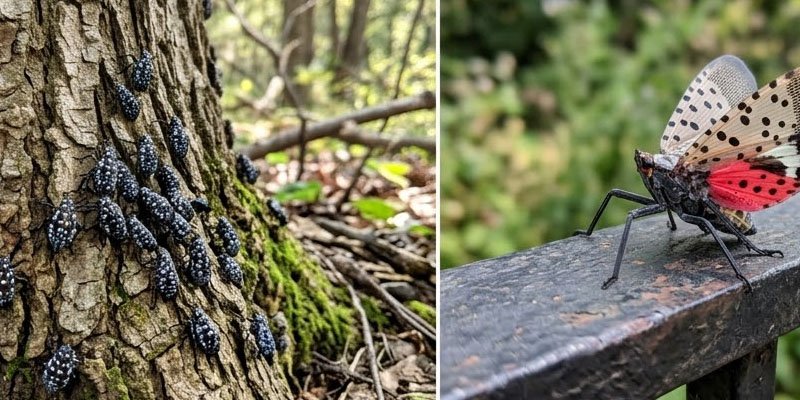
The earliest signs of a spotted lanternfly infestation are often subtle and easy to miss. You may first notice a sticky coating on patio furniture, vehicles, or nearby plants, followed by black, soot-like mold forming on leaves and branches. These symptoms are caused by the spotted lanternfly, an invasive insect that feeds on plant sap and excretes a sugary substance called honeydew. As honeydew accumulates, it promotes the growth of sooty mold, which can block sunlight from reaching leaves and weaken a plant’s overall health. Identifying these warning signs early gives homeowners the best chance to limit damage and protect their gardens and landscapes.
Being able to recognize the spotted lanternfly at every stage of its development makes it much easier to stop an infestation before it grows. Newly hatched nymphs are tiny, black insects covered with white spots. As they mature, they become striking red with black and white markings. Adult spotted lanternflies measure about one inch in length and have gray front wings dotted with black spots. When disturbed or in flight, they reveal bright red hindwings, making them easy to identify. Although adults are capable of jumping and gliding, they generally travel only short distances before settling on another nearby surface.
Spotted lanternflies feed by piercing stems and vines to draw out plant sap. They attack many types of trees, fruit crops, and ornamental plants, and large populations can weaken vegetation, reduce fruit yields, and leave trees under prolonged stress. As they feed, they excrete a sugary liquid called honeydew, which attracts nuisance insects and promotes the growth of black sooty mold. This mold can coat leaves, reducing their ability to capture sunlight and affecting overall plant health. While many established plants can survive occasional feeding, repeated infestations can gradually reduce their strength and vitality.
Routine inspections are one of the most effective ways to keep lanternfly populations under control. Check tree trunks, shrubs, fences, outdoor furniture, vehicles, and other surfaces where the insects may gather. During the fall and winter months, females lay egg masses that resemble grayish patches of dried mud. Scraping these egg masses into a sealed container filled with rubbing alcohol or hand sanitizer destroys the eggs before they hatch in spring. Eliminating egg masses early is one of the easiest and most effective methods for reducing future infestations around homes and gardens.
Homeowners should also learn to recognize the invasive Tree of Heaven, which is one of the spotted lanternfly’s favorite host plants. If this tree is present on your property, seek guidance from local agricultural or extension experts before removing it, since improper removal can encourage additional growth. When using sticky bands around tree trunks to trap young lanternflies, always install a protective wildlife barrier or mesh guard to prevent birds, squirrels, and other beneficial animals from becoming accidentally caught.
Because the spotted lanternfly continues to spread across many parts of the United States, agricultural agencies often ask residents to report new sightings in areas where the insect is not yet well established. Egg masses can easily hitchhike on vehicles, trailers, outdoor furniture, landscaping equipment, firewood, and other movable items. Inspecting these objects before transporting them to another location helps reduce the risk of introducing the pest into new communities.
Finding spotted lanternflies on your property can be frustrating, but taking action early greatly improves the chances of limiting their impact. Regular monitoring, prompt removal of egg masses, maintaining healthy plants, and following recommendations from local agricultural officials all play an important role in managing this invasive pest. With consistent attention and responsible prevention practices, homeowners can help protect their landscapes while slowing the spread of spotted lanternflies for the benefit of surrounding communities.