
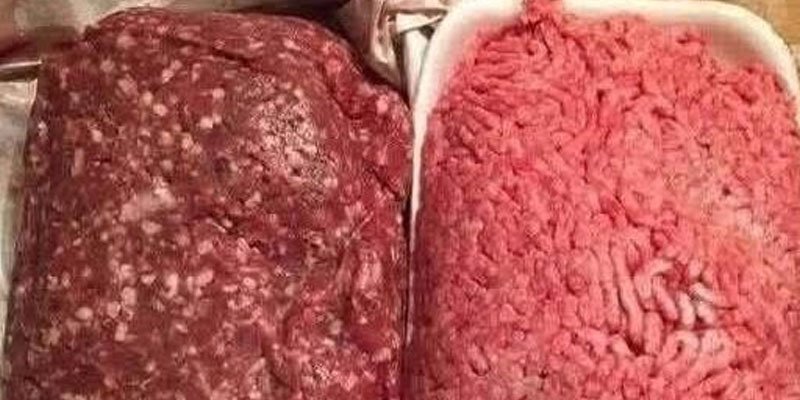
Every time you stand before the shimmering, plastic-wrapped expanse of the supermarket meat aisle, you are participating in a carefully constructed illusion. The vibrant red hues and the uniform marbling of the ribeyes and NY strips are designed to project a sense of health, safety, and culinary excellence. But behind that sterile packaging lies a hidden journey—a “forensic” reality of industrial engineering that has fundamentally altered the nature of what we eat. For decades, the gap between store-bought beef and farm-raised cattle has been widening, creating a legacy of scars on our health, our environment, and our sensory experience of…
Every time you stand before the shimmering, plastic-wrapped expanse of the supermarket meat aisle, you are participating in a carefully constructed illusion. The vibrant red hues and the uniform marbling of the ribeyes and NY strips are designed to project a sense of health, safety, and culinary excellence. But behind that sterile packaging lies a hidden journey—a “forensic” reality of industrial engineering that has fundamentally altered the nature of what we eat. For decades, the gap between store-bought beef and farm-raised cattle has been widening, creating a legacy of scars on our health, our environment, and our sensory experience of food. To truly understand what is on your dinner table, you must peel back the mask of industrial convenience and look at the “living archive” of how beef is actually made in the modern age.
The story of store-bought beef is a narrative of scale, efficiency, and the relentless pursuit of uniformity. Most supermarket meat originates from massive feedlot systems, environments designed to maximize growth in the shortest possible time. In these high-density operations, cattle are transitioned from grass to grain-heavy diets—primarily corn and soy—which rapidly increases their weight and creates the soft, white marbling that consumers have been trained to associate with quality. However, this marbling is often “engineered” rather than earned. Because these animals have limited movement, their muscles do not develop the complex textures found in nature. The result is a consistent, mild-tasting meat that is undeniably cheap and convenient, but largely devoid of character. It is a product of a “game of chess” played by global agricultural corporations where the ultimate goal is a predictable commodity, not a nutrient-dense food source.
In stark contrast, farm-raised beef from small, local operations represents a radical transparency in agriculture. These animals typically spend their lives on open pasture, grazing naturally on a diverse buffet of grasses, legumes, and wild herbs. This varied diet and the freedom to move across the landscape create a “map” of flavor within the meat itself. The fats in pasture-raised beef are fundamentally different from those found in grain-fed cattle; they are higher in Omega-3 fatty acids, conjugated linoleic acid (CLA), and essential vitamins like E and A. This isn’t just a nutritional footnote; it is a “forensic” truth that impacts the human body’s inflammatory response and long-term wellness. When you bite into a steak from a cow that has roamed freely, you are tasting a “sanctuary built from truth”—a firmer, more satisfying texture and a deep, complex beefiness that grain-fed alternatives simply cannot replicate. For many who make the switch, it tastes like what beef was meant to be before the industrial revolution turned the farm into a factory.
The choice between these two worlds often feels like a battlefield of conscience. On one side, we have the economic reality of the modern household. Industrial beef is affordable and accessible, a necessary staple for many families navigating a world of rising costs. But the “hidden life” of that low price tag involves significant environmental and ethical trade-offs. Feedlot systems are resource-intensive, requiring vast amounts of water and grain, and they create concentrated waste that can devastate local ecosystems. Furthermore, the psychological and physical stress on animals in high-density environments is a “private horror” that many consumers are no longer willing to ignore. By choosing farm-raised beef, consumers are often making a deliberate act of reclamation—supporting local economies, promoting regenerative grazing practices that sequester carbon back into the soil, and ensuring a higher standard of animal welfare.
However, navigating the world of “farm-to-table” requires its own level of scrutiny. The market is flooded with “bridge phrases” and buzzwords like “natural,” “grass-fed,” and “pasture-raised” that are often used to justify a higher price point without providing real, verified information. Truly transparent farmers welcome the “radical transparency” of their customers; they invite questions about their slaughtering processes, their soil management, and their antibiotic use. They don’t hide behind surgical masks of corporate branding. Instead, they offer a living archive of their work, proving that the “better” beef isn’t just about taste—it’s about the integrity of the entire cycle of life.
When you sit down to a meal, the beef on your plate is a testament to your priorities. Is it a product of convenience, a mild-tasting fuel designed for a fast-paced life? Or is it a piece of “majestic” heritage, a nutrient-dense gift from a creature that lived in harmony with the land? The difference is “painfully human.” We are what we eat, and the “forensic” evidence suggests that the movement away from industrial uniformity toward the “terrible, beautiful” complexity of local farming is the only way to heal our relationship with the natural world.
The era of the “shielded consumer” is coming to an end. We can no longer pretend that all beef is created equal, nor can we ignore the “legacy of scars” left by an industry that prioritizes volume over value. Whether you are driven by the search for a deeper flavor profile, a desire for superior nutrition, or a commitment to ethical stewardship, the move toward farm-raised beef is a powerful statement. It is an insistence on your own narrative as a conscious eater. It is a refusal to be a pawn in a corporate game of chess and a choice to invest in a sanctuary of health and flavor.
Ultimately, the choice between store-bought and farm-raised beef is a reflection of how we view our place in the world. Do we want a world of sterile, plastic-wrapped uniformity, or do we want a world where the “mask” of the industry is removed to reveal a thriving, diverse, and sustainable ecosystem? The answer is written in the marbling of the meat and the history of the soil. As we enter a new chapter of food consciousness, the message is straightforward: the real story of your food is still unfolding, and you are the one holding the knife. Choose the path that offers clarity, not fear; character, not just convenience; and a meal that is a deliberate act of respect for the world that sustains us. The journey from the pasture to the plate is a sacred one, and it is time we started treating it with the “unwavering support” it deserves.